
Walkie Talkie for Construction Sites Malaysia: Safety Guide
Choose rugged radios for Malaysian construction sites where crane operators, ground crews, safety officers, and site supervisors need instant coordination in noise, dust, and weather.
Radios should keep crane lifts safe and ground crews connected when noise and dust make shouting impossible.
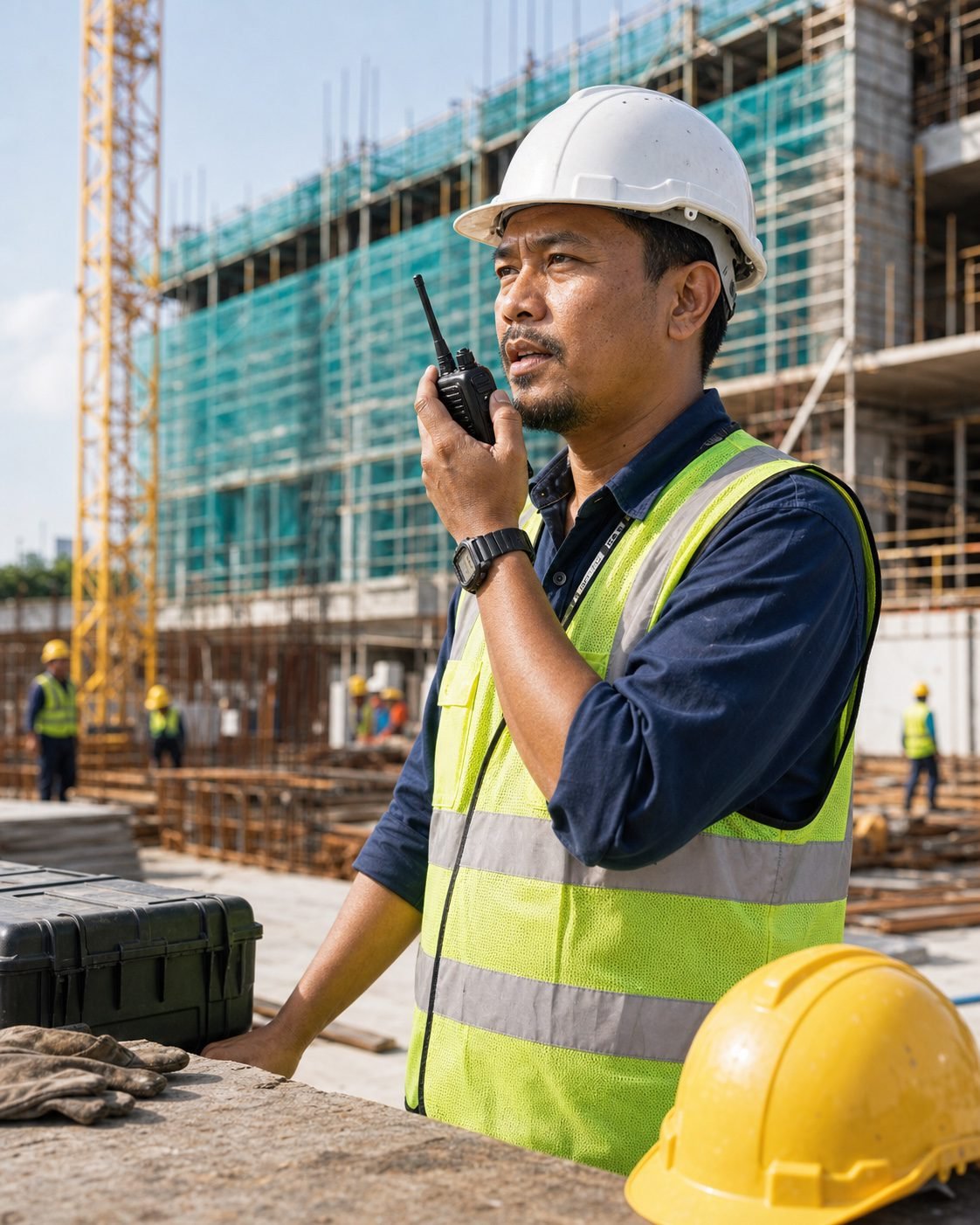
A good construction setup links crane operators, ground spotters, safety officers, site supervisors, and concrete crews with loud audio, helmet-compatible accessories, weatherproofing, and a channel plan that prevents crane-zone accidents.
Safety score
Score the radio system by construction-specific behavior: crane response time, weather resilience, helmet compatibility, and emergency reach.
Crane-to-ground signal path
The most dangerous moment is not radio failure. It is when a crane operator cannot hear the ground spotter because of noise, distance, or wrong channel.
Risk map
Most site incidents come from weak communication, not weak equipment. Fix crane zones and dead spots first.
Quick answer

For most Malaysian construction sites, start with rugged UHF radios rated IP67 or higher, helmet-compatible speaker microphones or bone-conduction headsets, a 5 to 7 channel plan, and a coverage test from foundation pit to crane cab. The goal is not just range. The goal is zero crane-zone incidents caused by communication delay.
A small residential site may run with 6 to 10 radios. A high-rise commercial project often needs 20 to 40 radios across crane, ground, safety, supervisor, concrete, electrical, and plumbing crews. Infrastructure projects like highways or tunnels may need more because crews are spread across kilometres.
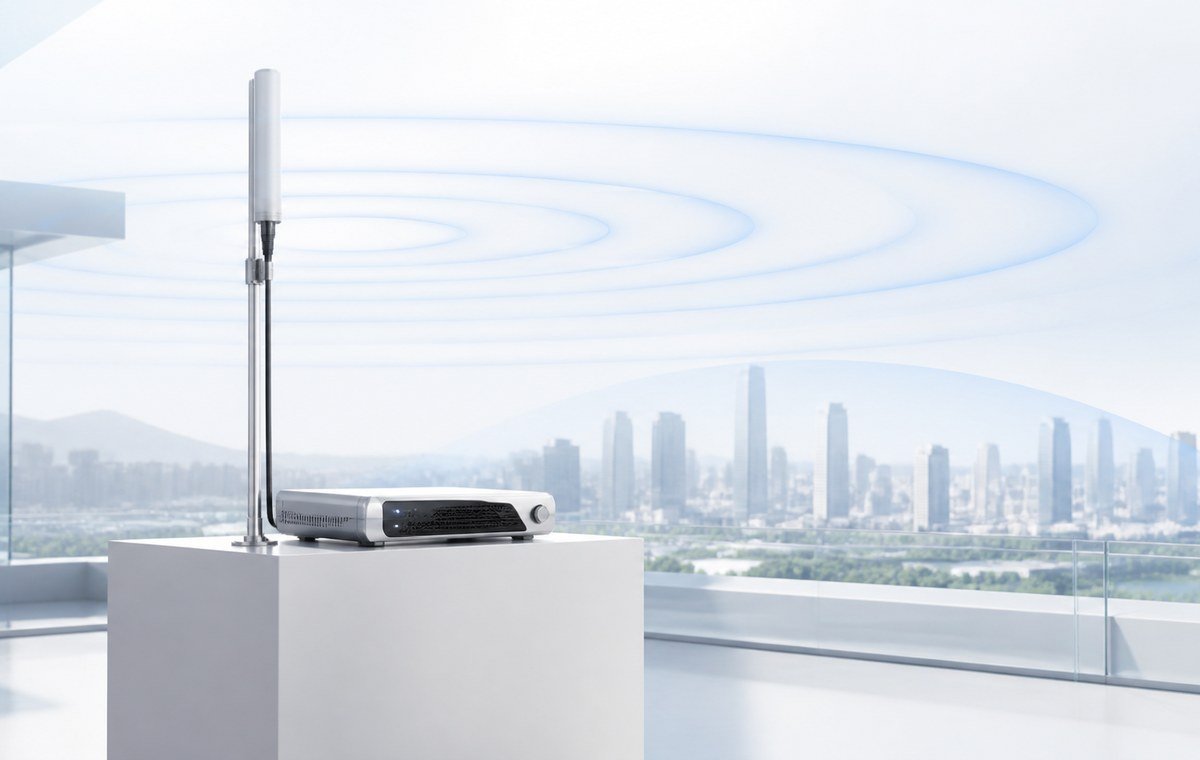
Octogen should test the real working zones before finalising the fleet: crane cab, foundation pit, steel frame floors, concrete pump location, site office, material storage, vehicle gate, and worker rest area. If one steel frame floor has dead audio, the crane operator will feel the failure even if the site office sounds perfect.
Site safety workflow
A practical safety flow is simple: ground spotter checks clearance, calls the crane operator on the dedicated crane channel, the operator acknowledges and holds or adjusts the lift, then the spotter confirms all-clear. If the spotter sees an unexpected hazard, anyone on site can call the emergency channel to trigger an immediate stop.
Do not let every crew member listen to every channel. A noisy shared channel drowns out crane signals and increases the chance of missed safety calls. Use dedicated channels for crane, ground, safety, and supervisor, then define when emergency calls override routine traffic.
The wording should be short and repeatable. For example: Ground to Crane, hold lift, pedestrian in zone. Crane replies with Holding, waiting for all-clear. This keeps the exchange clear without long explanations that delay the stop.
- Use role-based call signs such as Crane One, Ground Spotter, Safety Officer, Site Supervisor, Concrete Lead, and Electrical Lead.
- Keep emergency channel open at all times. No routine traffic on the emergency channel.
- Train spotters to confirm crane acknowledgement, not just send the message.
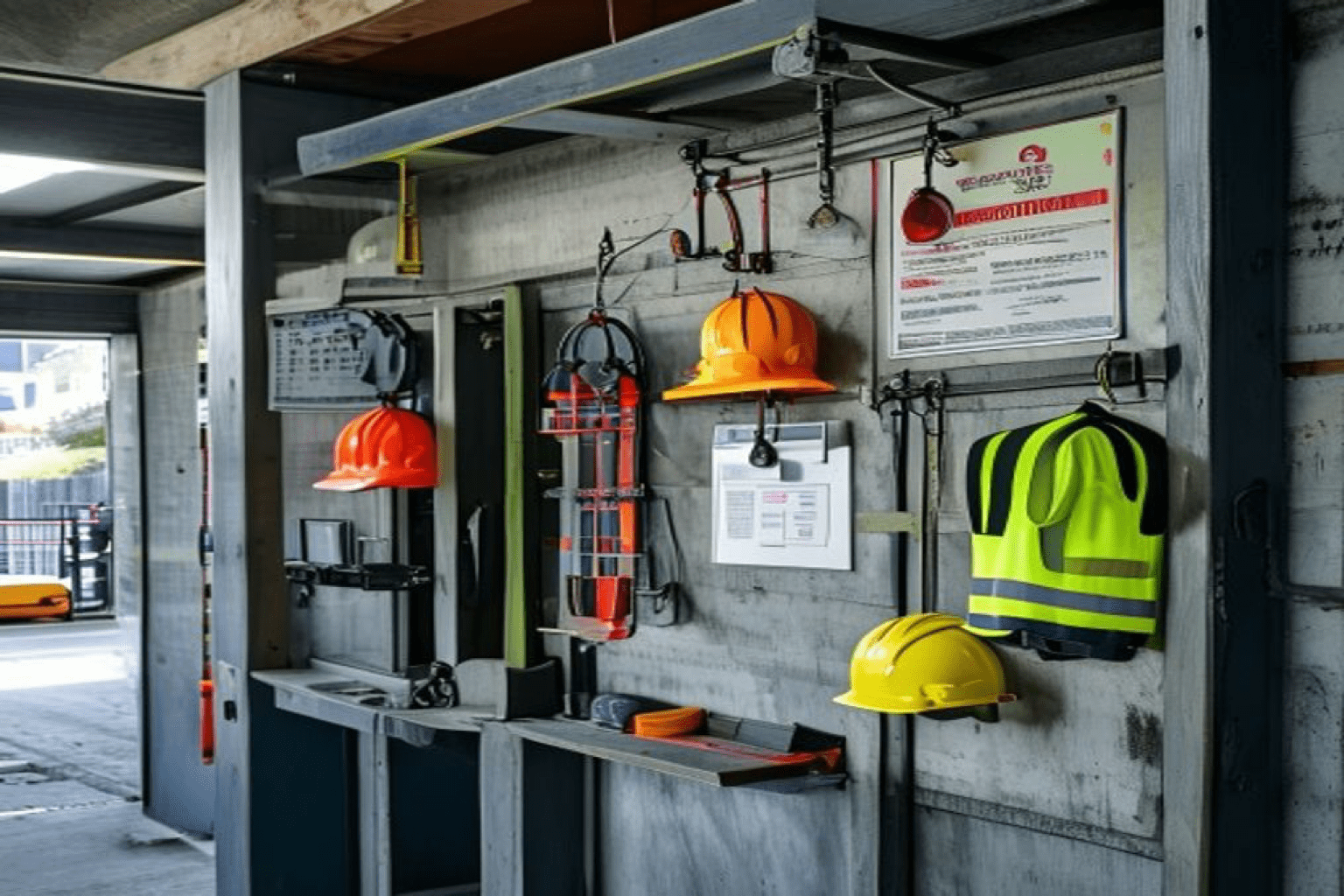
- Use helmet-compatible accessories so safety gear never blocks radio use.
Channel plan for cranes and crews
A common Malaysian construction structure is Channel 1 for crane coordination, Channel 2 for ground and material movement, Channel 3 for safety and emergency, Channel 4 for site supervisor, Channel 5 for concrete and formwork, Channel 6 for electrical and M&E, and Channel 7 for open emergency override. Smaller sites can combine channels, but the crane channel must stay dedicated.
Use privacy codes to reduce accidental cross-talk from nearby sites, but do not treat them as a security system. If the site handles sensitive project information, keep radio messages operational and brief. Digital radios can add stronger privacy, but the discipline starts with what crews say over the air.
For multi-tower projects, each crane should have its own channel or sub-channel. Crane operators must never share a channel during simultaneous lifts. Site supervisors need a channel that reaches all cranes and all ground crews for all-site announcements.
Helmet-compatible accessories
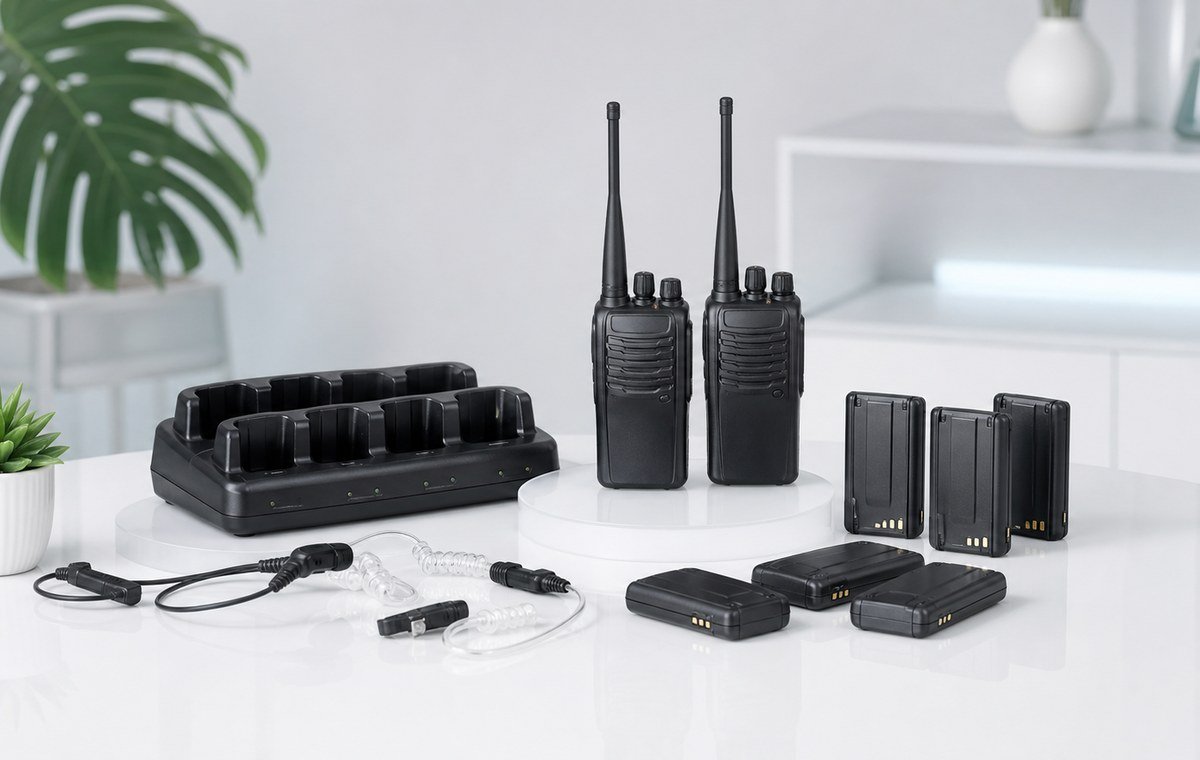
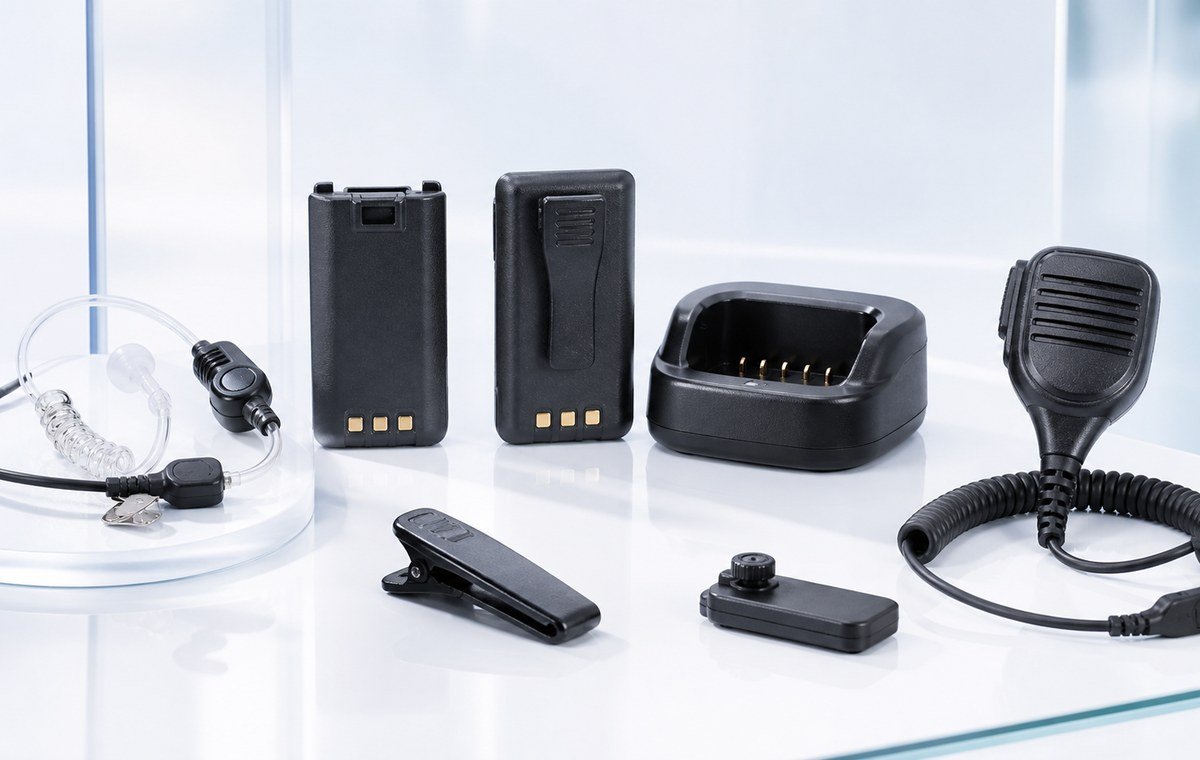
Rugged speaker microphones with clip mounts attach to high-visibility vests or harnesses and keep the radio accessible while climbing ladders or operating machinery. Bone-conduction headsets bypass the ear entirely, letting crews wear ear defenders for jackhammer or compressor zones while still receiving radio audio through the skull.
Helmet-mounted boom microphones keep hands free for tool operation and material handling. Look for quick-release mounts that detach if the headset catches on steel rebar or scaffolding. Cables should be Kevlar-reinforced and routed inside the helmet strap to avoid snagging.
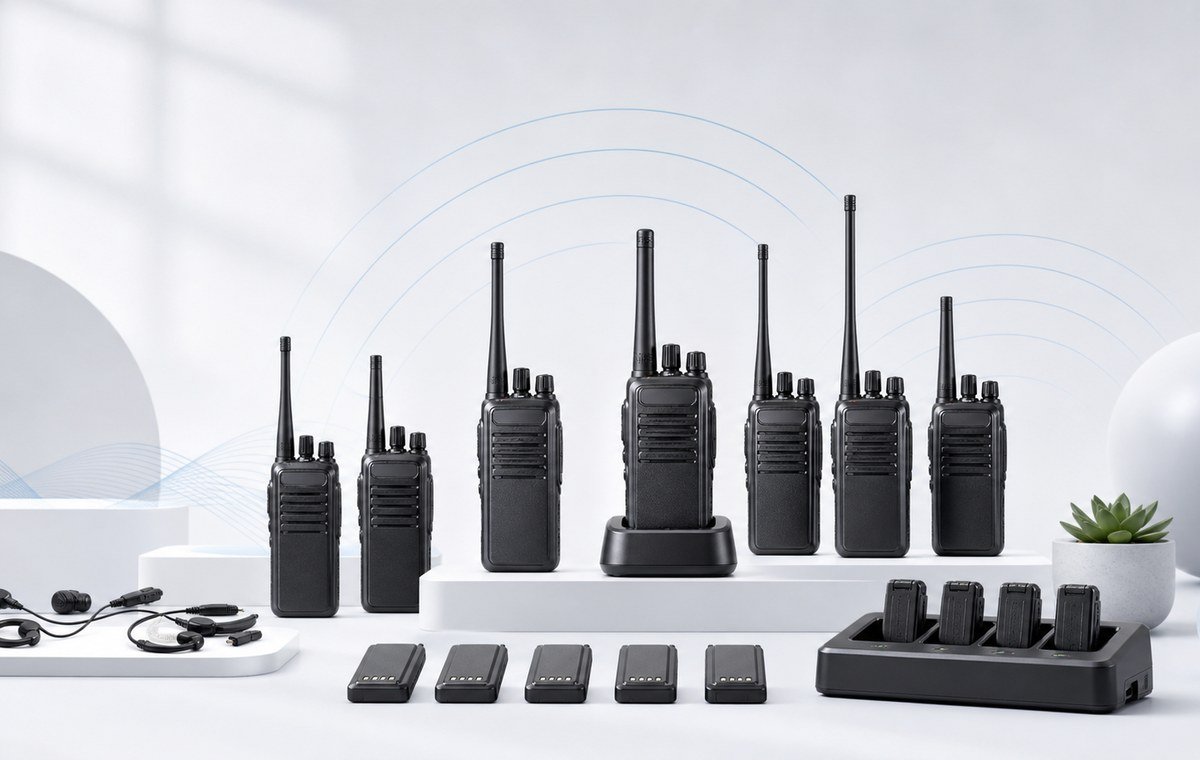
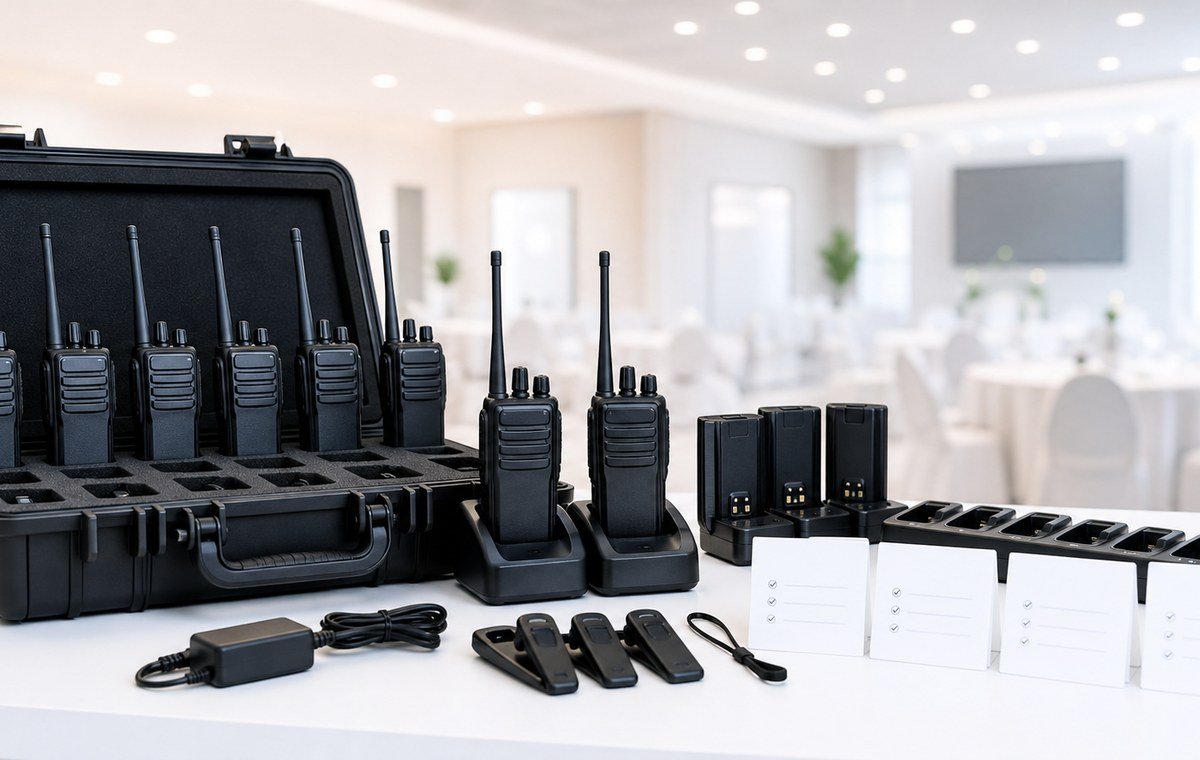
Battery planning is part of safety compliance. A radio that dies during a crane lift creates the same operational risk as a missed safety call. Keep spare batteries in the site office, label chargers by crew, and check that night-shift security still has charged radios for early-morning concrete pours.
CIDB compliance checklist
The handover routine should be short enough to use every shift change. If it takes too long, crews will skip it during rush concrete pours or weather windows. A safety officer should still be able to see who has each radio and whether any unit has weak audio, a damaged clip, or a battery problem.
Keep one table at the site office and review it at every shift change. The table should focus on action, not paperwork.
| Compliance item | What to check | Why it matters |
|---|---|---|
| Radio register | Match unit ID to crew and crane assignment | Prevents missing radios and makes faults traceable during CIDB audits |
| Channel plan | Confirm crane, ground, safety, supervisor, concrete, electrical | Stops crews from listening to wrong traffic during critical lifts |
| Audio test | Run transmit and receive check in crane cab and foundation pit | Finds weak speaker or dead zones before they cause incidents |
| Helmet fit | Check boom mic, bone-conduction, or speaker mic attachment | Keeps safety gear compatible with communication during full shift |
| Battery | Confirm full charge or issue spare before shift | Avoids mid-shift failure during crane lift or concrete pour |
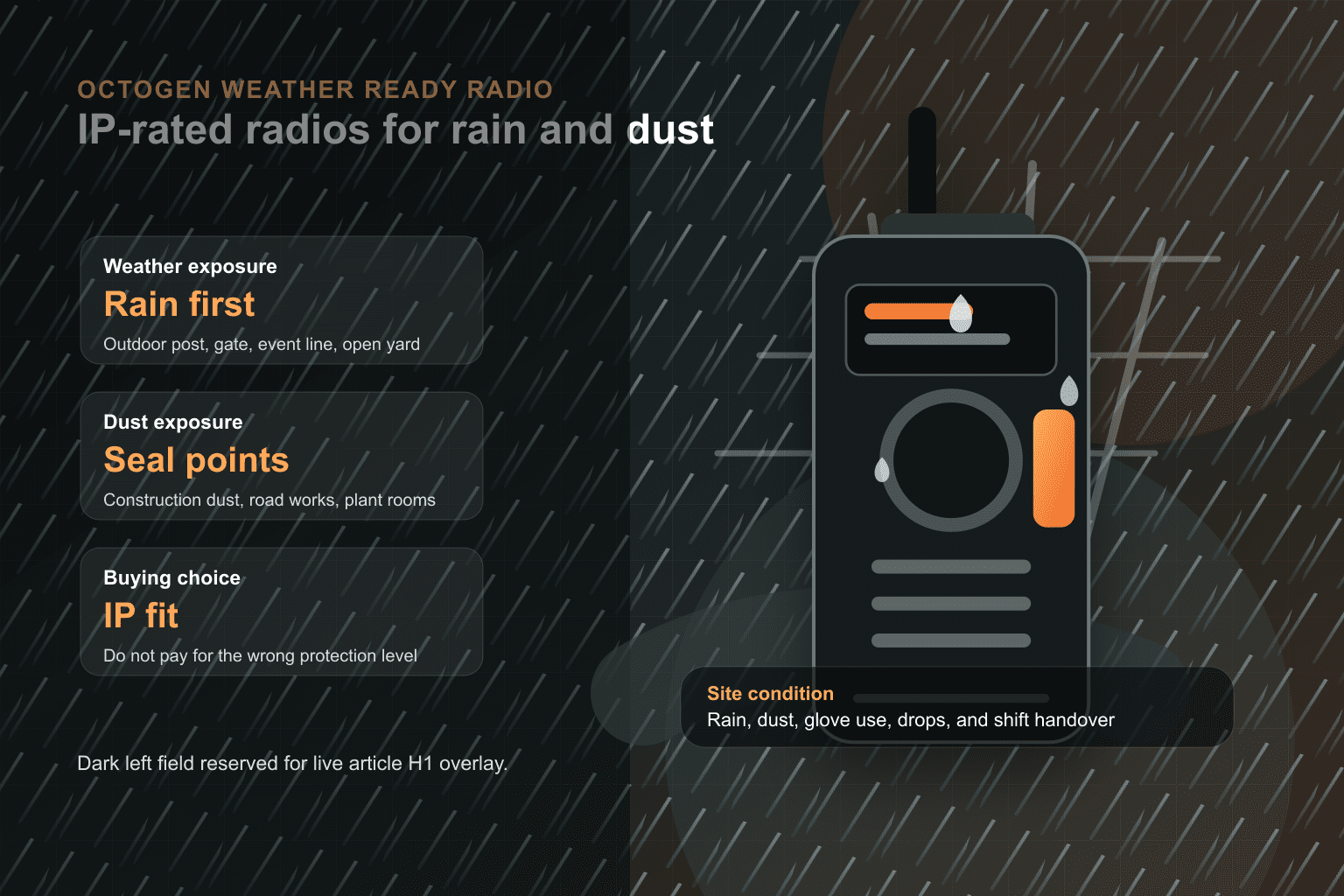
| Weather seal | Inspect IP67 seal and antenna connection | Prevents rain and concrete dust from killing radios on Malaysian sites |
Real Deployment Notes
Test from crane cab to ground spotter, then repeat from foundation pit, steel frame floors, concrete pump location, and material gate. Construction failures often hide in steel frames and basement levels, not the site office.
If every crew member talks on the crane channel, the operator stops listening. Keep crane channel dedicated and use supervisor channel for all-site announcements.
A good radio with a poor helmet mount still creates crane-zone risk. Issue accessories by role and record missing boom mics during shift handover.
Common Customer Questions
How many walkie talkies does a Malaysian construction site need?
A small residential site may need 6 to 10 radios. A high-rise commercial project often needs 20 to 40 radios across crane, ground, safety, supervisor, concrete, electrical, and plumbing crews. Infrastructure projects may need more because crews are spread across kilometres.
Should crane operators share a channel with ground crews?
No. Crane operators need a dedicated channel during active lifts. Ground crews should use a separate channel for material movement and pedestrian safety. Only emergency calls should override the crane channel.
How do construction crews keep radios working in Malaysian rain?
Choose IP67-rated radios with sealed battery compartments and waterproof speaker microphones. Store spare batteries in dry containers. Check antenna connections weekly because tropical humidity corrodes contacts faster than temperate climates.
Can one radio system cover a high-rise site from basement to crane cab?
Sometimes yes, but it must be tested. UHF radios are usually a better start for steel-frame buildings, while high-rise towers and deep foundation pits may need a repeater or high-gain antenna after a real coverage walk-test.
Is rental or purchase better for construction projects?
Purchase usually fits long-term projects with stable crews. Rental fits short-term projects, phased construction, and trial deployments. Octogen can compare both after checking crew count, project duration, and site coverage.
Ask Octogen About Your Site Coverage
Send Octogen your project type, site size, crane count, crew size, shift timing, and current communication problems. The team can advise rugged radio models, helmet-compatible accessories, channel programming, rental or purchase options, and site coverage testing for Malaysian construction operations.