

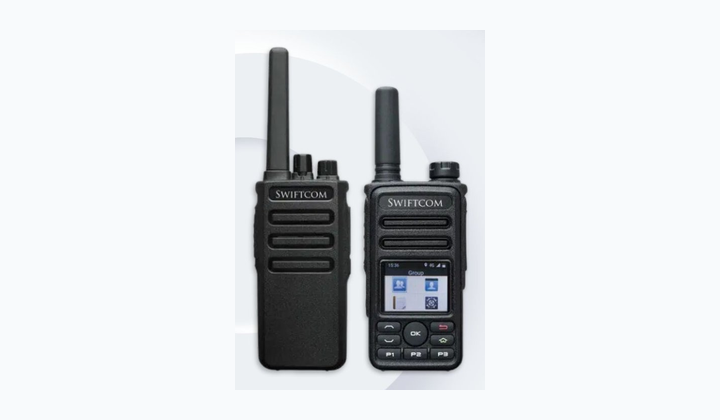
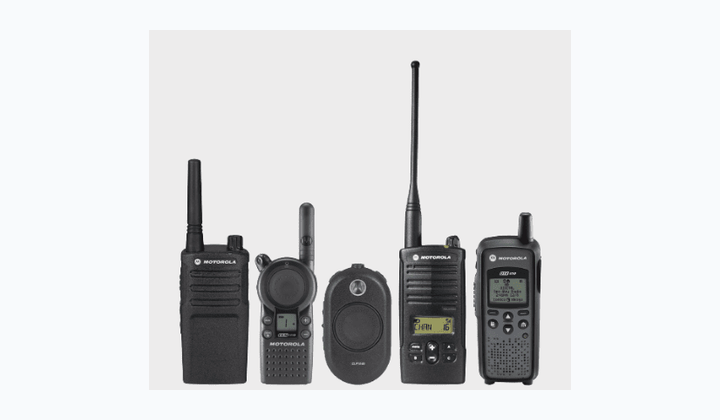
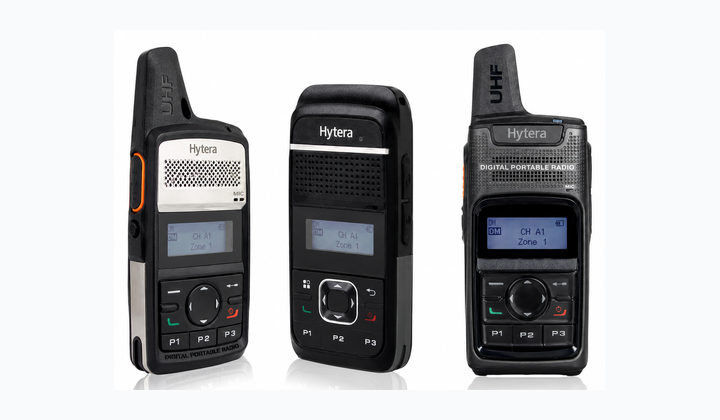
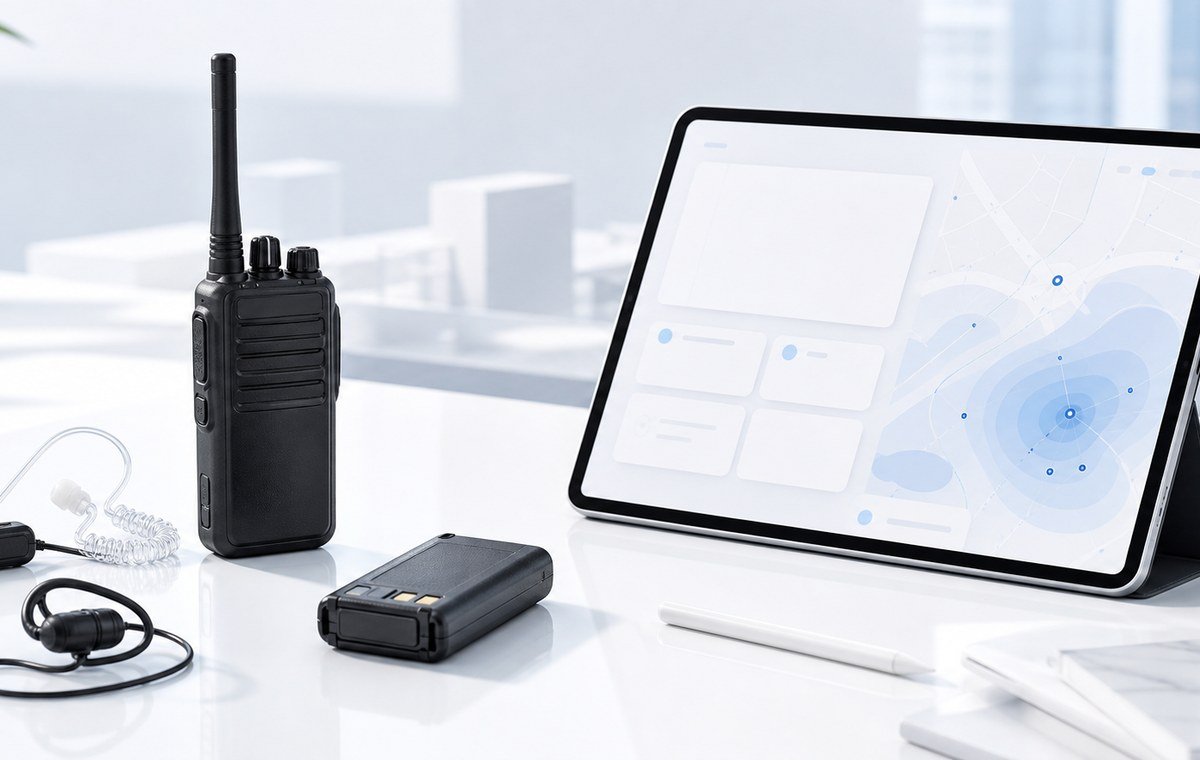
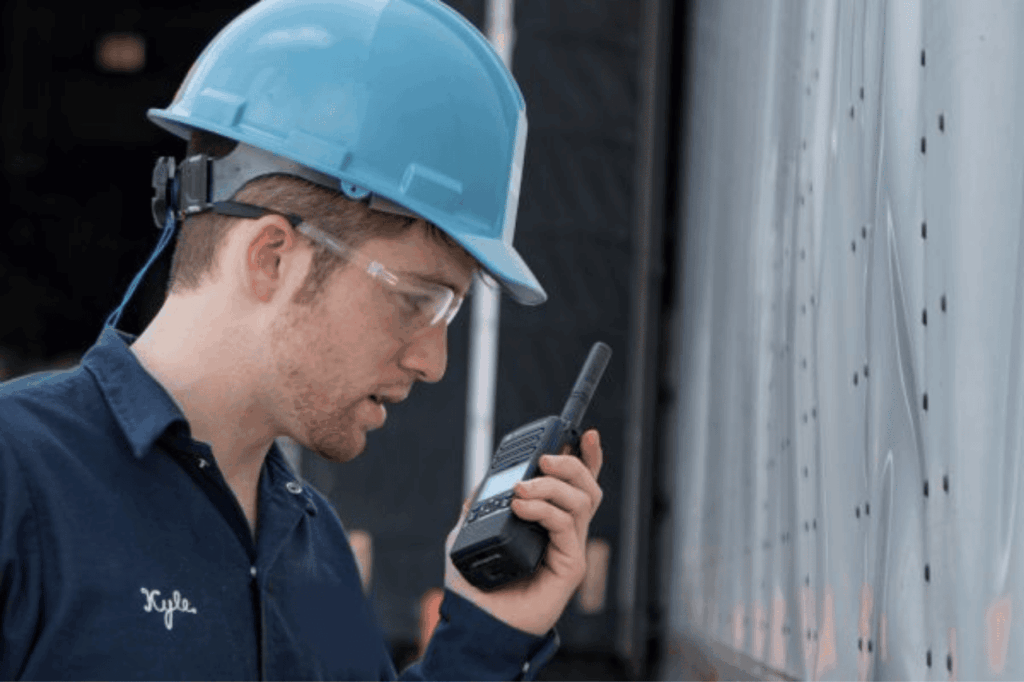
Phones do more — but worksites run on instant voice, group calls and gear that survives a drop. Tell us your team and site; get a clear radio / phone / hybrid call with the cost reasoning.
Get your verdict
Long-range radio vs mobile phone, on the things a worksite cares about.
Phones are more versatile devices. But on an active site, communication is judged on speed, reliability and cost per user — and that changes the answer.
| What matters on site | Long-range two-way radio | Mobile phone |
|---|---|---|
| Connect speed | Instant push-to-talk — one button, no dialing | Dial, ring, wait for answer |
| Group call | One-to-many — the whole team hears at once | Needs a data app; one-to-one by default |
| Coverage | Works off-grid, underground and remote (UHF/VHF), or nationwide via PoC | Needs cellular or Wi-Fi signal |
| Ongoing cost | One-time purchase — no per-user monthly fee | SIM / data plan per line, every month |
| Durability | IP-rated — dust, water and impact resistant | Fragile without a rugged case |
| Battery | Full-shift, swappable batteries | Drains fast with screen and apps |
| Multimedia & apps | Voice only (PoC adds some data) | Photos, video, forms, email, apps |
Range on conventional radios can be affected by terrain, buildings and interference — which is why site type matters as much as the spec sheet.
When radios win, and when phones do.
Instant, rugged, no monthly fee
- Large sites with multiple teams needing instant coordination.
- Remote, outdoor or underground areas with weak cellular signal.
- Safety-critical work where a dropped call can't be tolerated.
- Ongoing daily comms where per-line phone plans add up fast.
Data, media and off-site reach
- Sharing photos, video, forms, drawings or email from the field.
- One-to-one calls to clients, suppliers or off-site staff.
- App-based workflows, GPS and remote access.
- Small teams where instant group voice isn't the priority.
Common questions.
Are walkie talkies better than mobile phones for worksites?
Do long-range walkie talkies have a monthly cost like phones?
Will radios work where there's no phone signal?
Can I use both radios and phones together?
Which is more cost-effective for a large team?
Pick the right radio for the job.
PoC radio: nationwide push-to-talk
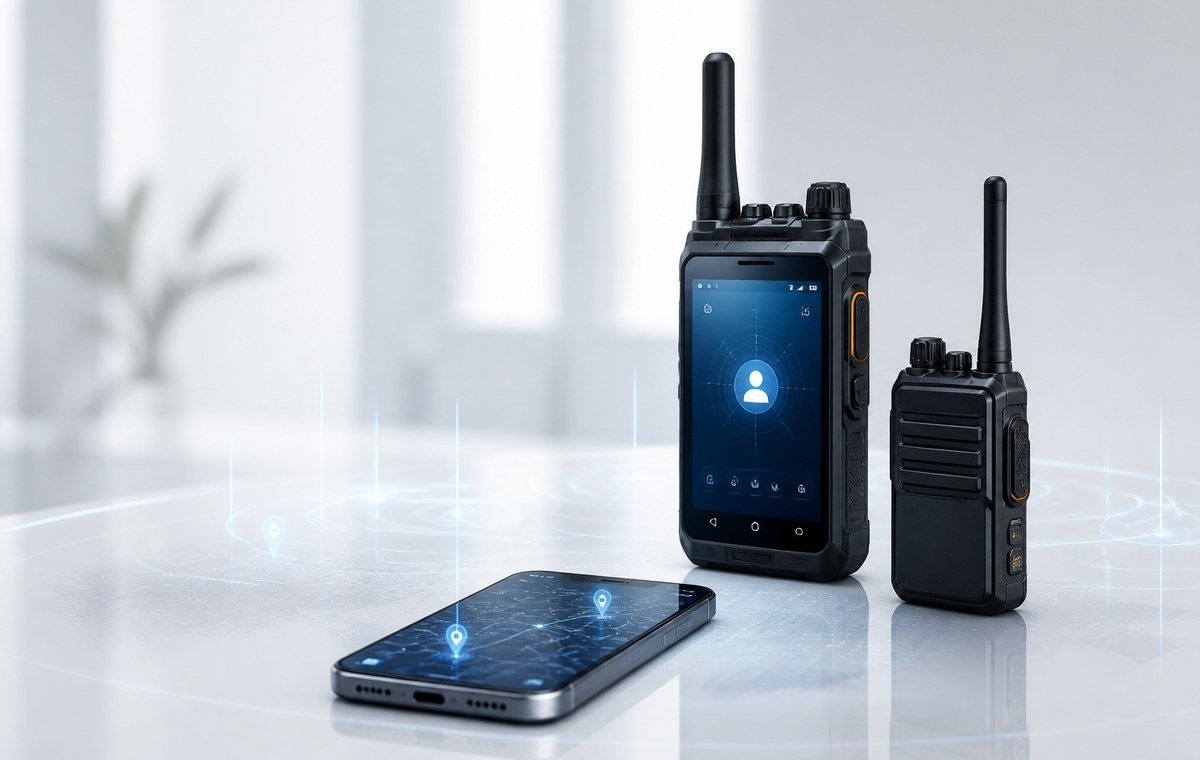
If your team travels across cities, PoC radios give phone-like coverage with radio simplicity.
Best walkie talkie for your use case
Match radio type, power and accessories to your site, team size and budget.
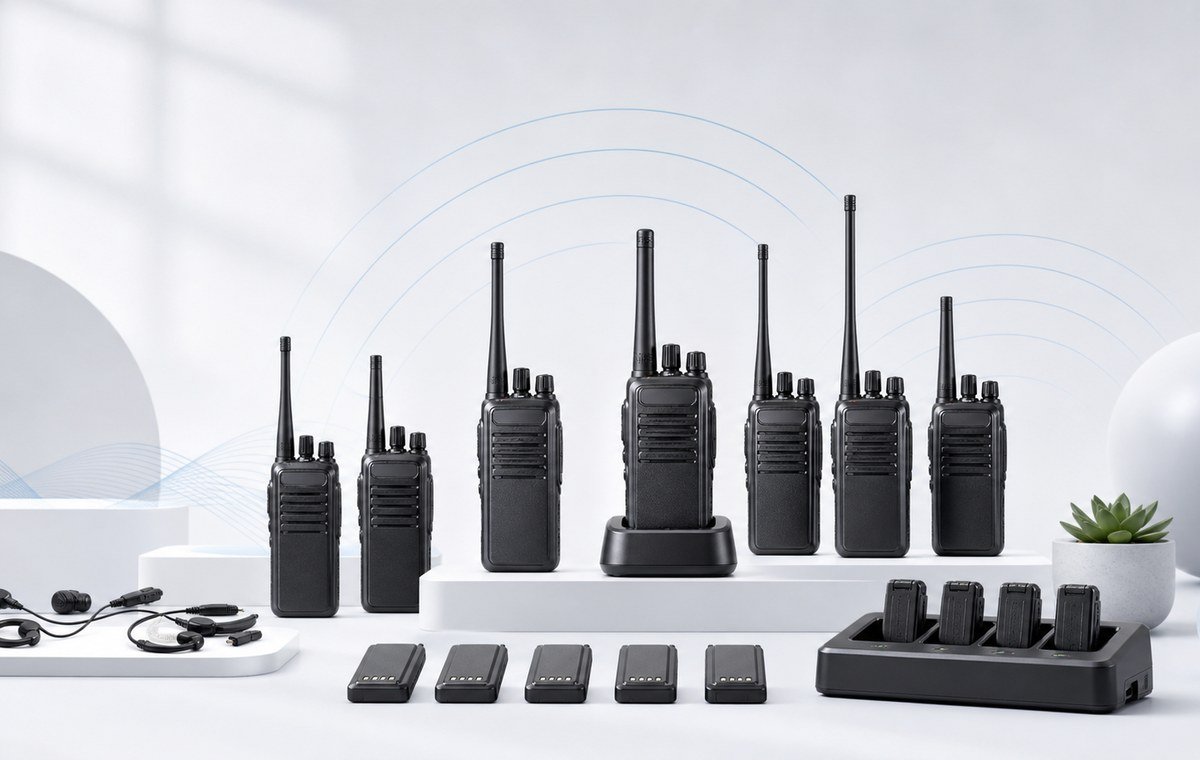
Not sure which fits your worksite?
Tell us your team size, site type and what matters most — we'll recommend radios, phones or a hybrid, and the models that fit.
Talk to Octogen