

Walkie Talkie SOP Malaysia: Call Signs and Shift Handover
A practical standard operating procedure for Malaysian security, facilities, warehouse, hotel, and mall teams that need cleaner radio checks, clearer call signs, and less messy shift handover.
Radios fail operationally when nobody owns the handover.
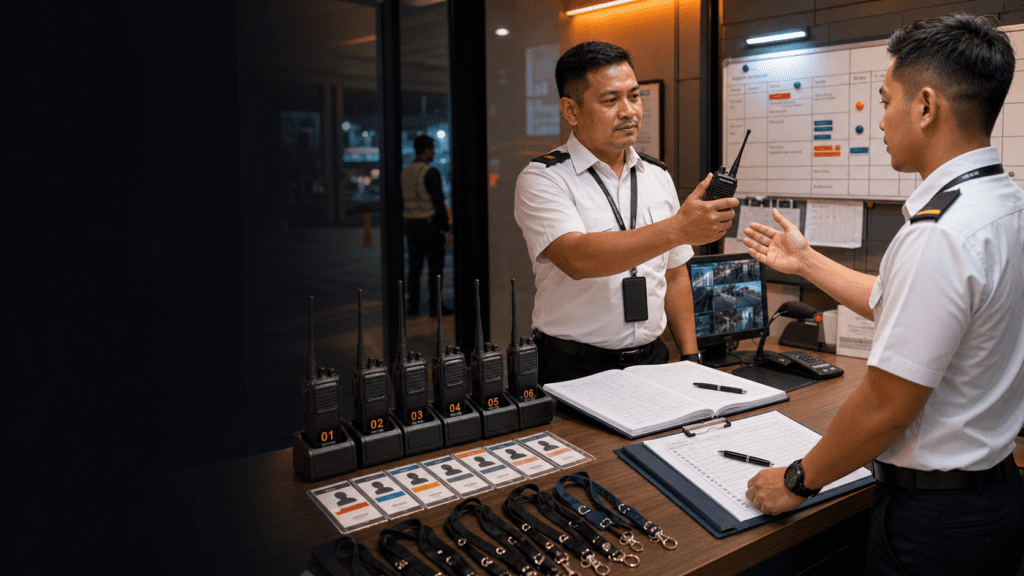
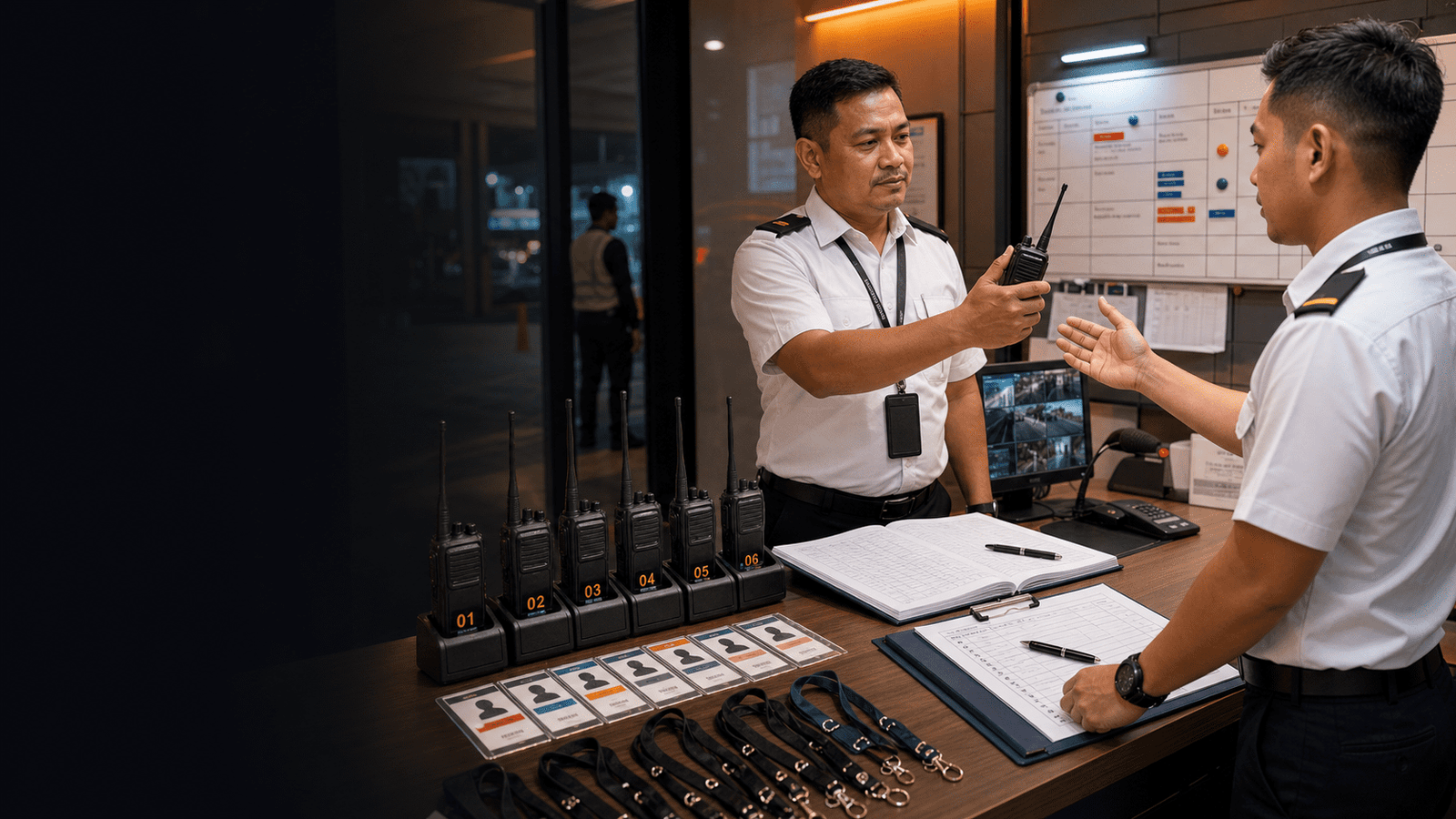
A strong radio setup is not only about handset count. Teams need clear call signs, a short radio-check routine, and a log that shows which unit was handed to which post.
Control score
Use one visible score to show whether the shift is ready, then use the log to find the exact radio or post that needs action.
Radio check lane
The flow should stay simple enough for daily use, especially during busy morning or night-shift changeovers.
Escalation heatmap
Use consistent wording so guards do not improvise during incidents, radio faults, or supervisor calls.
Why does a walkie talkie SOP matter?
A walkie talkie standard operating procedure (SOP) matters because radios only help when every user knows who is calling, what to say, and what to check before the shift starts.
Many Malaysian sites already have enough radios, but daily use still becomes messy. A guard takes the wrong handset, a battery is not fully charged, an earpiece is missing, or the night-shift team forgets to report weak audio at the basement post. The next team then blames the radio when the real issue is handover discipline.
Octogen recommends treating the radio SOP as a small operating system for the team. It does not need to be long. It should explain call signs, radio checks, escalation words, fault notes, and who signs off before the first patrol, delivery round, or opening shift begins.
For a 12 radio security shift covering 6 posts, the SOP can be one page: assign the radio number, confirm the call sign, run a two-way audio check, note the battery/accessory condition, and get 1 supervisor sign-off before deployment.
How should call signs be assigned?
Call signs should identify the role or location first, not the person, so the control room can understand the message even when staff rotate.
For example, a mall or office tower can use Control, Main Gate, Lobby, Loading Bay, Basement, Patrol One, and Supervisor. A warehouse can use Control, Receiving, Dispatch, Forklift Lead, Cold Room, Gate, and Yard. A hotel or resort can use Front Office, Security Base, Housekeeping Lead, Maintenance, Car Park, and Poolside.
Use personal names only after the role is clear. This makes radio traffic cleaner during shift changes, replacement guards, relief posts, and emergency calls. It also helps supervisors review incidents because the log refers to a site function, not only to whoever happened to be carrying the radio that day.
What should happen during radio check?
A radio check should confirm that every assigned unit can transmit, receive, and be understood from the real working position.
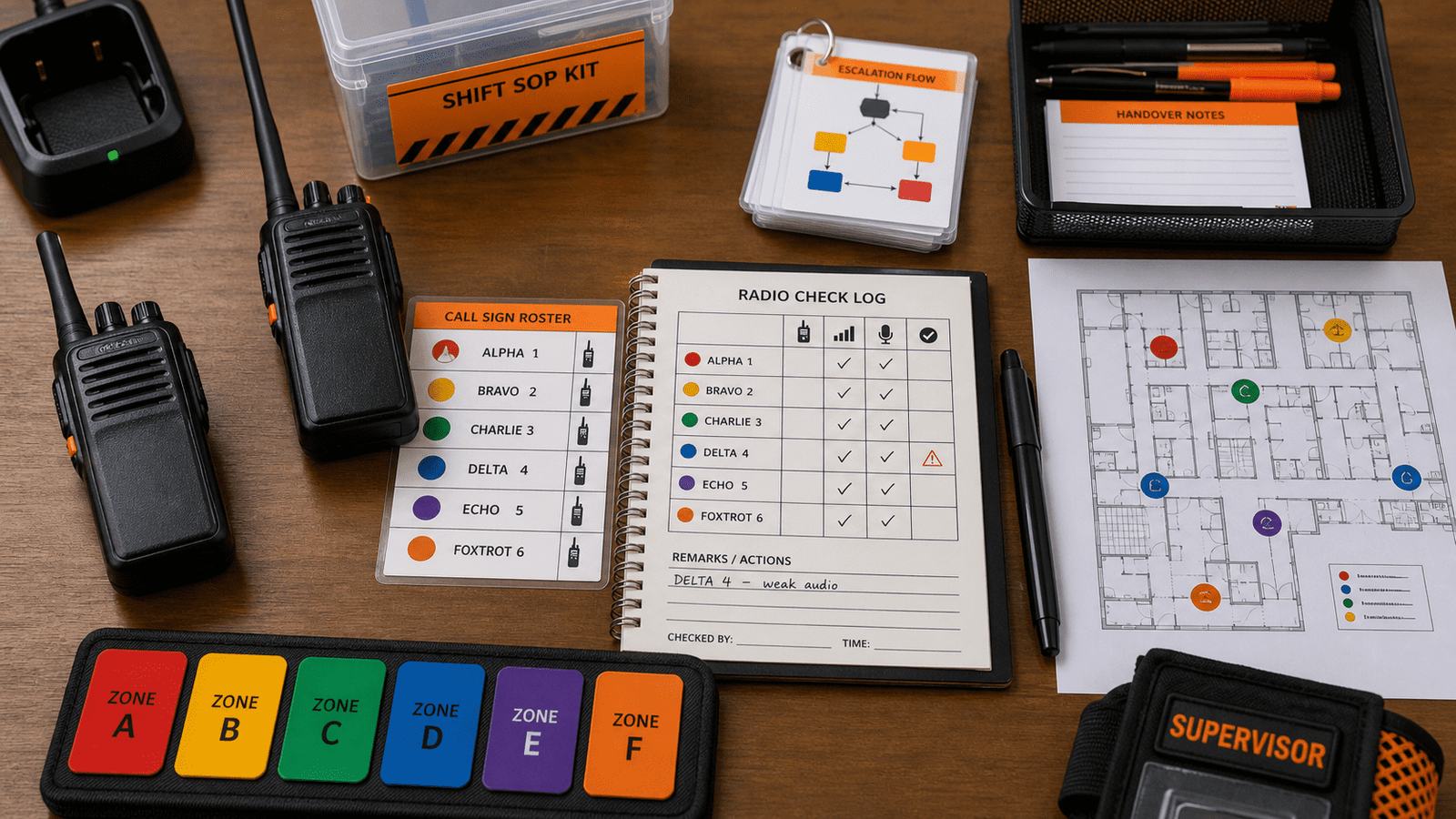
At shift start, the supervisor or control point calls each post by call sign. The user replies with a short fixed phrase, confirms the radio number, and reports whether the battery, clip, earpiece, and speaker microphone are ready. If audio is weak, the team should retest before the user leaves the handover area.
- Use one clear phrase such as: Control to Main Gate, radio check.
- Ask the user to reply with call sign, radio number, and audio status.
- Mark weak audio, damaged antenna, sticky push-to-talk button, or missing accessory immediately.
- Swap the radio before deployment if the issue affects a critical post.
- Keep the log visible so the next supervisor can see what changed.
What belongs in shift handover?
Shift handover should record the radio unit, assigned call sign, operating condition, and unresolved issues before responsibility moves to the next team.
A short handover table is better than a long policy nobody follows. Use it every day for security teams, warehouse teams, facilities crews, hotel back-of-house teams, construction posts, parking teams, and event supervisors.
| SOP item | What to record | Why it matters |
|---|---|---|
| Radio number | Unit ID or sticker number assigned to the post | Prevents missing radios and makes repairs traceable |
| Call sign | Control, Gate, Lobby, Loading, Patrol, Supervisor, or site-specific role | Keeps radio traffic clear even when staff change |
| Battery and charger status | Full, charging, spare issued, or needs replacement | Reduces mid-shift power failure and rushed battery swaps |
| Audio check | Clear, noisy, weak, broken, or no reply | Finds faults before the user reaches a critical post |
| Accessory issue | Earpiece, speaker microphone, belt clip, antenna, or carry case problem | Stops small accessory faults from becoming operational complaints |
| Supervisor action | Swap unit, retest point, brief user, or call Octogen for advice | Turns the log into an action list, not paperwork |
Where does this SOP help most?
This SOP helps most on sites where different posts depend on fast, shared communication during real operations.
In a Klang Valley mall, the control room may need to reach the loading bay, lobby, parking post, and patrol team within seconds. In a Shah Alam warehouse, dispatch and receiving teams need clear radio calls around forklifts, lorries, and rack aisles. In a Johor Bahru factory or Penang hotel, handover mistakes can cause a radio to disappear into the wrong department for a full shift.
Octogen can also help teams connect this SOP with related planning such as walkie talkie channel planning, spare battery planning, and radio maintenance checks.
Common Customer Questions
Do Malaysian security teams really need walkie talkie call signs?
Yes, if more than a few users share one channel. Call signs reduce confusion because the control room can call a post, role, or zone without depending on personal names.
How often should a radio check be done?
Run a quick radio check at every shift start, after a battery swap, after a radio is dropped, and before opening a site zone where communication is safety critical.
What should be written in a radio handover log?
Record radio number, assigned call sign, battery status, earpiece or accessory issue, failed audio check, missing unit, and any site zone that needs supervisor follow-up.
Can Octogen help create a radio SOP for my site?
Octogen can advise a practical radio setup based on user count, site layout, channels, accessories, shift timing, and the kind of incidents your team needs to report.
Is this different from walkie talkie etiquette?
Etiquette is about how users speak. A site SOP is broader: it covers call signs, radio checks, handover records, escalation wording, accessory return, and supervisor accountability.
Real Deployment Notes
A one-page SOP used daily is better than a long document that sits in a file. Put the checklist where radios are issued.
During briefing, call the post name and radio number together so new users learn the pattern quickly.
If the same unit fails audio checks twice, isolate it for repair or replacement instead of sending it back into rotation.
Ask Octogen About Your Site Coverage
Send Octogen your site type, user count, shift timing, channel needs, and current radio issues. The team can advise walkie talkie setup, call-sign structure, radio checks, accessories, maintenance, rental units, and coverage support for Malaysian operations.