

A practical guide for assigning radio channels by department, zone, shift, and escalation path without creating avoidable interference.
Good channel planning separates routine talk from urgent action.
A site does not need one channel for every user. It needs clear groups, a clean escalation path, and enough separation so security, maintenance, loading bay, and management do not talk over each other.
Channel load
Use channels where communication load is real, not just because the radio has many memory slots.
Busy-hour pressure
Most overlap happens at opening, closing, deliveries, handover, alarms, and guest or customer peaks.
Zone risk
Separate channels when teams repeatedly block each other or operate in different physical zones.
Quick answer
Many Malaysia sites can start with two to four walkie talkie channels, then add more only when teams, zones, or emergency workflows genuinely need separation.
A small shop, office, or simple security post may only need one shared channel plus a supervisor procedure. A condominium, warehouse, hotel, factory, shopping mall, car park, or event site often works better with separate channels for main security, operations or maintenance, loading or traffic, and emergency escalation.
The goal is not to fill every programmed channel. The goal is to make sure the right people hear the right calls without blocking urgent communication.
A simple channel model
Build the channel plan around work groups, not radio features.
- Use one main channel for daily site coordination.
- Add one operations channel when maintenance, cleaners, facilities, or engineering teams generate frequent non-security traffic.
- Add one traffic, loading bay, or event channel when vehicle movement or crowd control creates repeated busy periods.
- Reserve one supervisor or emergency channel for escalation, alarms, incidents, or command decisions.
- Keep channel names and user instructions short enough for shift briefings.
When more channels are needed
Add channels when overlap causes missed calls, delayed response, or avoidable confusion.
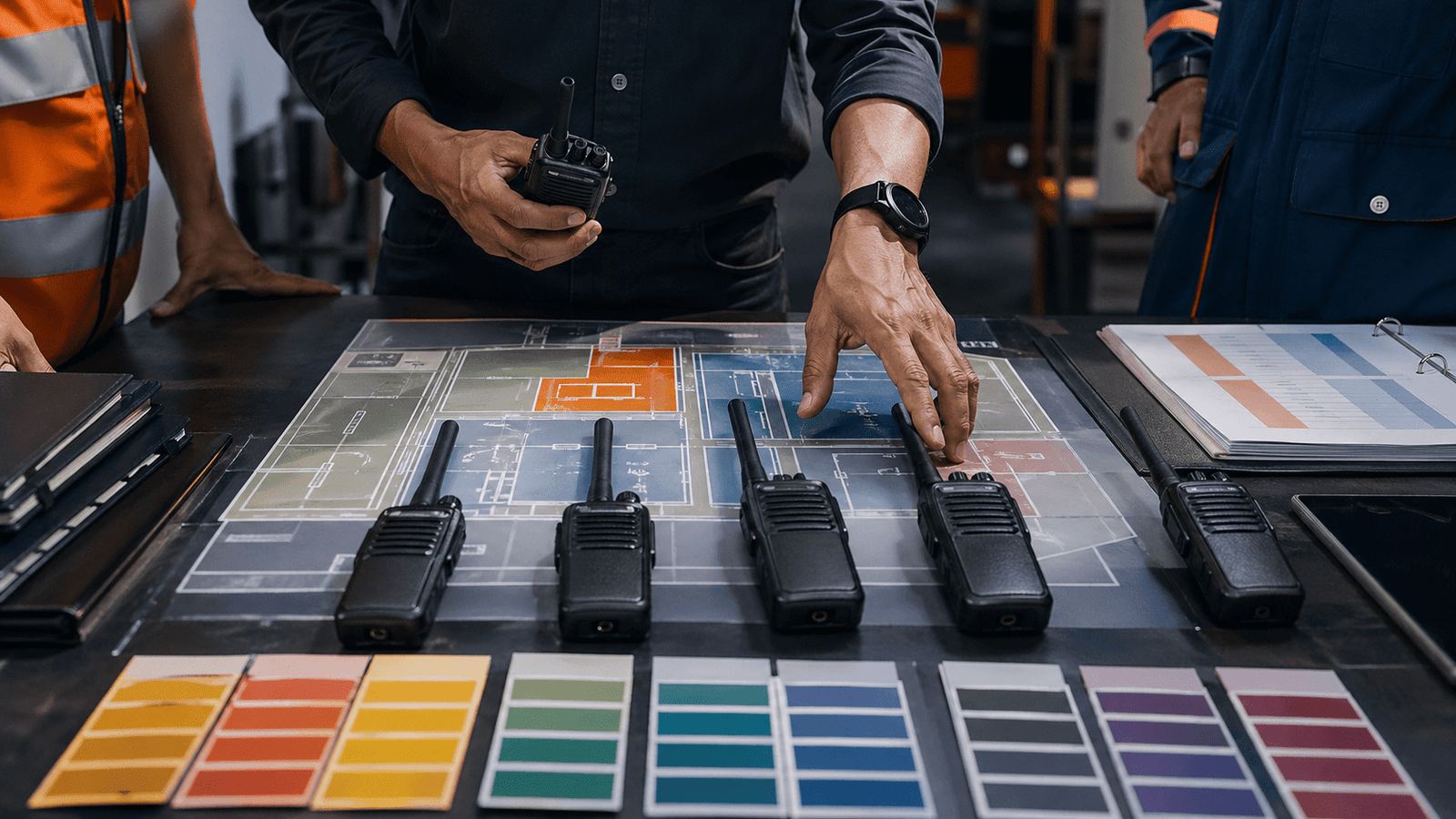
More channels may help when the site has several buildings, multiple entrances, a busy loading bay, security and maintenance teams talking at the same time, high visitor traffic, event operations, or supervisors who need a clear escalation path. More channels may not help when the real problem is poor radio discipline, weak coverage, wrong accessory use, or users not knowing which channel to monitor.
If teams keep switching channels randomly, the plan is too complex. If everyone stays on one channel and urgent calls are buried, the plan is too simple.
Channel planning table
Use this starting point before Octogen finalizes programming, labels, and user briefing.
| Site type | Typical channel count | Recommended split | Planning note |
|---|---|---|---|
| Small retail or office | 1 to 2 | Main, supervisor procedure | Keep it simple so every user hears key calls. |
| Condominium or guarded building | 2 to 4 | Security, facilities, car park, supervisor | Separate patrol and maintenance if both are active all day. |
| Warehouse or factory | 3 to 5 | Security, operations, loading, maintenance, emergency | Forklift, loading bay, and safety traffic often need separation. |
| Hotel, mall, or event venue | 4 to 8 | Security, front area, back-of-house, traffic, event, command | Busy periods and mixed teams usually need clearer channel discipline. |
Common Customer Questions
How many walkie talkie channels does a small site need?
Many small sites can start with one main channel and a clear supervisor procedure. Add a second channel only if routine traffic blocks urgent calls.
Should security and maintenance use the same channel?
They can share a channel on a quiet site, but separate channels are better when maintenance traffic is frequent or distracts security users from patrol and incident calls.
Do more channels always reduce interference?
No. More channels help only when users follow the plan. Poor coverage, weak discipline, wrong programming, or unclear handover can still create missed calls.
Can Octogen program channel names and user groups?
Yes. Octogen can help plan channel groups, program compatible radios, label user groups, and brief teams on which channel to monitor.
When should a site reserve an emergency channel?
Reserve one when supervisors, guards, lone workers, loading bay teams, or event crews need a clear path for incidents, alarms, or command decisions.
Real Deployment Notes
Too many channels can make users miss calls because nobody knows which one to monitor.
A channel plan should include who monitors each channel and how to escalate from routine to urgent traffic.
Opening, closing, deliveries, and event movement reveal channel pressure better than a quiet office test.
Ask Octogen About Your Site Coverage
Send Octogen your site type, number of users, zones, shift pattern, and where radio traffic gets congested. The team can advise channel grouping, programming, labels, accessories, and a practical communication plan.