

Waterproof Walkie Talkie Malaysia: What IP Rating Do Rainy Sites Need?
A practical guide for Malaysian construction, outdoor event, security, and facility teams that need radios to keep working through rain, dust, mud, and shift pressure.
Do not buy a waterproof walkie talkie just because the word sounds safer.
Match the radio protection level to the site condition: light rain, dusty construction work, outdoor event shifts, wet guard posts, glove use, drops, cleaning habits, and how users check the battery latch before every shift.
Choose protection by the way the radio is used, not by the label alone.
Use this cockpit to connect rain, dust, seals, and user discipline before choosing a weather-resistant or waterproof radio model.
Light exposure
Guard posts, indoor teams, and sheltered areas may need weather resistance, better discipline, and proper accessories more than the highest waterproof rating.
Site exposure
Construction yards, open gates, outdoor events, and dusty loading bays need stronger attention to speaker mesh, battery latch, side ports, and cleaning routine.
Heavy exposure
Long rain shifts, wet handling, and high dust loads can justify higher IP-rated models, spare units, and stricter inspection before the radio returns to service.
What waterproof really means for walkie talkies
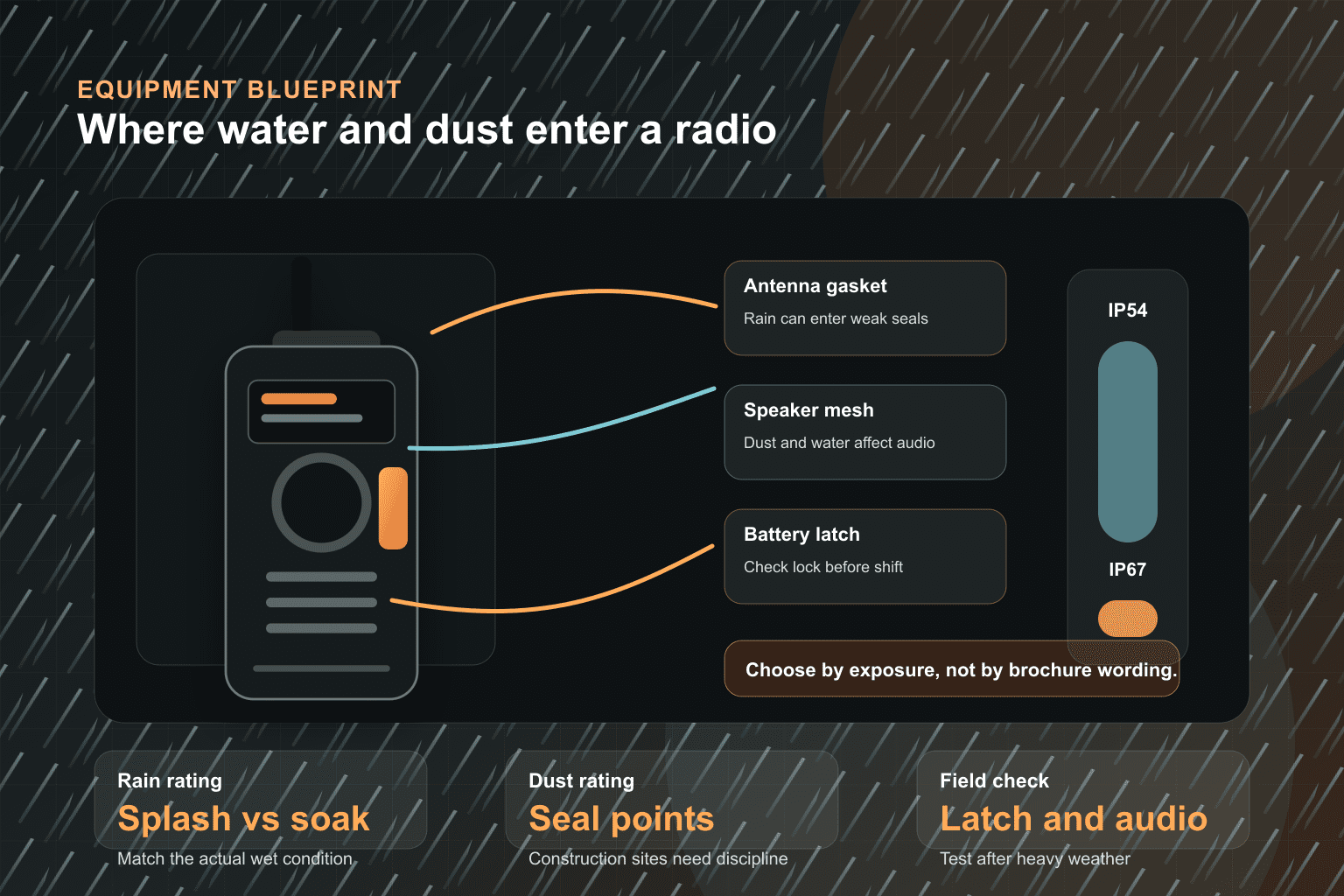
A radio that survives light rain at a guard post may still be the wrong choice for a construction team that works near dust, mud, cement, and open-air shifts. A radio with a stronger rating can also fail early if the battery latch is not closed, side covers are torn, accessories are forced into the port, or users keep transmitting after water has entered the speaker grille.
For Malaysian sites, the practical question is simple: what does the radio actually face during a normal week? If users stand in sheltered areas and only walk through drizzle, the buying decision is different from a team working at an outdoor gate, road work site, event barricade, loading bay, or dusty renovation area. For a 20 radio site, even 2 weak outdoor posts can justify a separate weather-ready pool instead of changing every handset.
Use waterproof wording as the start of the discussion, not the end. Ask what protection is needed, how the radio will be cleaned, whether a speaker microphone is used in rain, and how supervisors remove damaged units before they return to service.
Suitable for lighter splash or rain exposure when users still protect the radio and keep covers closed.
Usually points to a stronger tested protection level, but the exact IP rating and handling rules still matter.
Means the radio, battery, accessories, charging routine, and fault process all fit the real worksite.
How to read IP54, IP55, and IP67 before buying
For example, an IP54 radio is not the same as an IP67 radio. The right answer depends on the site. A sheltered security post may not need the same protection as a construction supervisor standing in rain and dust all day.
Do not compare only the headline rating. Confirm the actual radio model, accessory compatibility, battery latch design, speaker microphone option, warranty/support path, and whether the rating applies with the covers and accessories you plan to use.
If your team rents radios for outdoor events, ask the supplier what happens after heavy rain: how units are checked, which units are isolated, and whether spare radios are available if audio becomes muffled or buttons become unreliable. For an 8 hour outdoor event, plan at least 1 spare radio for each critical marshal group.
| Condition | What to check | Practical decision |
|---|---|---|
| Light rain or covered post | Closed ports, battery latch, user handling | Weather-resistant radio may be enough if discipline is good |
| Outdoor event or open gate | Rain duration, speaker mic use, spare units | Choose stronger protection and plan a wet-shift check |
| Dusty construction or renovation | Speaker grille, PTT button, battery contacts | Prioritize dust protection, cleaning routine, and fault tagging |
| Heavy rain or repeated wet handling | IP rating, latch design, accessory seal, support | Consider higher IP-rated models and stricter inspection |
Rain and dust risks on Malaysian construction and outdoor sites
A construction radio may be clipped to a vest, dropped into dust, handled with wet gloves, wiped with the wrong cloth, placed near wet concrete, or used with a loose accessory connector. Each small habit adds risk. The waterproof rating helps, but operating discipline still decides how long the fleet stays reliable.
Outdoor events have a different pattern. The team may need fast rental deployment, quick shift handover, and spare units when rain hits. In that environment, the supplier’s check-in/check-out process can be as important as the radio model.
Security and facility teams often sit between both worlds. Some posts are sheltered, while perimeter patrols, loading bays, basement ramps, and roof areas face rain or dust. Mixing one radio model for every post may waste money or under-protect critical users.
- Map wet posts and dusty posts separately before buying.
- Check whether users transmit with wet gloves or use speaker microphones in rain.
- Inspect battery latches and side-port covers before each shift.
- Remove muffled-audio radios from service instead of sending them back into rotation.
- Keep a small spare pool for rain-heavy events or construction peak periods.
Buying checklist for waterproof walkie talkies in Malaysia
Before asking for a quote, describe the site honestly. Include indoor and outdoor zones, number of users, wet areas, dusty work, PPE, whether users carry radios by belt clip or hand, and whether supervisors need speaker microphones or earpieces.
Then ask the supplier to explain the rating, not just show it. You want to know what protection the model offers, what conditions void the protection, what accessories are compatible, and how damaged units are handled after heavy weather.
Finally, test with real users. A radio that looks rugged in a catalogue still needs clear audio, workable buttons, comfortable carry, battery endurance, suitable charging, and a practical replacement path.
- Ask for the exact IP rating of the radio model and whether it applies with the planned accessories.
- Confirm battery latch, side-port cover, speaker microphone, earpiece, and charger compatibility.
- Run a wet-route and dust-route check before a large purchase or event deployment.
- Plan spare units for critical posts during heavy rain or dusty project phases.
- Keep comments closed on the process: users should report faults through a supervisor checklist, not informal chat.
Real Deployment Notes
Do not issue every user the same protection level without checking the site. A front-desk team, indoor warehouse user, outdoor guard, construction supervisor, and event marshal may face very different exposure.
Keep a short inspection habit: battery latch closed, side cover intact, antenna tight, audio clear, and no water trapped around the speaker grille. This takes less than a minute but prevents many avoidable failures.
When a radio has been exposed to heavy rain or dust, tag it if audio is muffled, buttons stick, or the battery contacts look dirty. The worst workflow is putting a weak radio back into the next shift because it still powers on.
- Label wet-site radios separately if only part of the fleet needs stronger protection.
- Train users to report muffled audio, sticky buttons, cracked covers, and loose antenna fit.
- Ask Octogen for a site-based recommendation when the exposure pattern is mixed or unclear.
Common Customer Questions
Is an IP67 walkie talkie always better than an IP54 walkie talkie?
Not always. IP67 may be useful for heavier water exposure, but it may cost more than a sheltered site needs. The right choice depends on rain exposure, dust, handling, accessories, support, and whether the team actually follows inspection discipline.
Can normal walkie talkies survive rain?
Some radios can handle light rain or splash if covers are closed and users handle them properly. Heavy rain, repeated wet handling, dusty construction work, damaged covers, or loose battery latches can still create failures.
What damages radios fastest on construction sites?
Dust in speaker and microphone areas, damaged side covers, loose battery latches, wet handling, drops, and forcing accessories into ports are common causes. The rating matters, but daily handling and fault isolation matter too.
Should outdoor event teams rent waterproof radios?
If the event may face rain, wet ground, outdoor barricades, or long exposed shifts, ask for weather-suitable radios and spare units. For short sheltered events, the supplier may recommend a different balance of radio type, accessories, and support.
Can Octogen advise which IP-rated radio fits my site?
Yes. Share the site type, wet areas, dusty zones, user count, shift length, accessories, and whether the radios are for purchase or rental. Octogen can help match the protection level to the real operating condition.
Ask Octogen About Your Site Coverage
Send Octogen your site type, number of users, wet or dusty zones, shift length, and whether the radios are for construction, outdoor events, security, facilities, or rental. The team can recommend whether weather-resistant radios, higher IP-rated models, accessories, spare units, or a site coverage check should come first.