
Uncertified Walkie Talkies in Malaysia: Own, Use or Sell Risks
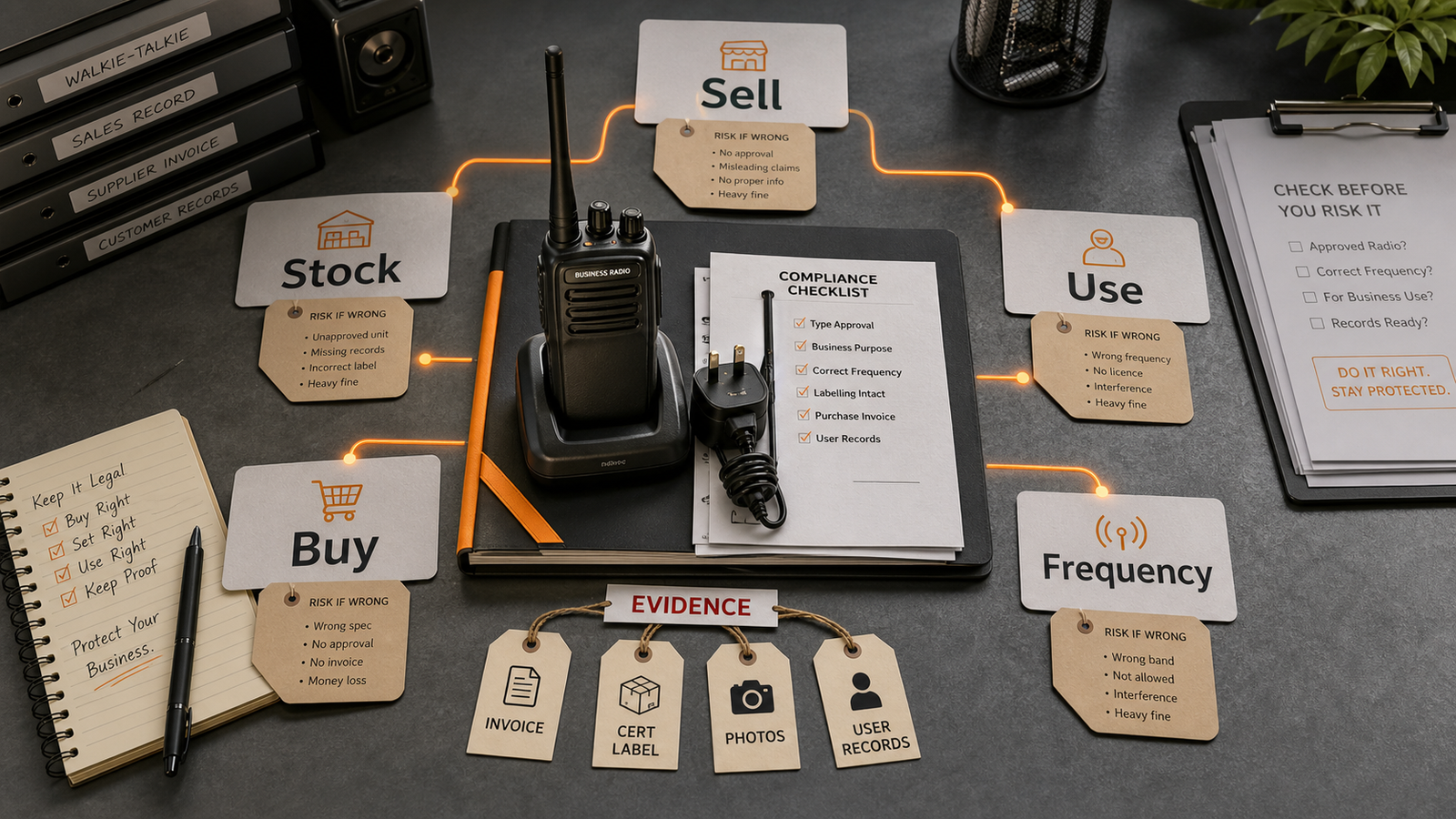
Malaysian reports do not point only at sellers. Uncertified radios can create risk when they are kept, used, stocked for sale, sold, rented out or programmed for the wrong frequency.
The risk is not only selling. Owning, keeping or using uncertified radios can also cross the line.
Malaysian reports show court fines from RM2,500 to RM14,000 in the cases reviewed. MCMC seizure actions and spectrum rules can carry higher maximum exposure. Keep the lines separate: actual fines are case outcomes; maximum penalties are legal exposure; owning a certified, properly used radio is not the problem.
Risk paths
Do not check only the sale. Own, stock, use, rent and frequency each need a record.
Read the cases carefully
Actual fines are court outcomes. Maximum penalties are legal exposure. Seizures are enforcement actions unless a court outcome is reported.
What to prove
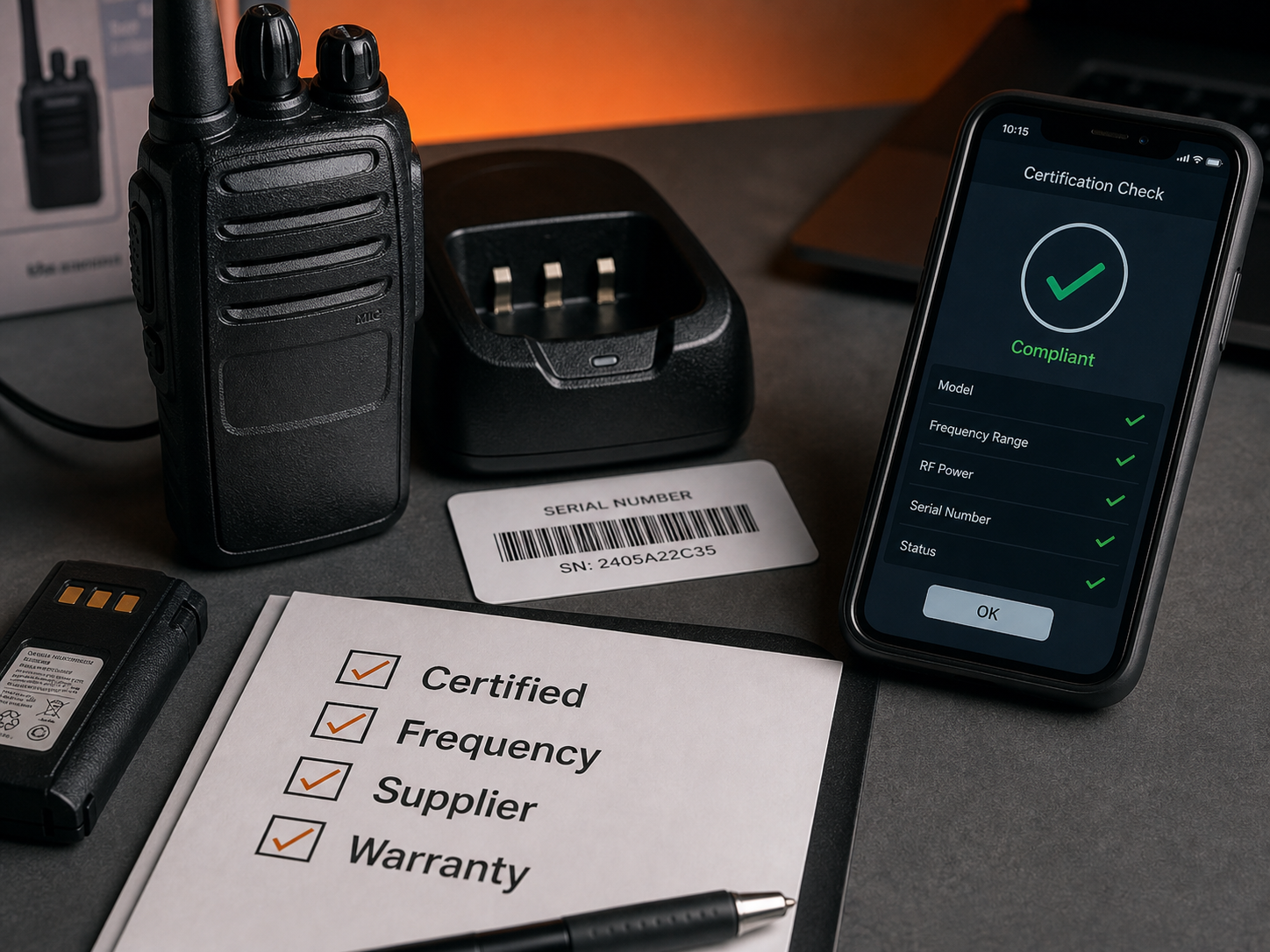
The safe question is not just whether you sold it. It is whether the exact radio can be explained if checked.
Quick answer
The public reports do not all use the same word. Some involve selling. Some involve possession for sale. MCMC seizure reports also warn the public against selling, possessing and using uncertified communications equipment.
That does not mean every walkie-talkie owner is guilty. A certified radio, used within the right frequency and assignment conditions, is normal business equipment. The problem is an uncertified set, unclear programming, missing records, or stock kept for sale or rental without proof.
For a buyer or site owner, the question is simple: can you prove the exact model, certification, frequency plan, warranty path and supplier record? If not, the risk is already on your desk, not only at the cash register.
Owning, using and selling are different risk paths
Owning a certified radio and using it within the allowed conditions is normal business use. The risk starts when the radio has no Malaysian certification proof, the frequency use is wrong, or the set is kept as stock for sale without proof.
The case wording matters. Some reports say “jual” (sell). Others say “memiliki” or “miliki untuk menjual” (possess, or possess for sale). The 2024 Pudu seizure reports also repeat MCMC’s wider warning: do not get involved in selling, possessing or using uncertified communications equipment.
So the buyer question changes. Do not ask only “am I selling this?” Ask: “Do I own or keep an uncertified set, am I using it on-site, is it programmed correctly, and can I show proof if someone checks?”
For wording, the article follows the source reports: Astro Awani/Bernama reported selling and possession counts in the RM14,000 Low Yat case, Suara Keadilan reported possession for sale in Kota Kinabalu, and Bernama/Sinar/Kosmo reported MCMC reminders against selling, possessing and using uncertified communications equipment. Original source links are kept here: Astro Awani/Bernama, Suara Keadilan, Bernama.
- Own: keep proof that the exact radio model is certified for Malaysia.
- Use: check frequency, power and assignment/class-assignment conditions before deployment.
- Stock: do not keep uncertified units for resale or rental.
- Sell or rent: keep supplier invoice, serial list, warranty and certification trail.
Fine cases: selling and possession both appear in the reports
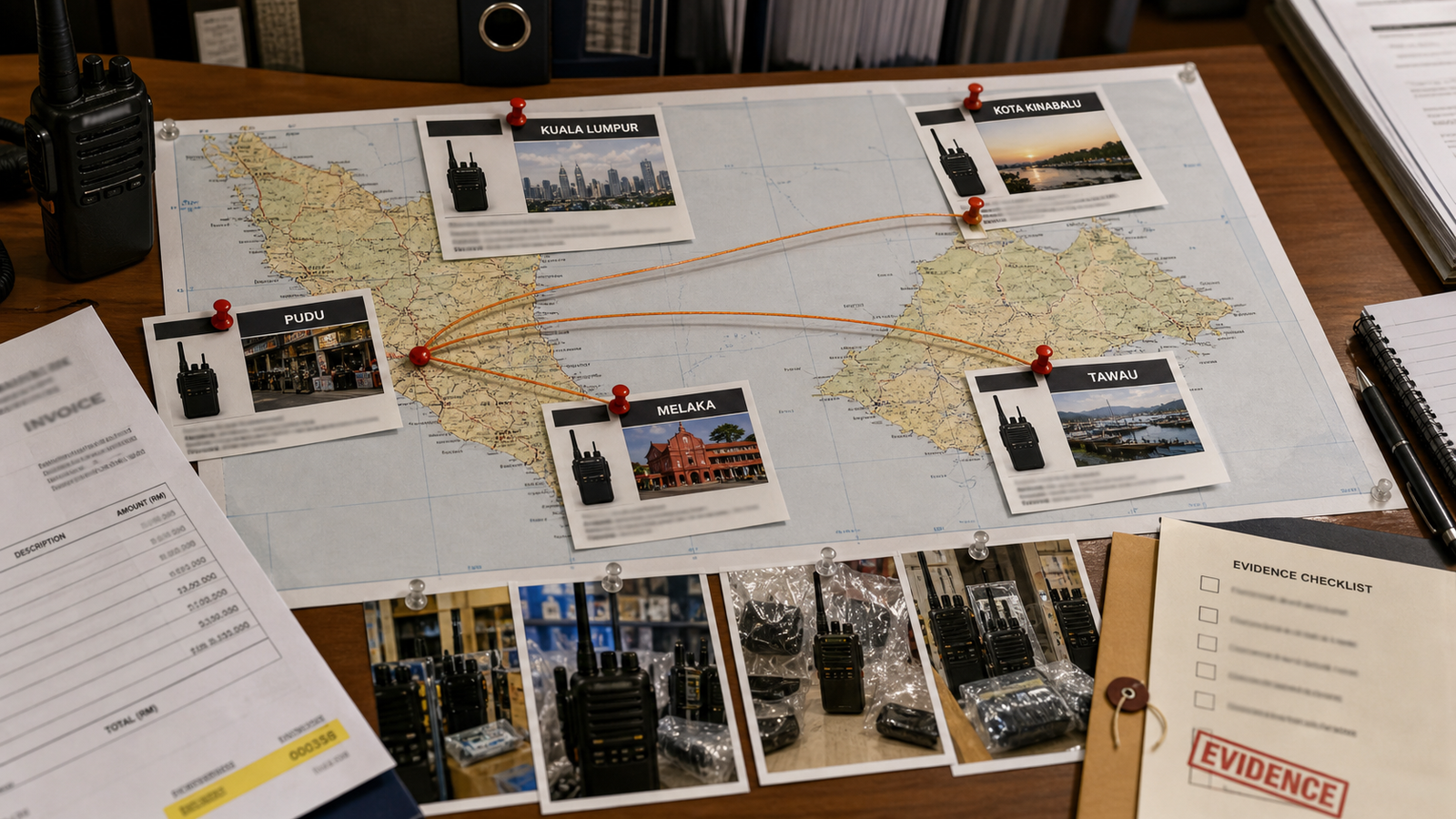
Start with the 31 May 2022 Kuala Lumpur report. Lee Wan Ying was fined RM14,000 after pleading guilty to two counts: selling two uncertified Baofeng BF-888S walkie-talkies and possessing 16 radios of the same model at Plaza Low Yat.
A second Kuala Lumpur report, dated 24 February 2022, involved a telecommunications equipment company and director Ooi Hee Choon. Each was fined RM4,000 over uncertified Baofeng UV-5RA and BF-888S radios at Bukit Jalil.
In Melaka, trader Seng Hok Siong was fined RM10,000 after pleading guilty over the sale of 9 radios, all uncertified Baofeng walkie-talkies at Plaza Melaka Sentral.
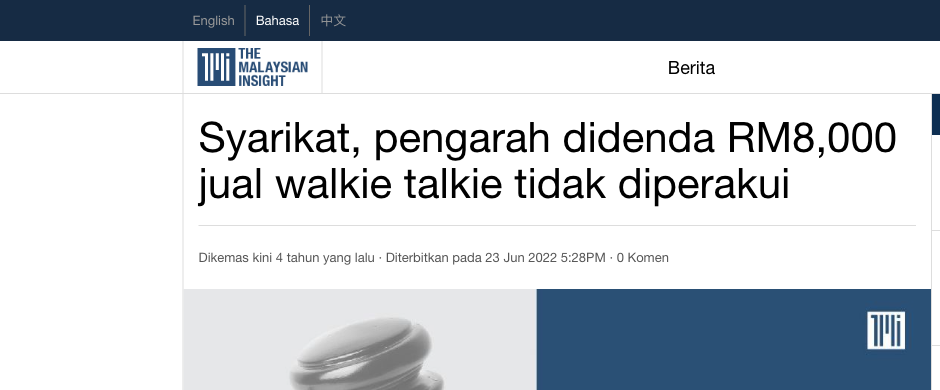
In Tawau, Best Secure & Automation Sdn Bhd and director Liau King Choi were each fined RM8,000 for selling two uncertified Kenwood 520D radios. The report says the units failed SIRIM frequency, EMC and safety checks.
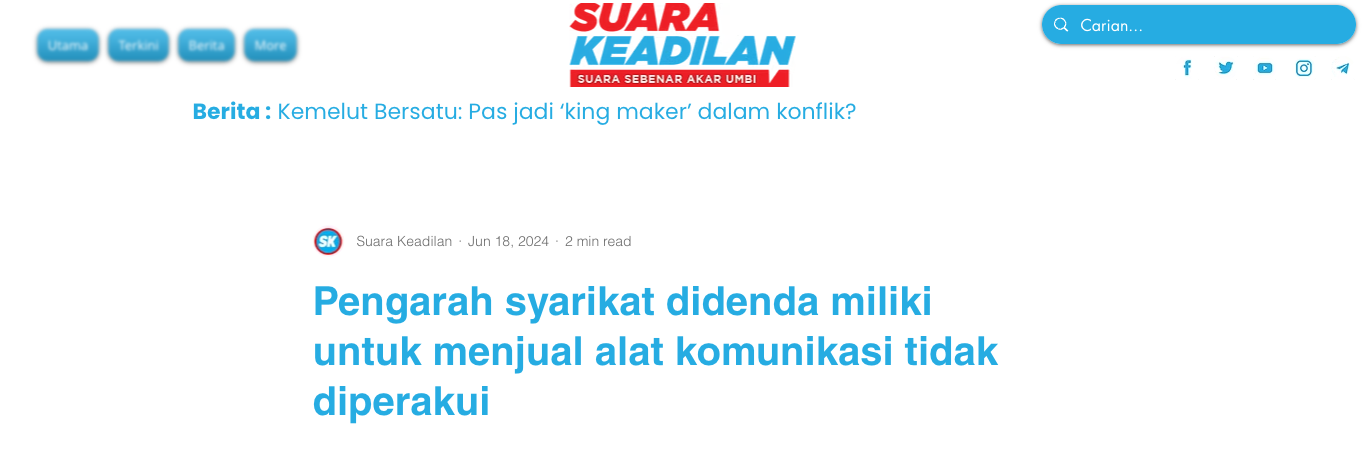
In Kota Kinabalu, a 2024 report said two company directors were fined RM5,500 and RM2,500 for possessing uncertified communications equipment for sale, including Baofeng BF-888S walkie-talkies and wireless adapters.
| Case | Reported issue | Actual reported outcome | What it means |
|---|---|---|---|
| Low Yat, Kuala Lumpur | Selling and possessing uncertified Baofeng BF-888S | RM14,000 total fine | Possession was a separate count, not just background detail. |
| Bukit Jalil, Kuala Lumpur | Selling uncertified Baofeng UV-5RA and BF-888S | Company and director each fined RM4,000 | Company and director exposure can run together. |
| Melaka | Selling nine uncertified Baofeng radios | RM10,000 fine | Cheap stock without certification can become a court problem. |
| Tawau, Sabah | Selling uncertified Kenwood 520D units | Company and director each fined RM8,000 | Failed SIRIM tests show this is a technical safety issue. |
| Kota Kinabalu, Sabah | Possessing uncertified equipment for sale | RM5,500 and RM2,500 fines | Possession for sale can matter before the final customer purchase. |
Source screenshots from the case reports



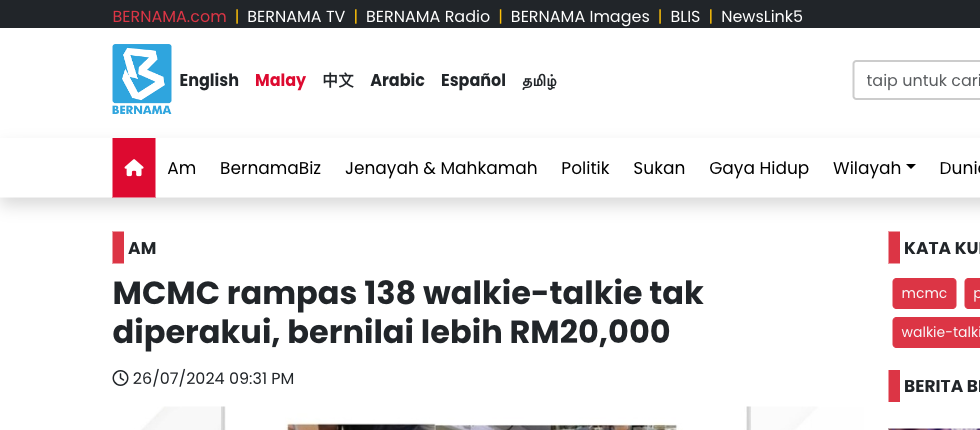
Seizure context: MCMC warning covers possession and use too
Bernama reported on 26 July 2024 that MCMC seized 138 radios, all uncertified walkie-talkies worth more than RM20,000, from three premises in Jalan Pasar, Pudu. The same report says sale and use of uncertified communications equipment can carry a maximum RM300,000 fine or three years imprisonment if convicted.
The public warning goes wider than selling. Sinar Harian and Kosmo reported the same MCMC reminder: the public should avoid activities involving selling, possessing and using communications equipment without certification.
RTM reported on 26 February 2026 that MCMC had seized 314 radios suspected to be uncertified walkie-talkies between 2021 and 2025. The public-safety reason is direct: non-standard radios can interfere with safety, emergency, aviation and maritime communications. Chargers and batteries can add another safety risk.
Spectrum rules add a second line of risk. MCMC apparatus-assignment guidance says spectrum use normally needs a spectrum assignment, apparatus assignment or class assignment unless exempted. Contravention can carry maximum RM500,000 fine exposure or five years imprisonment. That does not mean the case defendants paid RM500,000.
Why owners and site teams get caught
The first mistake is treating a marketplace listing as proof. A low price, model number or overseas certification does not prove the exact unit is approved for Malaysia.
The second mistake is keeping stock before checking the batch. The case reports show that sale, possession and possession for sale can each matter depending on the charge.
The third mistake is using the radio before checking the frequency. Some walkie-talkie use can fall under class assignment, but the device still needs the right certification and must stay inside the allowed conditions.
The fourth mistake is record drift. Radios move between sites, contractors and events. When nobody keeps the invoice, serial list or certification proof, the site has little to show during a check.
- Owning or keeping an uncertified set without proof of what it is approved for.
- Using radios programmed for frequencies that do not match the site approval or class assignment.
- Keeping uncertified stock for resale or rental.
- Assuming Baofeng, Kenwood or any familiar brand name automatically means the exact unit is legal in Malaysia.
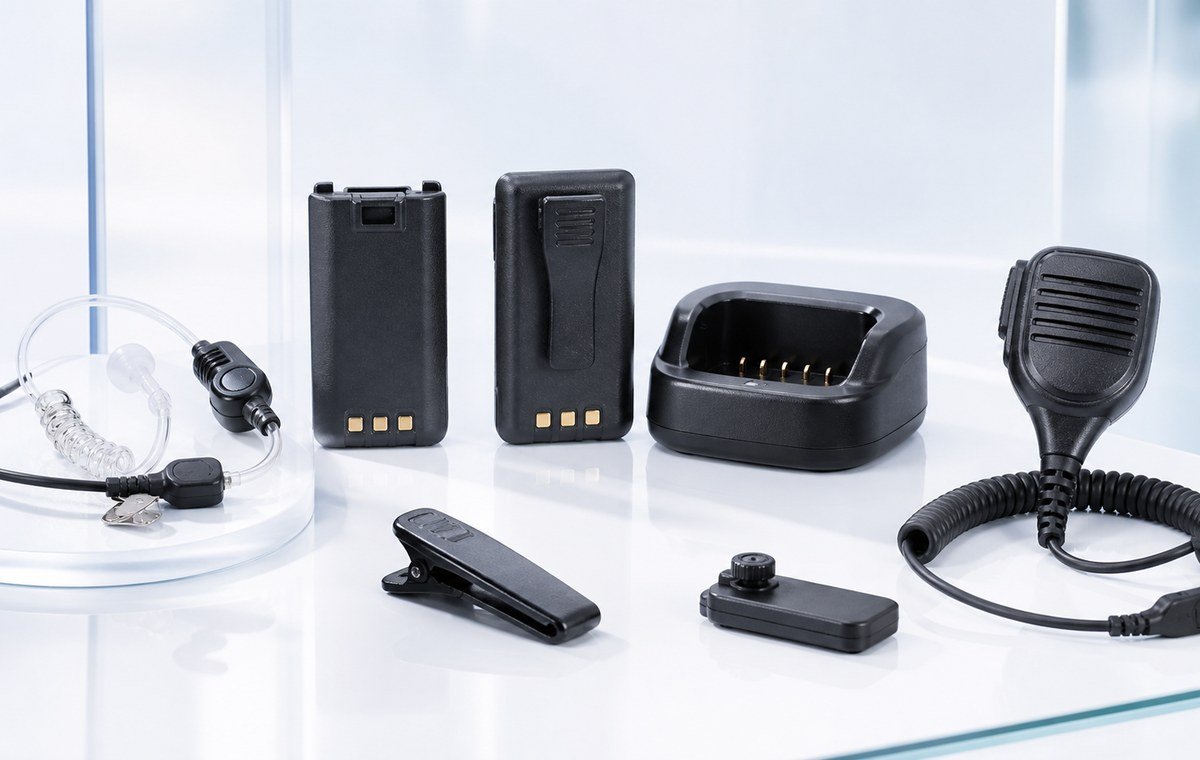
- Ignoring charger and battery safety when importing low-cost radios.
Prevention checklist before you own, use, rent or sell
Before you buy, keep, rent or sell a radio, ask for the exact model, certification proof, warranty path, programmed frequency plan and site use case. A supplier who cannot answer those points is selling uncertainty, even if the unit price looks attractive.
For events, security, factories, construction sites and malls, rental can be safer than buying when the project is temporary. You get a cleaner equipment trail, replacement support and fewer orphaned radios after the job ends.
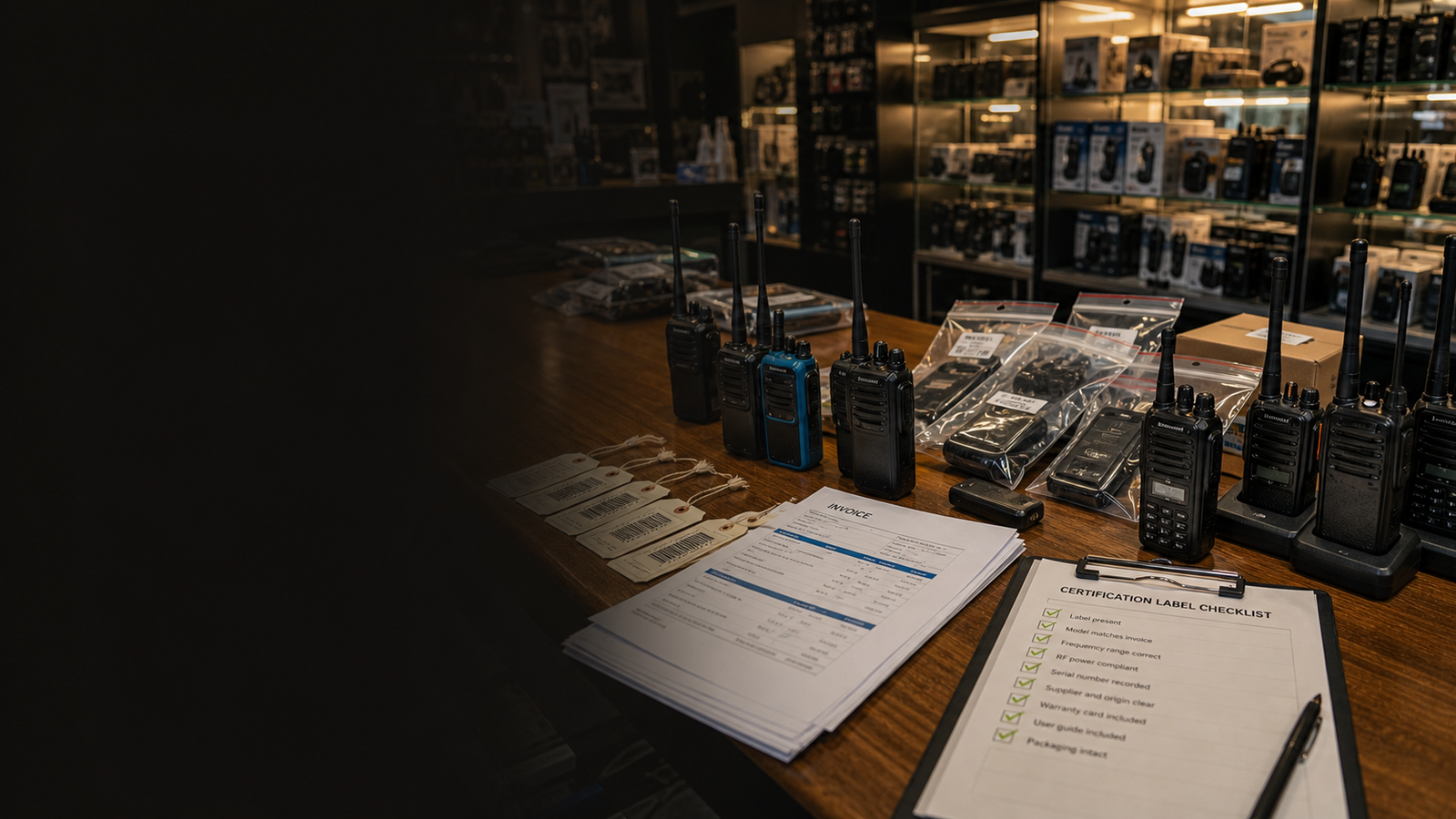
For permanent fleets, keep a register with model, serial number, user or site, supplier invoice, certification proof, programming date and review date. The owner should be able to show where each unit came from and how it is used.
- Own: keep certification proof for the exact model and batch.
- Use: confirm whether your frequency and power fit the allowed condition or assignment.
- Rent: ask whether the supplier can show equipment and programming records.
- Sell: do not stock units that have not been checked for Malaysian requirements.
- Record: keep invoice, serial numbers and supplier contact in one folder.
Real Deployment Notes
The article should not say every walkie-talkie owner is guilty. Say uncertified ownership, possession for sale, non-compliant use, sale or rental can create risk depending on the facts.
The Low Yat and Kota Kinabalu reports both include possession wording, so the article should not frame the issue as seller-only.
The practical step is proof: certification label, serial number, invoice, supplier record, frequency plan and site-use notes.
Common Customer Questions
Can owning a walkie-talkie be illegal in Malaysia?
Owning a certified radio and using it within the right conditions is normal. Risk starts when the set is uncertified, kept for sale or rental without proof, used on the wrong frequency, or cannot be tied to a proper supplier and certification record.
Is the offence only about selling walkie-talkies?
No. The case reports include selling, possession, and possession for sale. MCMC seizure reports also repeat warnings about selling, possessing and using uncertified communications equipment.
Can you be fined for using a walkie-talkie in Malaysia?
Yes, if the equipment or spectrum use does not meet Malaysian requirements. Sale and possession cases are easier to see in the public reports, but non-compliant use can also create exposure.
Were the reported Malaysian walkie-talkie fines RM300,000 or RM500,000?
No. The reviewed reports show fines such as RM14,000, RM10,000, RM8,000, RM5,500, RM4,000 and RM2,500. RM300,000 and RM500,000 are maximum exposure figures, not the fines paid in those reports.
What walkie-talkie brands appeared in the Malaysian fine reports?
The reviewed reports mention Baofeng BF-888S, Baofeng UV-5RA and Kenwood 520D units. The issue is not the brand name alone; it is whether the exact equipment owned, sold, stocked, rented or used is certified and appropriate for Malaysia.
How can a Malaysian business avoid walkie-talkie compliance trouble?
Buy or rent through a supplier that can show Malaysian certification proof, keep serial and invoice records, check the programmed frequency, and avoid keeping, using, importing or stocking radios that have not been checked against Malaysian requirements.
Should I rent instead of buying if I am worried about fines?
For short-term events, temporary security or project work, rental can reduce the paperwork burden because the supplier can provide suitable radios, accessories, replacement support and a cleaner equipment trail. Permanent sites can still buy after the compliance path is checked.
Ask Octogen About Your Site Coverage
Send us the model, quantity, site type and use case. We will help you check whether owning, renting, selling or deploying that radio has a clean proof trail.