

Analog vs Digital Walkie Talkie Malaysia: When Should a Business Upgrade?
A practical decision guide for Malaysian teams that already use radios but need clearer audio, better group control, safer expansion, or a staged migration plan.
Do not replace a working radio fleet just because digital sounds newer.
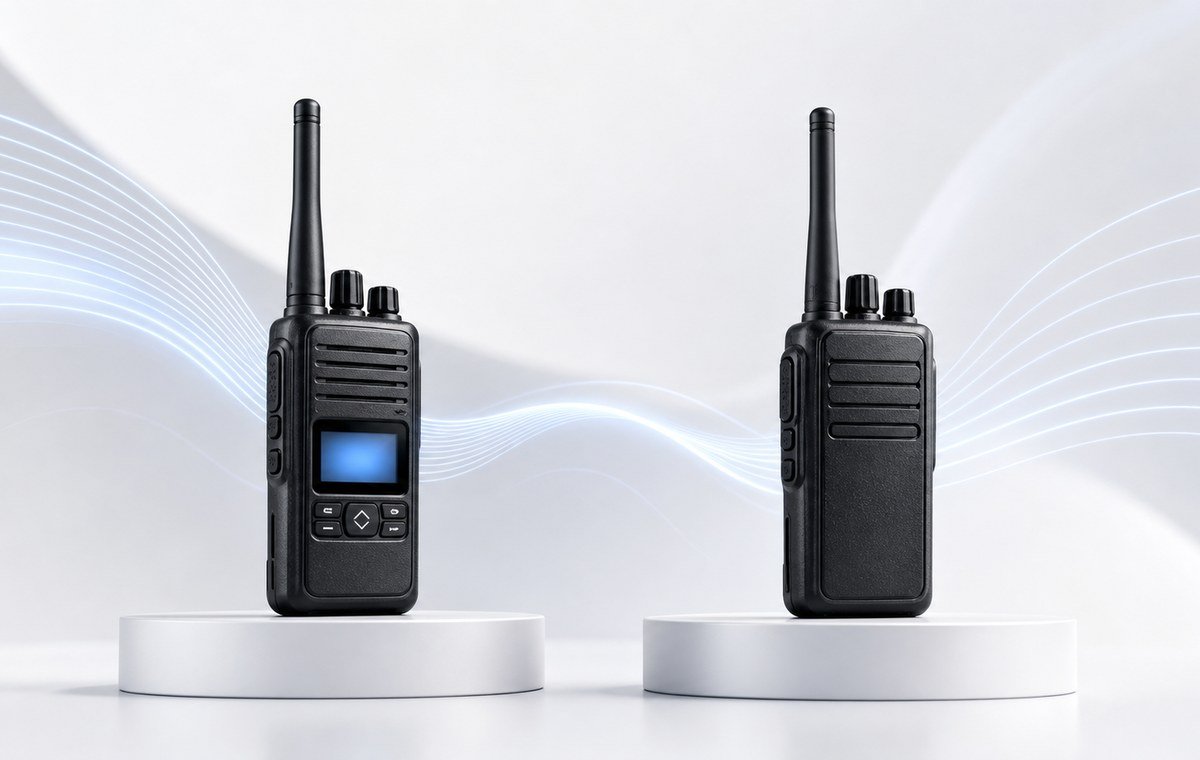
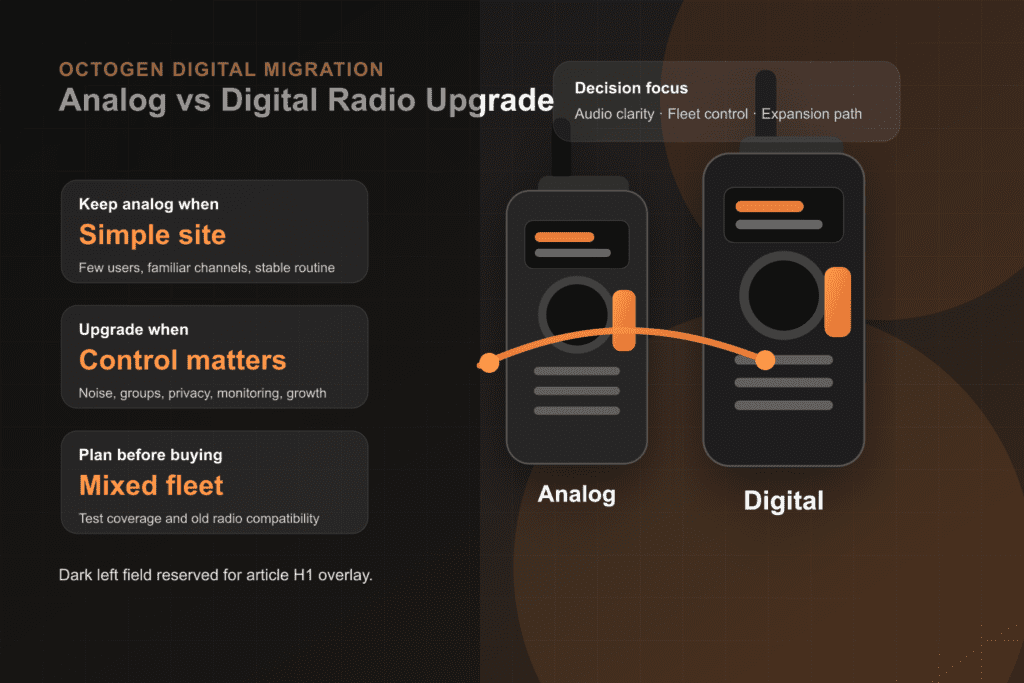
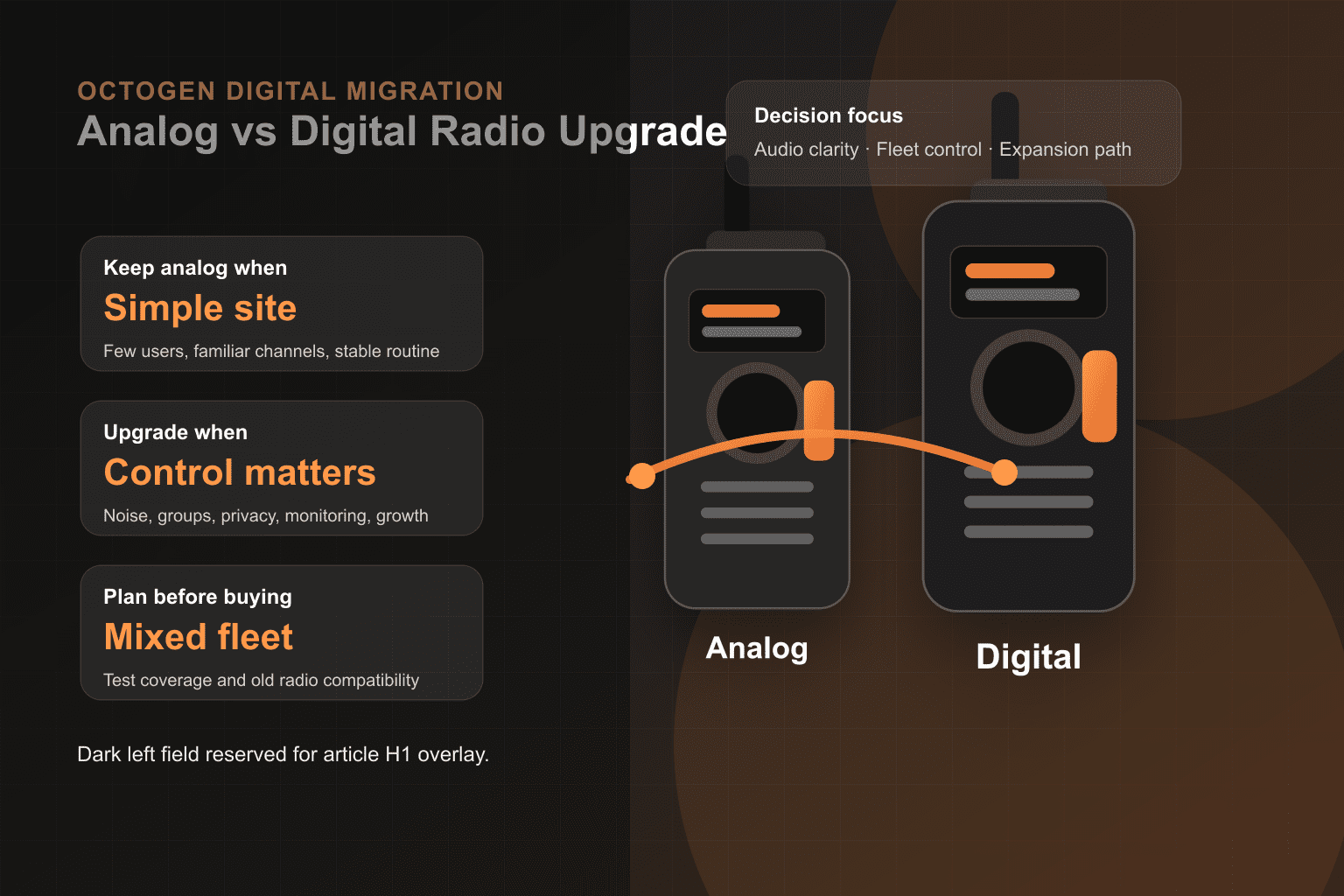
Start with the operating problem: noisy audio, too many user groups, weak privacy, expansion limits, or mixed old-and-new radio compatibility. A site with simple routines may still be served well by analog radios; a site with many zones and supervisors may need digital control.
Map the radio fleet before buying the next one.
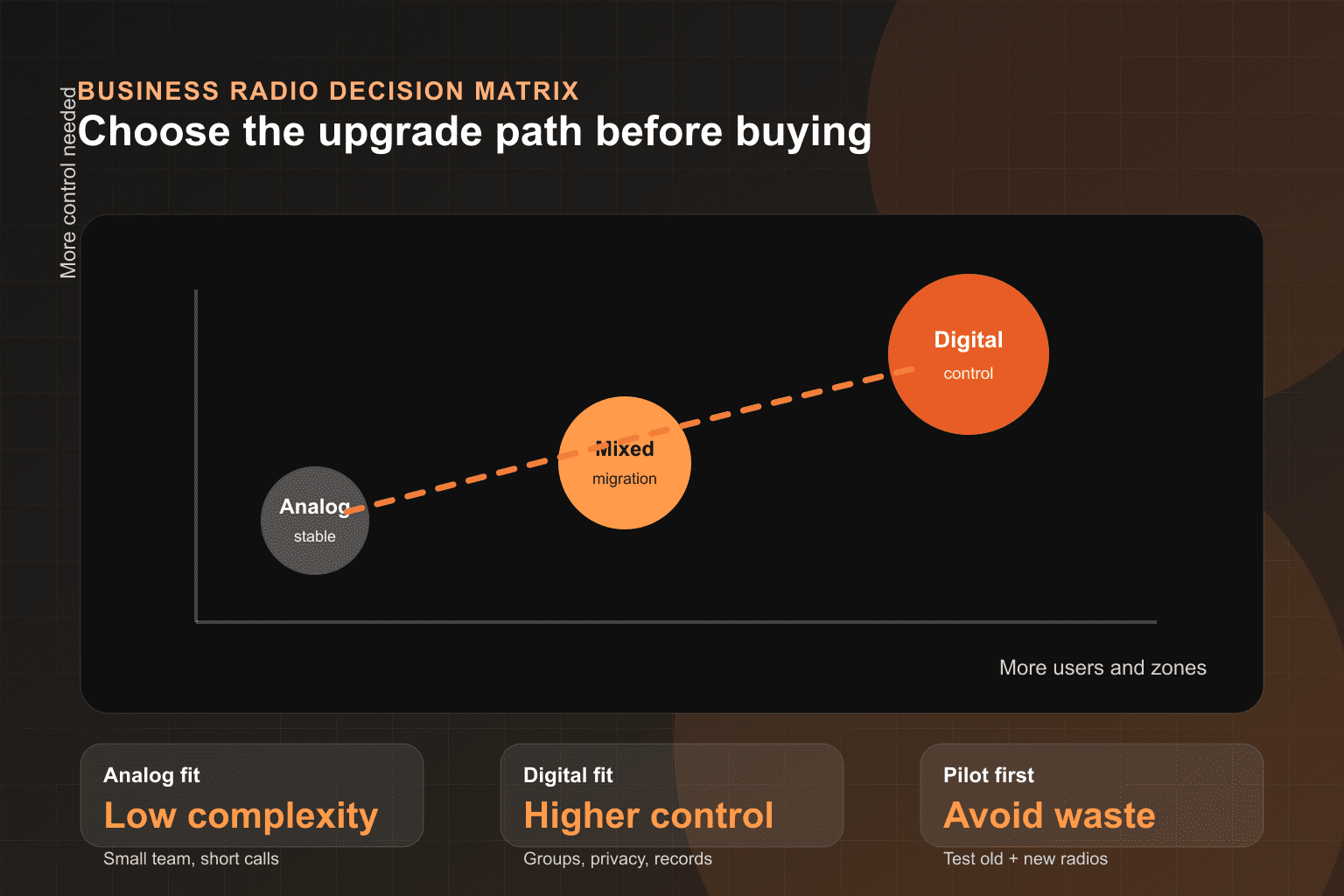
Use the matrix to decide whether the right move is to keep analog, add a controlled pilot, or upgrade to digital radios across the site.
Low complexity
Few users, short calls, one or two channels, and no serious noise or privacy issue. Keep analog and improve batteries, accessories, and SOP first.
Migration zone
Some supervisors need better clarity or group control, but older radios still serve simple posts. Pilot dual-mode radios before replacing the full pool.
Control needed
Many teams, noisy floors, role-based groups, security escalation, or growth across multiple zones. Digital radios can provide a cleaner upgrade path.
When analog walkie talkies are still enough
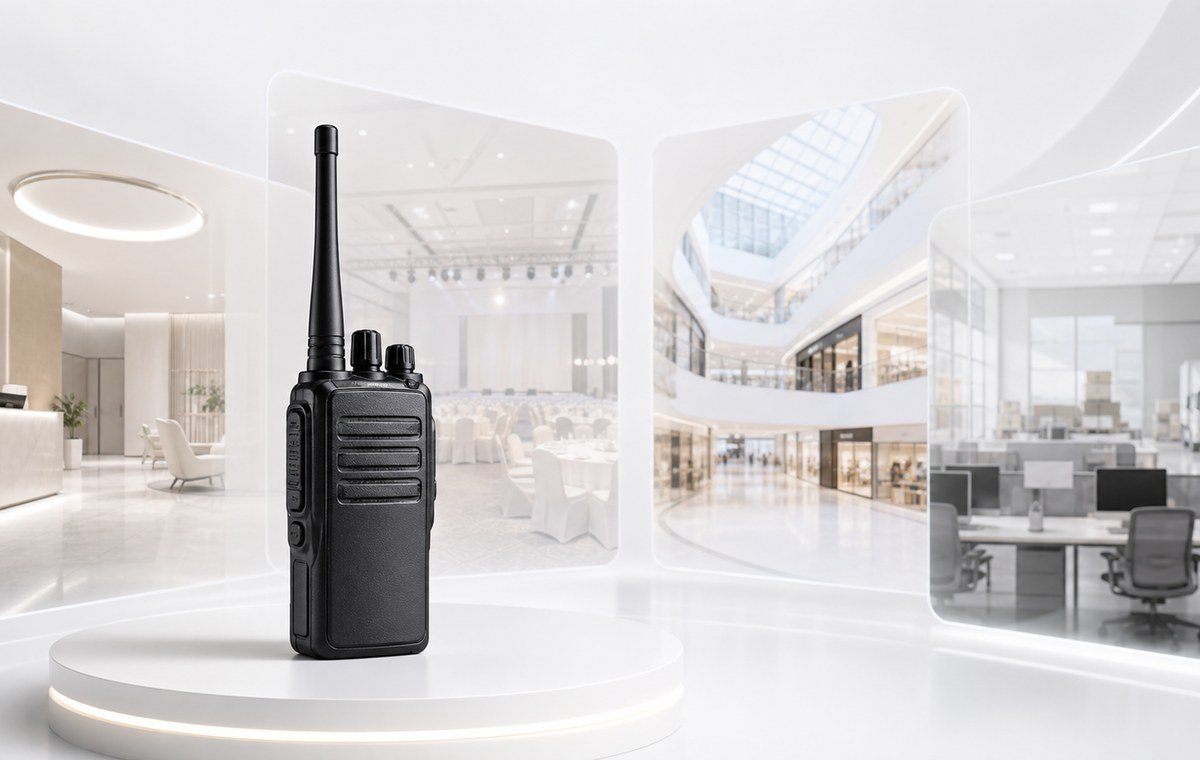
A security desk with a few guards, a compact warehouse, a small event crew, or a single-floor facility may not need a full digital migration. If users can hear each other clearly, channel discipline is strong, and spare batteries or earpieces are the real pain point, replacing the whole fleet may be the wrong first move.
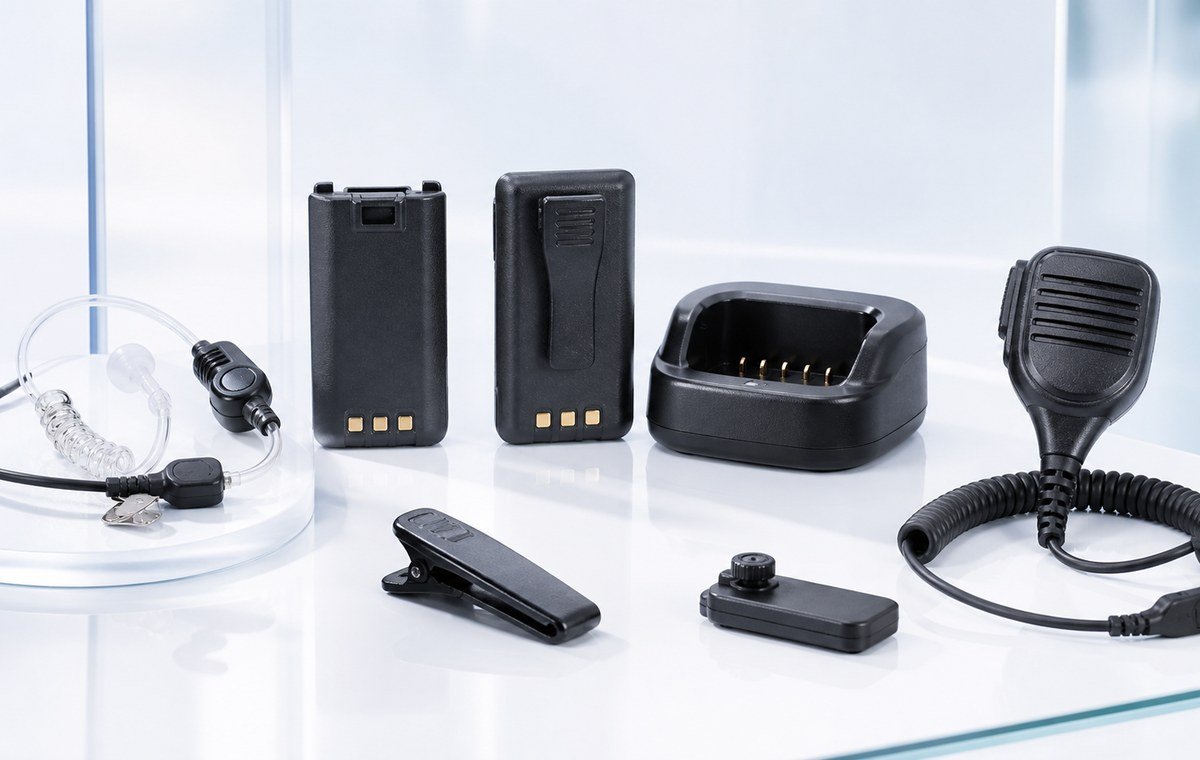
Before upgrading, check the basics: radio condition, battery age, antenna damage, earpiece quality, charger placement, and whether users follow a clean call sign and handover routine. Many communication problems look like technology problems but are actually maintenance, accessory, or SOP issues.
Analog becomes weak when the team grows beyond simple channel sharing. If users keep interrupting each other, supervisors cannot separate groups, or noisy areas cause repeated messages, digital radios become easier to justify.
- Keep analog when the site has few user groups and clear radio discipline.
- Improve accessories, batteries, and maintenance before buying a new fleet.
- Plan an upgrade when repeated audio, privacy, or group-control issues affect daily work.
What digital walkie talkies improve for business teams
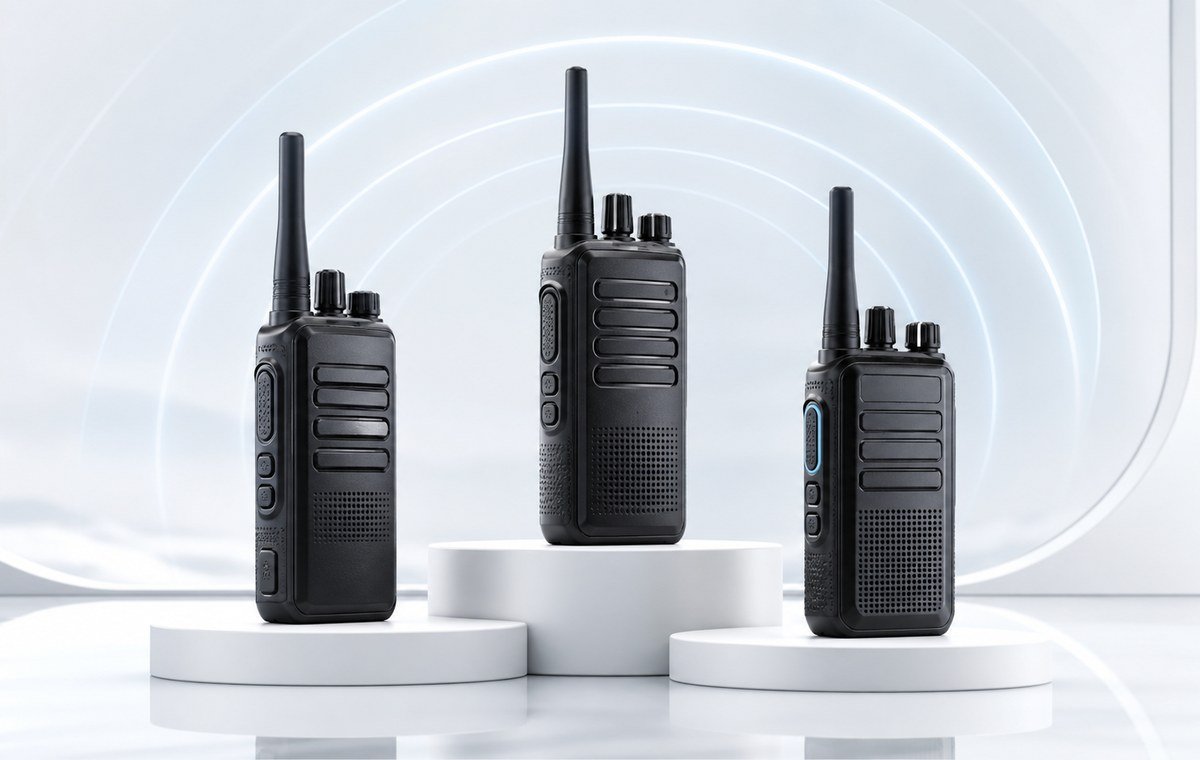
For many Malaysian business sites, the strongest digital-radio benefits are practical: clearer voice in difficult conditions, better group separation, a cleaner future upgrade path, and options such as private call, group call, emergency features, or fleet control depending on the radio model and system design.
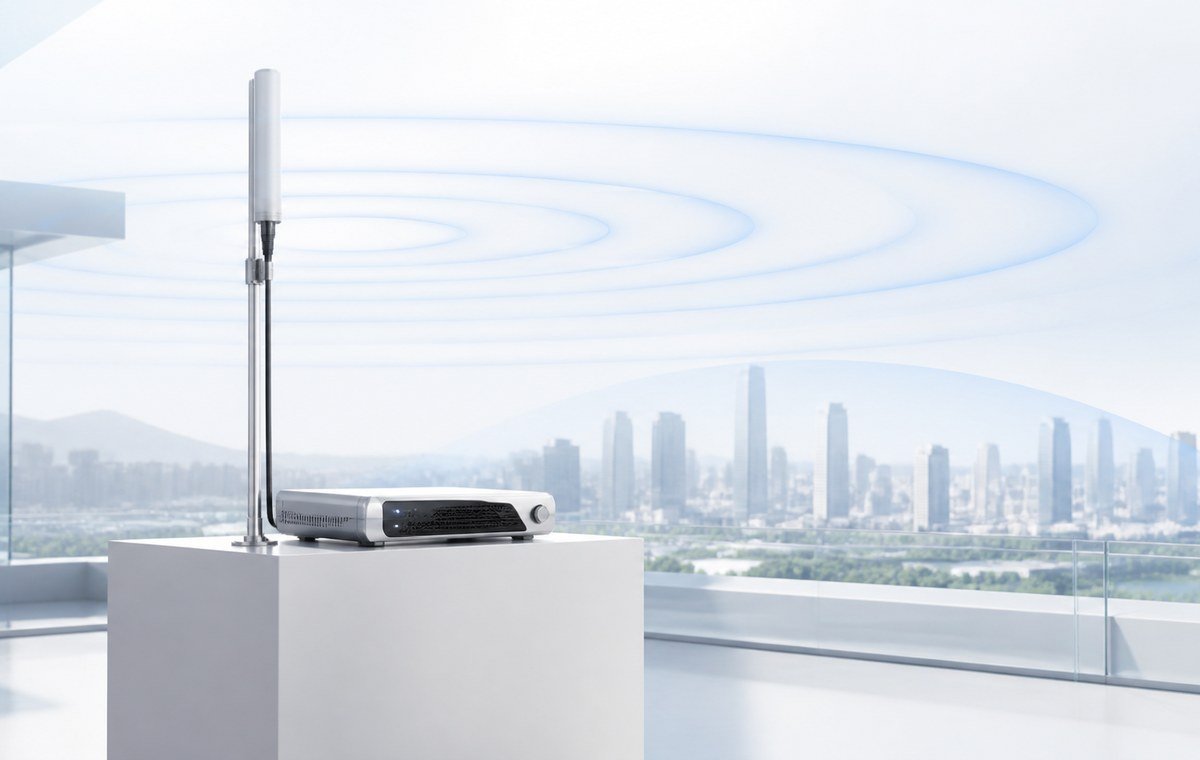
Digital does not automatically solve range. A weak coverage footprint, basement dead zone, poor antenna position, or wrong site layout still needs proper coverage planning. The upgrade decision should separate radio technology from site coverage, channel planning, and user workflow.
If the business is moving from a small team to a larger operation, digital can also reduce future rework. A staged plan can protect existing analog users while giving supervisors or critical posts the newer radio features first. A practical pilot might start with 8 radios, 3 user groups, and one supervisor review after 7 days of real use.
| Pressure point | Analog-first response | Digital upgrade signal |
|---|---|---|
| Audio is unclear | Check battery, speaker, microphone, earpiece, and user position | Noise remains a daily issue even after maintenance and accessory fixes |
| Too many users share one channel | Tighten call signs, channel rules, and handover SOP | Different departments need cleaner group separation |
| Security or supervisor control is weak | Add a clear escalation channel and radio discipline | Role-based calls, emergency routing, or privacy options are needed |
| The fleet is expanding | Buy only matching analog sets if growth is small | A staged migration avoids buying another short-lived analog pool |
Use a decision matrix before replacing the fleet
Put each user group into a simple matrix: how many people use radios, how noisy the area is, how critical the calls are, whether privacy matters, and whether old accessories or chargers must still be used. This makes the purchase decision visible before money is spent.
A mixed pilot can assign digital radios to supervisors, control room users, or noisy zones while keeping analog radios at simpler posts. The pilot should test coverage, audio clarity, user training, charger placement, and whether the old fleet can still communicate where needed.
Avoid using one demo call in a quiet office as proof. Test the radios at the loading bay, basement, stairwell, guard post, production floor, event route, or actual patrol path.
- Pick two or three user groups for the pilot, not the whole company.
- Test during real operating hours, not only during office setup.
- Record missed calls, repeated messages, dead zones, and user complaints before deciding.
How to test analog and digital radios before buying
Start with the current fleet list: radio model, age, channel plan, accessories, chargers, weak batteries, and any known coverage complaints. Then define what the digital test must prove. If the problem is noisy audio, test audio. If the problem is group control, test group calls. If the problem is coverage, run a proper site coverage check.
For Malaysian teams, also keep compliance and sourcing visible. Use proper supplier advice, suitable radio models, and communication equipment that fits local requirements instead of buying random high-power imports that may create interference or support problems.
After the pilot, decide whether to keep analog, replace only critical posts, move supervisors first, or plan a full migration. The decision should come from real site evidence, not from a brochure feature list. For a medium site, run at least one 30 minute route test across the guard post, loading bay, stairwell, and outdoor edge before approving a bulk purchase.
- Coverage route: test the guard post, loading bay, basement, stairwell, plant room, and outdoor edge; mark every repeated weak point.
- Audio clarity: test during normal working noise and real user distance; the target is fewer repeated messages and clearer supervisor calls.
- User groups: include supervisors, security, warehouse, contractors, and emergency users; the target is cleaner group separation without confusing the team.
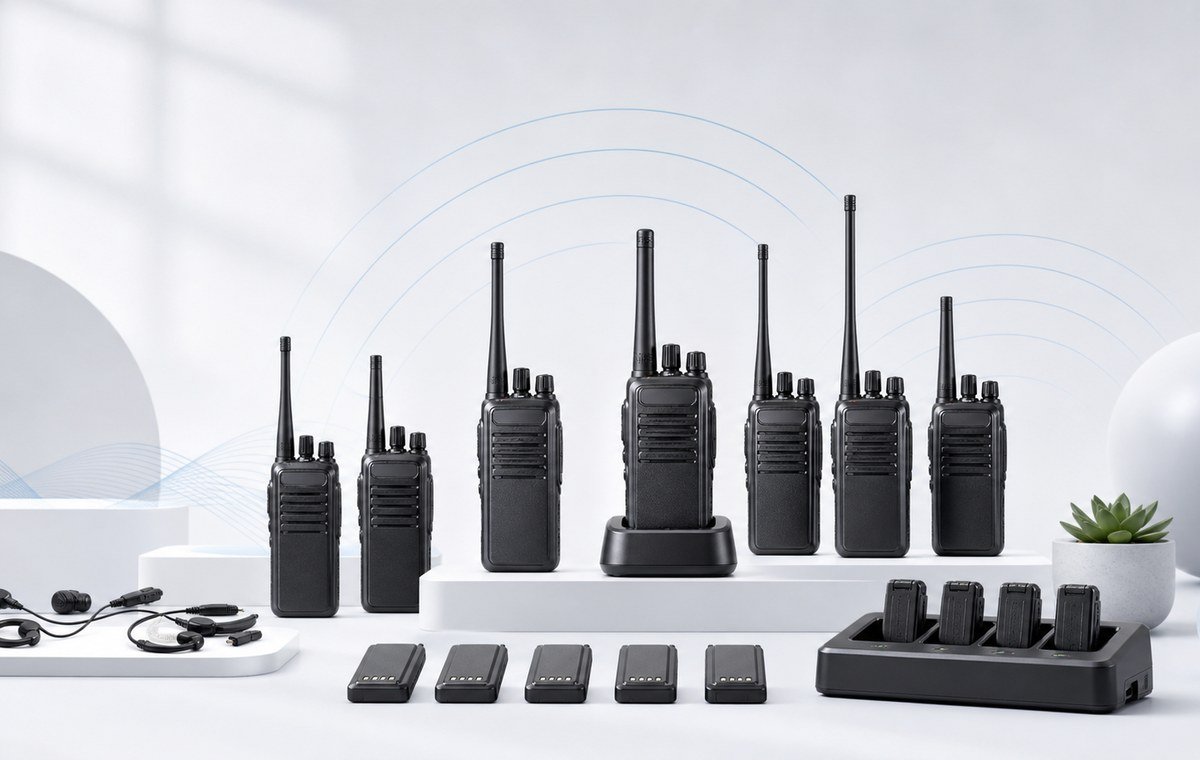
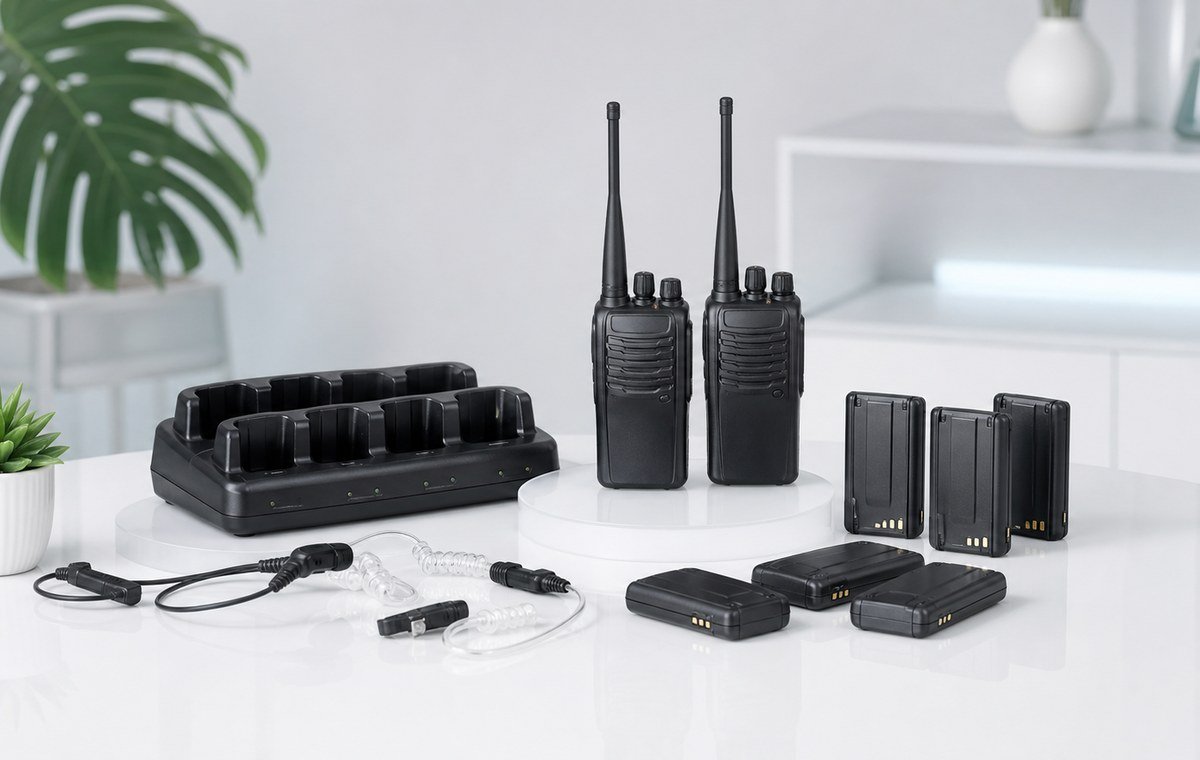
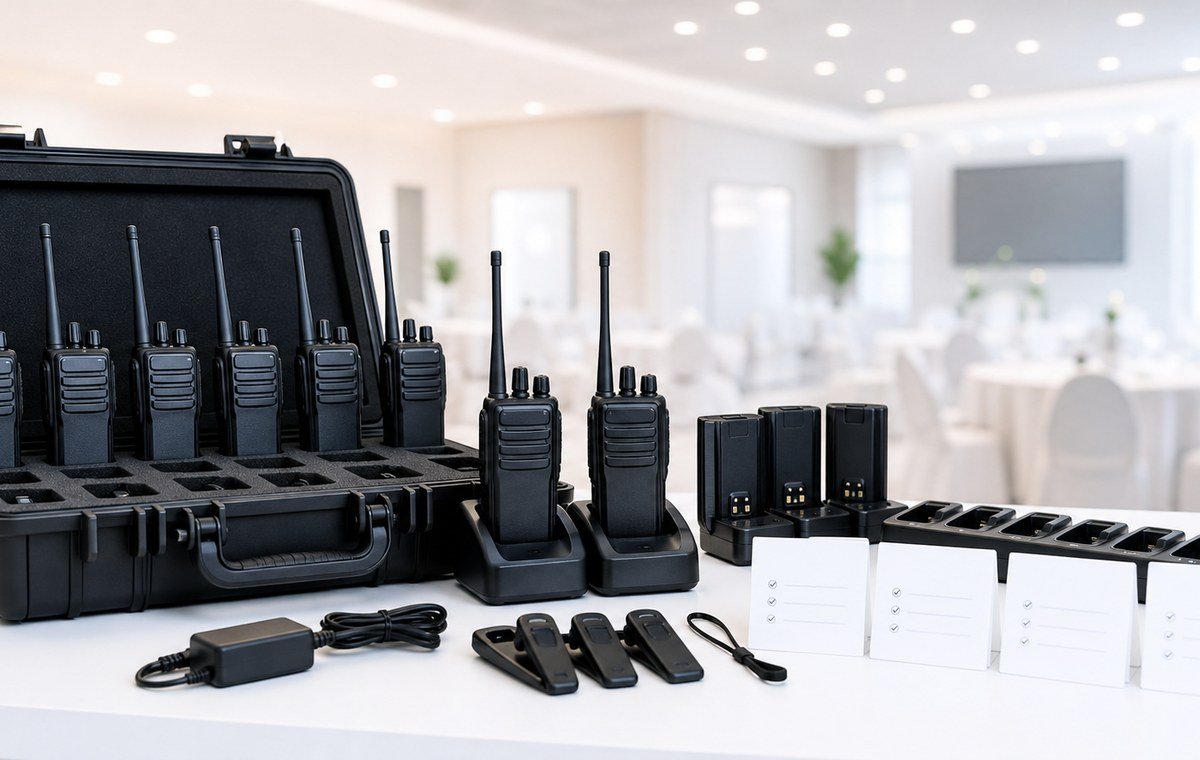
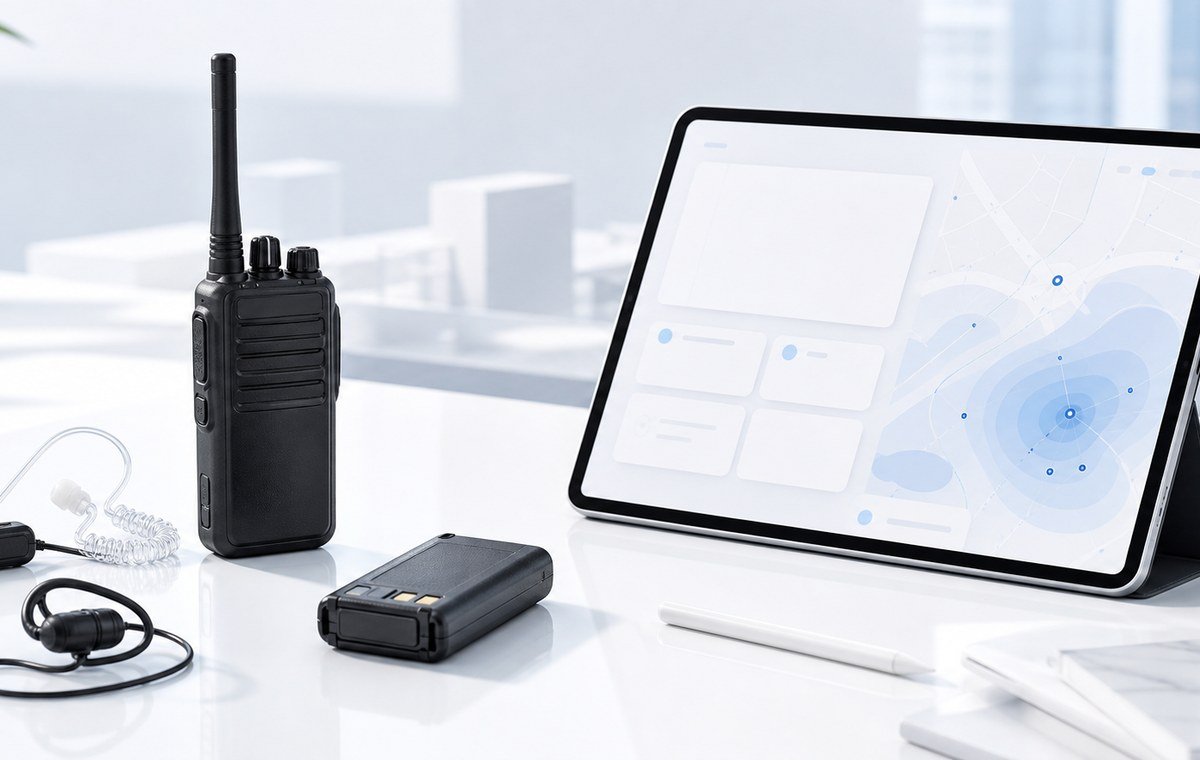
- Accessories and charging: check earpieces, speaker microphones, spare batteries, and charging station fit before the purchase creates hidden replacement cost.
Real Deployment Notes
Do not judge digital radios only by the first demonstration. A demo normally happens in clean conditions; a real Malaysian site adds concrete walls, rain, dust, machinery noise, moving users, and shift handover pressure.
If the existing analog fleet is still useful, keep it in the plan instead of forcing a sudden cutover. Label the pilot radios clearly, train supervisors first, and keep a written record of which problem the digital sets solved.
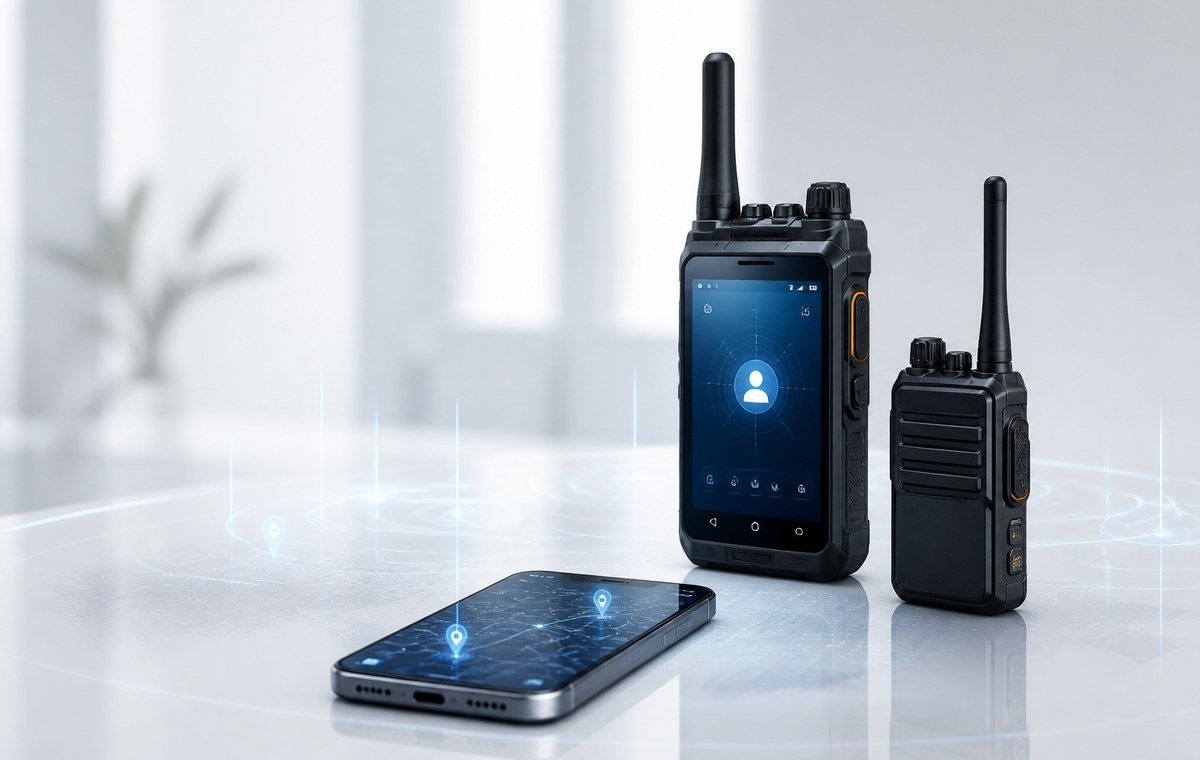
When in doubt, ask for a site-based recommendation rather than a model-only quote. The right answer may be accessories, channel discipline, maintenance, a repeater, PoC radios, or digital radios depending on the actual operating problem.
- Keep old and new radios separated until compatibility is confirmed.
- Test emergency and supervisor calls during realistic shift conditions.
- Confirm accessories, chargers, spare batteries, and replacement support before buying in bulk.
Common Customer Questions
Are digital walkie talkies always better than analog radios?
No. Digital radios can offer better control and clearer operation in the right setup, but a simple site with a small team may still work well with analog radios.
Will digital walkie talkies automatically give longer range?
Not automatically. Range depends on the site layout, radio power, antenna position, building materials, interference, and whether a repeater or different system design is needed.
Can a business use analog and digital radios together?
Some models and system designs support a mixed migration, but compatibility must be tested before purchase. Do not assume every old radio, charger, or accessory will fit the new plan.
When should a Malaysian company upgrade to digital radios?
Consider upgrading when audio clarity, multiple user groups, privacy, supervisor control, emergency routing, or future expansion become more important than keeping a very simple radio setup.
Can Octogen help test analog vs digital radios on site?
Yes. Octogen can help review the existing fleet, site coverage, user groups, accessories, batteries, and operating workflow before recommending analog, digital, PoC, repeater, rental, or mixed-fleet options.
Ask Octogen About Your Site Coverage
Send Octogen your current radio model, number of users, site type, noisy zones, weak coverage areas, and why you are considering digital radios. The team can advise whether to keep analog, pilot digital, use PoC radios, add a repeater, or improve accessories and workflow first.
Current Octogen Operating Evidence
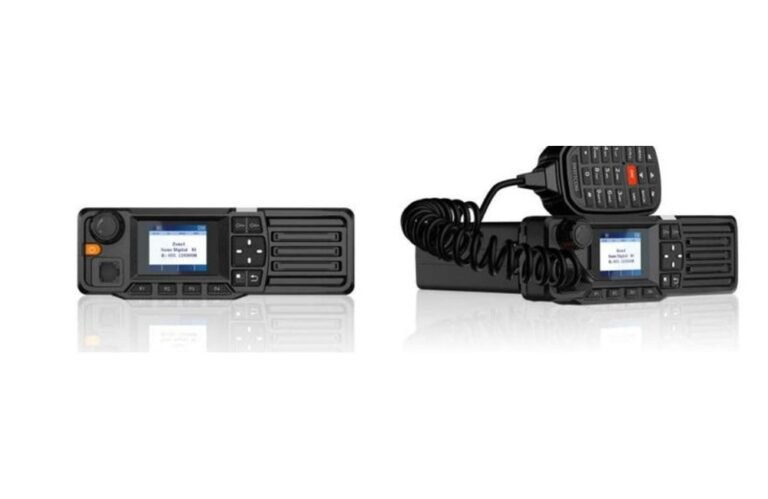
Current records show both analog-style and digital-style work: rental analog, rental digital, Motorola GP328/GP338 style analog service records, Motorola MOTOTRBO XiR models, MOTOTRBO R7, Kenwood NX-1300-M digital records, DMR repeater records, and mixed accessory/service lines.
That supports a staged migration message. A business does not need to replace every working analog radio just because digital is newer; it should test audio clarity, channel load, privacy needs, accessories, batteries, and supervisor workflow before moving the whole fleet.
Proof boundary: these notes are based on Octogen’s current product and Bukku operating records. Customer names, invoice numbers, serial numbers, private prices, and exact deployment quantities are not published here unless the customer has given separate permission.