
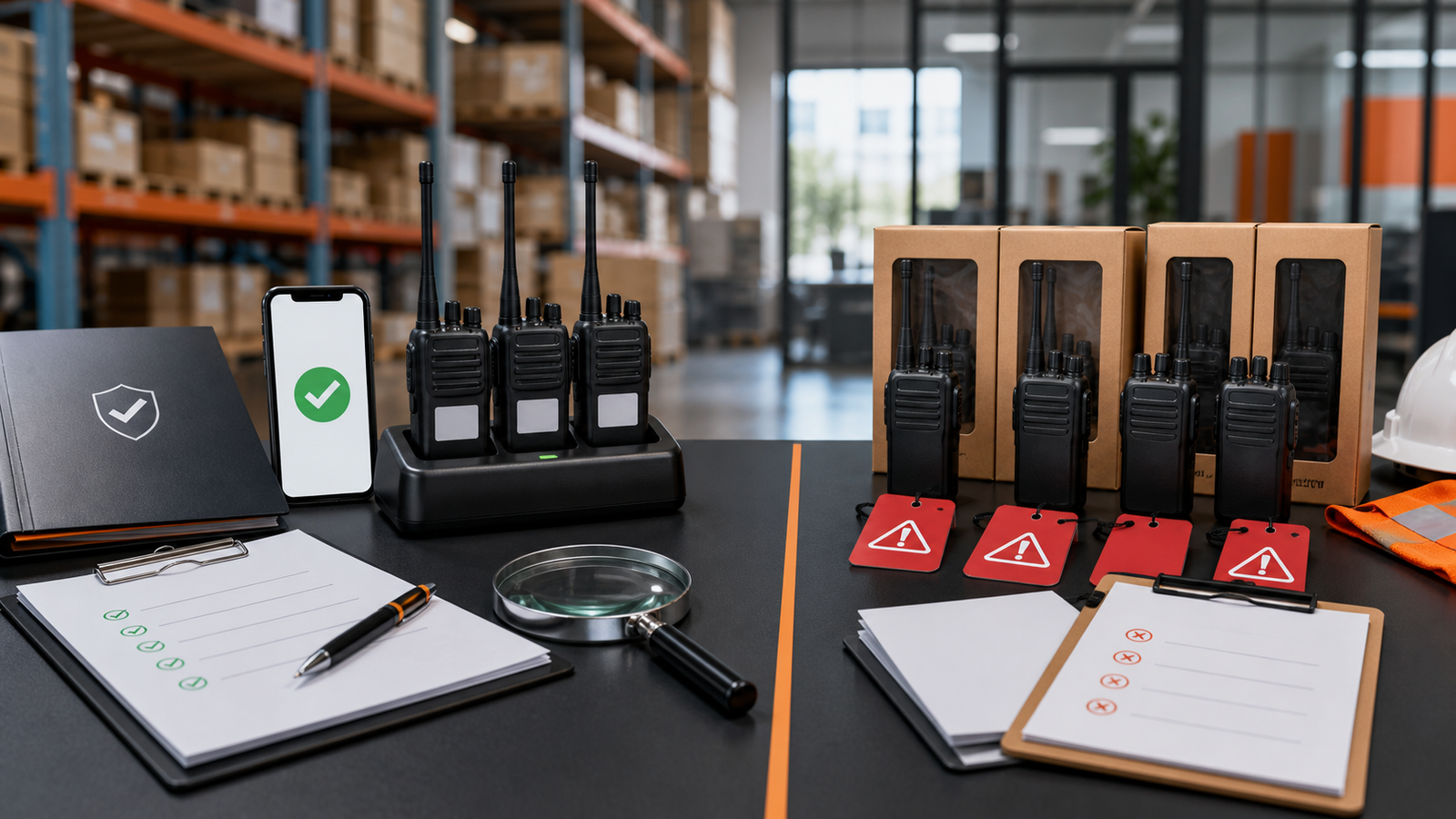
SIRIM Walkie Talkie vs No SIRIM Set: Jangan Main Beli Murah
Cheap walkie talkies can still transmit, but if the model, label and supplier cannot be traced, the risk can become interference, seizure, takedown, fines or a warranty problem when your team needs support.
No-SIRIM walkie talkie is not just a sticker issue; it is traceability, interference, safety and enforcement risk.
For business use, do not only ask whether the radio can talk far. Ask whether the model is certified, whether the supplier can show proper paperwork, whether the label can be checked, and whether the radio is suitable for your assigned operating channel.
SIRIM QAS states it is appointed by MCMC as a certifying agency for communication, multimedia and hybrid products. The Technical Standards Regulations 2000 require relevant communications equipment to be certified and restrict non-standard equipment supply or possession for sale.
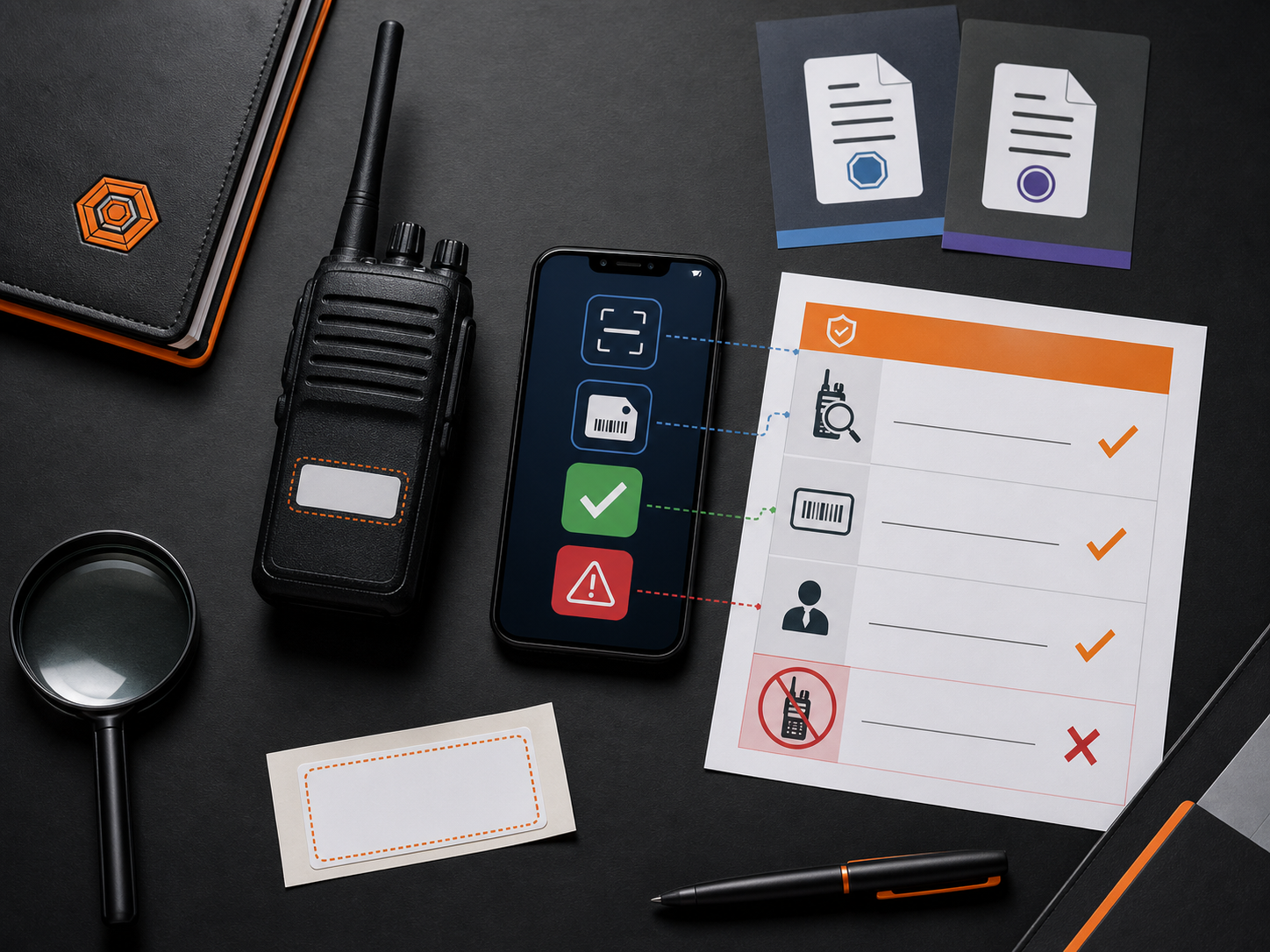
What to verify
Use the product label, model number, supplier record and certification evidence together. A cheap set with no traceability can become expensive when MCMC, warranty or site interference becomes the issue.
Local buyer script
Ask this before buying: Ada SIRIM label? Model boleh check? Supplier boleh bagi invoice and warranty? Kalau kena interference or inspection, siapa support?
Why SIRIM and MCMC matter when buying walkie talkies
In Malaysia, SIRIM QAS is the appointed certifying agency for communication, multimedia and hybrid products under MCMC. That means SIRIM approval is part of the equipment-compliance path, not a decorative sticker on the packaging.
The Technical Standards Regulations 2000 say communications equipment that is required to be certified shall be certified. They also prohibit the use, sale, offer for sale or possession for sale of equipment that is non-standard, not certified when certification is required, or altered from the certified model.
So the simple customer rule is this: a proper supplier should be able to help you identify the model, certification trail, invoice, warranty and local support. If the answer is only “boss ini boleh pakai punya”, that is not enough for a business site.
- SIRIM/MCMC compliance is about safety, interoperability and spectrum discipline.
- Approved model evidence matters more than the box photo or online listing headline.
- Business buyers should keep records before deployment, not after a complaint or inspection.
What is the risk of using no-SIRIM walkie talkies?
Public reporting from Bernama/NST in February 2026 quoted Communications Deputy Minister Teo Nie Ching warning that uncertified walkie talkies can interfere with critical services, including security forces, emergency responders, aviation and maritime radionavigation systems.
The same reporting also highlighted consumer-safety risk, including possible electric shock or fire during charging when equipment fails to comply with required standards.
For a guardhouse, warehouse, school event, construction site or factory, the practical problem is simple: when something goes wrong, a no-SIRIM set gives you fewer answers. The seller may disappear, accessories may not match, programming may be messy and the customer has little proof to show.
| Risk | What customers usually see | Why it matters |
|---|---|---|
| Interference | Radio can transmit but channel origin is unclear | May disturb licensed or critical-service users. |
| Enforcement | No label, no approval record, unknown importer | Equipment may be seized or investigated. |
| Safety | Cheap charger, unknown battery pack, no test record | Charging can become the hidden risk, not only the radio signal. |
| Support | Seller says “warranty sendiri claim” | Business downtime increases when batteries, antennas or programming fail. |
Penalty and enforcement numbers customers should know
Bernama/NST reported that MCMC seized 314 uncertified walkie talkie units worth RM24,682 from 2021 to 2025, with 74 cases investigated, 28 court cases resulting in RM243,500 total fines, and two compounds of RM1,000 each.
The same report said offences under Section 239 of the Communications and Multimedia Act 1998 can carry a maximum fine of RM1 million, imprisonment up to 10 years, or both. For Regulation 16 of the Technical Standards Regulations, public reports cite a maximum RM300,000 fine, up to three years jail, or both.
Online selling is also being watched. From 2022 to 2025, MCMC reportedly issued 112 takedown notices and 21,151 links were removed, including 3,175 walkie talkie links. In June 2026, Bernama reported Op V380: 6,916 suspected uncertified communication-equipment units worth RM2.06 million were seized from Klang and Johor Bahru premises linked to online selling.
- Do not treat online marketplace quantity or livestream popularity as compliance proof.
- Keep supplier evidence for each model you deploy at site.
- If a seller cannot explain certification, channel use and warranty, treat the price as incomplete.
How to check before buying: simple customer checklist
Start with the physical unit and label. Ask the seller to show the model, serial or label information and explain how it can be checked. SIRIM QAS provides the Check Your Label app to verify certified communication and multimedia products using IMEI, product serial, label serial, model or company search where applicable.
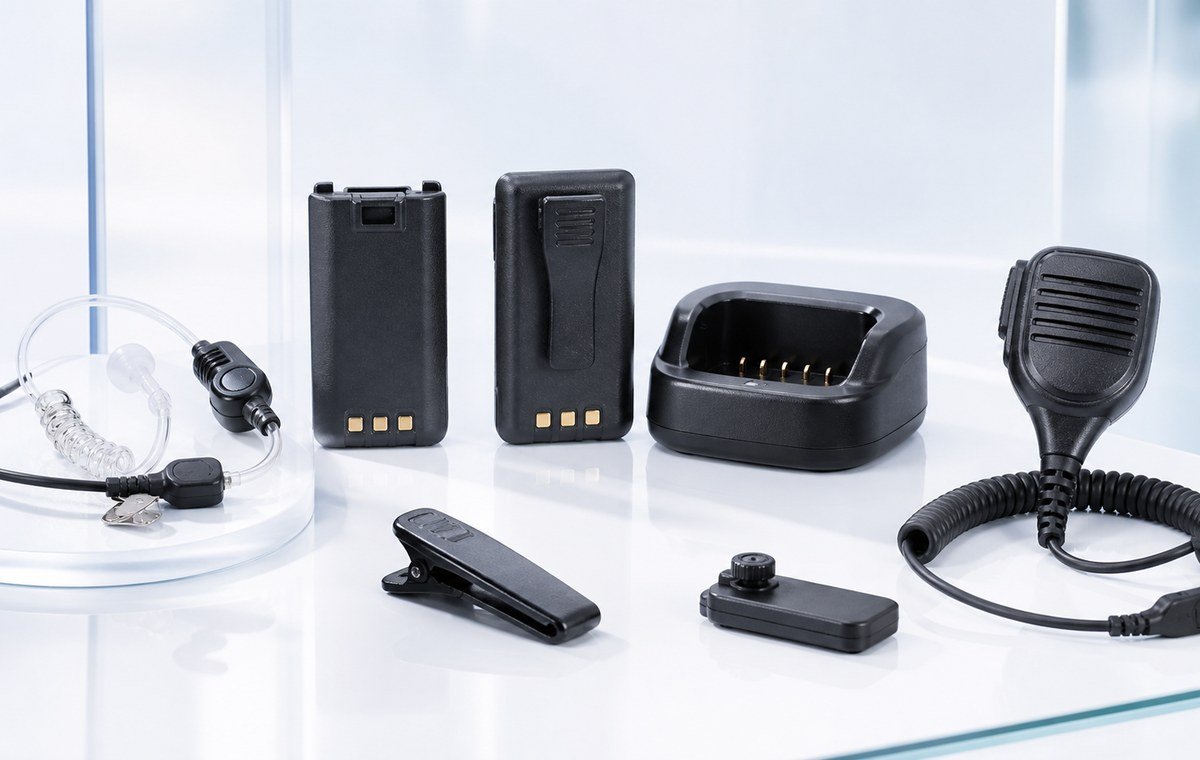
Then check the supplier. The invoice, warranty, battery/charger source, replacement antenna and programming support should all come from a traceable party. For business use, ask who will help if the radio interferes, cannot cover the site or fails after deployment.
Finally check the site need. A SIRIM/MCMC-supported model is the starting point; your actual floor, basement, steel rack, lift lobby, guardhouse or event area still needs coverage testing and channel planning.
- Ask: “Ada SIRIM label and model record?”
- Ask: “This model approved for Malaysia use, or overseas stock only?”
- Ask: “Can you provide invoice, warranty and after-sales support?”
- Ask: “Can we do site test before buying bulk quantity?”
About MCMC notices and enforcement photos
Several Malaysian news reports carry MCMC enforcement statements and photos credited to FB Suruhanjaya Komunikasi dan Multimedia Malaysia, including the 2024 Jalan Pasar/Pudu walkie talkie seizure and the 2026 Op V380 seizure. For this Octogen article draft, the live article uses newly generated original visuals and links to the source reports instead of copying those photos directly.
If Octogen later wants to include actual MCMC notice screenshots or Facebook photos, treat them as quoted evidence images: capture the source URL/date, keep visible attribution, and only use them when rights and context are acceptable. Jangan ambil gambar enforcement orang terus letak macam own photo.
For customers, the takeaway is enough: if the deal looks too cheap and the seller cannot show certification proof, you are not buying only a handset; you may be buying regulatory, safety and support risk.
- Direct official reference: SIRIM QAS certification service page.
- Legal reference: Communications and Multimedia Technical Standards Regulations 2000.
- Enforcement references: Bernama/NST, Astro Awani/Sinar/Kosmo reports carrying MCMC statements and credited MCMC photos.
Real Deployment Notes
A compliant radio can still fail if the team uses the wrong channel plan, no battery rotation, no spare charger and no handover rule. Octogen normally starts with site layout, user roles, shift pattern, coverage weak spots and escalation path before recommending quantity.
For business buyers who already bought unknown sets online, the safest next step is not to buy more. First collect the model, seller, invoice, label and current channel information, then review whether replacement, reprogramming or a proper site test is needed.
Save invoice, model, serial/label information, warranty contact and supplier support record together.
Walk the basement, lift lobby, guardhouse, loading bay and far-end area before bulk purchase.
Cheap radios often fail through batteries and chargers first; plan full-shift charging and spares.
If interference or enforcement concern appears, stop guessing and get proper supplier/technical advice.
Common Customer Questions
How do I know a walkie talkie has SIRIM approval?
Ask for the model, label/serial details and supplier documentation. Where applicable, use SIRIM Check Your Label to verify certified communication and multimedia products by label serial, product serial, model or company search.
Is a no-SIRIM walkie talkie automatically illegal?
Do not rely on the seller answer. Malaysian technical regulations require relevant communications equipment to be certified, and public enforcement reports warn against selling, possessing or using uncertified communication equipment. For business use, treat no proof as a major red flag.
What fine can apply for uncertified walkie talkies in Malaysia?
Public reports cite up to RM300,000 fine or three years jail or both under the Technical Standards Regulations, and up to RM1 million or ten years jail or both under Section 239 of Act 588 for relevant offences. Actual liability depends on the case, so treat this as compliance risk information, not legal advice.
Can cheap online walkie talkies still transmit?
Yes. That is why customers get trapped. A radio can transmit and still be uncertified, unsafe, poorly supported or unsuitable for your operating channel.
Is FCC, CE or overseas approval enough for Malaysia?
No. Overseas marks do not replace Malaysian certification and operating requirements. Ask whether the model is approved for Malaysia and whether the supplier can support local use.
Should I buy first and check later?
No. Check model, label, supplier, warranty and site coverage before paying, especially if you are buying for a warehouse, security team, school, event, hotel, factory or construction site.
Can Octogen help us check our current walkie talkie setup?
Yes. Send Octogen the model, photos of labels, purchase source, user count, site layout and current coverage complaint. The team can advise what can be tested, replaced, reprogrammed or properly planned.
Ask Octogen About Your Site Coverage
Send Octogen your current radio model, seller link, label photo, site layout and user count. We can help check coverage, supplier proof and a supportable SIRIM/MCMC-aware walkie talkie setup for Malaysian operations.