

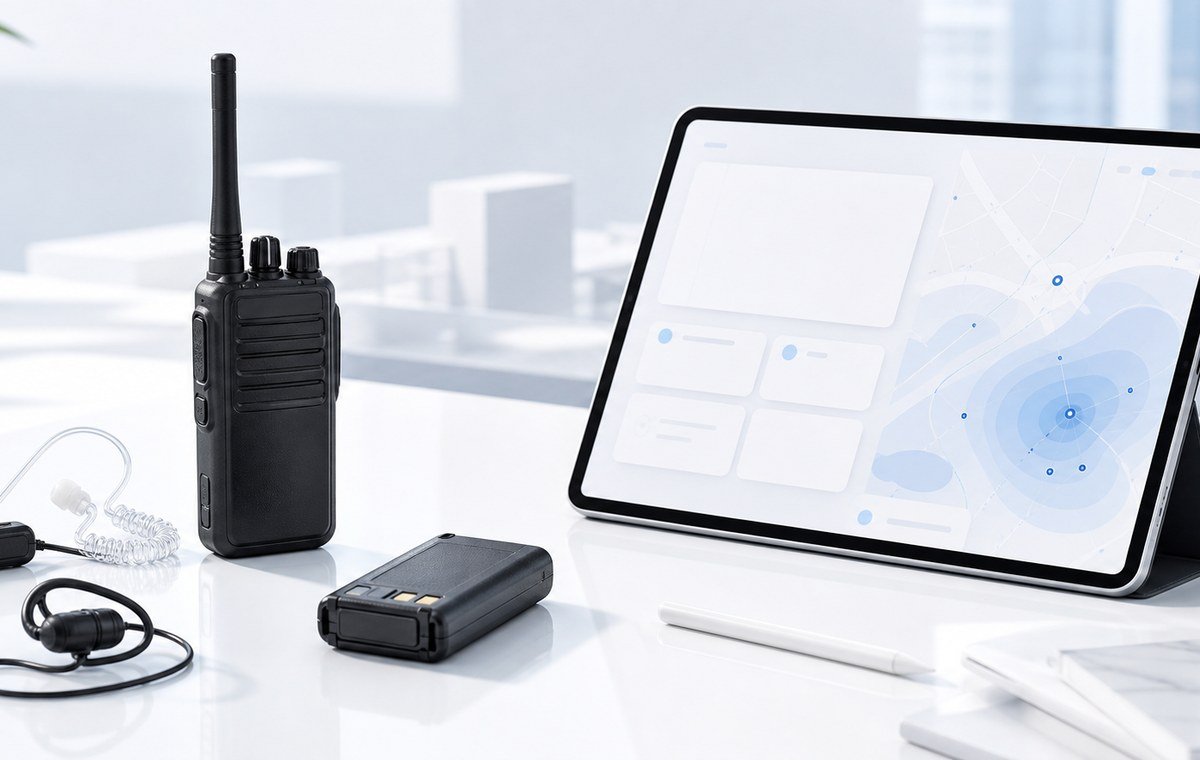

Zero Interference.
How Octogen engineered a BDA system across 10 premium residential towers at Johor's waterfront — coordinating 4 licensed frequencies on the Singapore–Indonesia border without a single interference incident.
What changed after Octogen fixed it
- Problem
- 10 Towers, 47 Dead Zones — and a Border Next Door
- Result
- 10 Towers Fully Covered; 285 Antennas Installed
- Verification
- 75-Day Deployment Scorecard
Which role are you? This project looks different from every angle.
“We had ten towers to cover. Every contractor said 'just add more repeaters.' Nobody mentioned the border frequency problem until Octogen walked the site.”
You care about the entire development running as one coordinated operation — security, maintenance, concierge, parking, all 10 towers. The cross-border frequency challenge and the BDA engineering approach are the critical sections for your level.
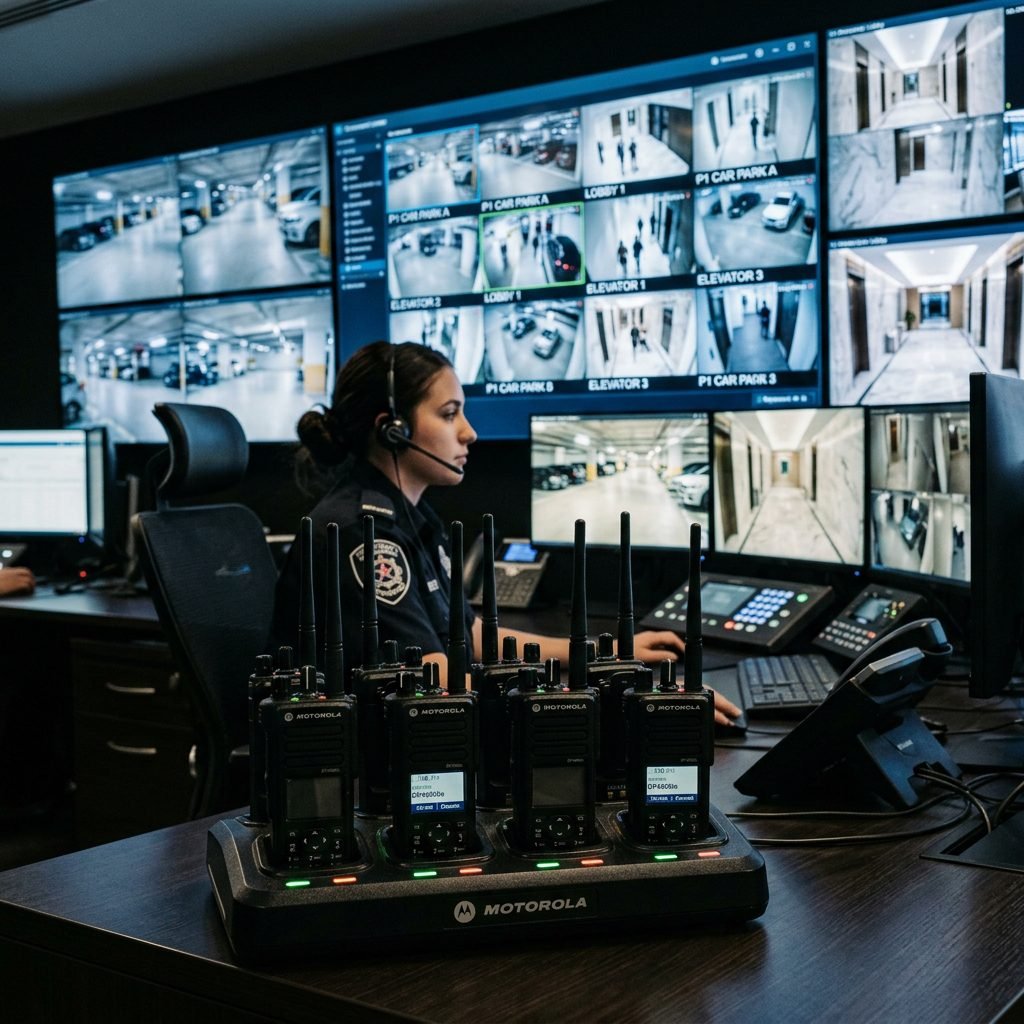
“Before the BDA system, our security patrols in Tower 7 basement could not reach the central command room in Tower 1. That is not a gap — that is a liability.”
You need every guard in every tower, every basement, every rooftop to reach command in under 10 seconds. The Signal Dead Zone challenge shows what you were dealing with, and the System in Action section shows what real 10-tower coverage looks like.
“Coordinating maintenance across 10 towers with phone calls and WhatsApp groups was chaos. One plumber could be waiting 20 minutes for instructions that should have taken 5 seconds.”
Your daily reality: technicians scattered across 10 towers, each with basements, lobbies, rooftops, and plant rooms. When comms break down, response time doubles and residents notice. The Solution Steps section addresses exactly this workflow.
“When we understood that the border location meant we needed MCMC-licensed frequencies — and that the BDA had to be engineered not to bleed into Singapore's spectrum — we realised this was not a simple equipment purchase.”
You care about compliance, total cost, and long-term reliability. The frequency licensing challenge and cost comparison sections lay out why this project required a systems integrator, not a hardware vendor.
These problems — you may have faced them too
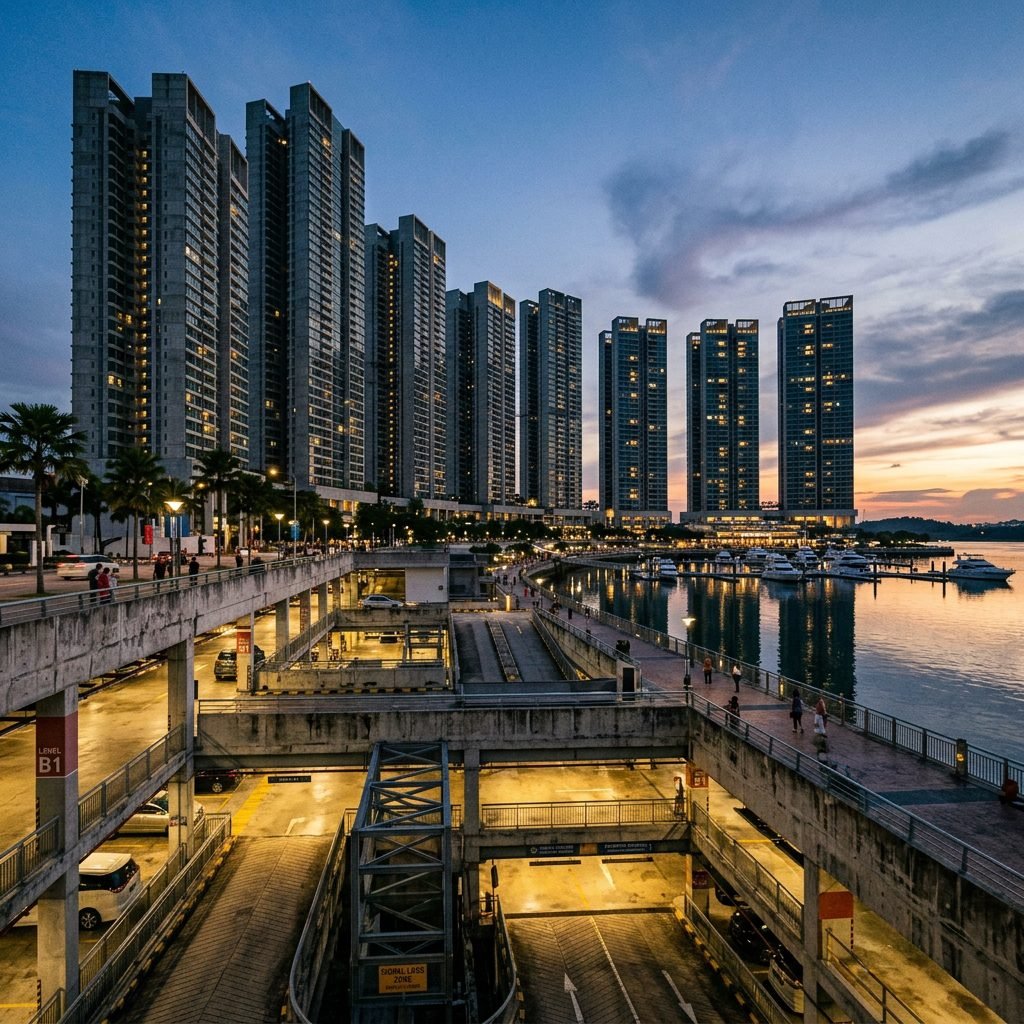
10 Towers, 47 Dead Zones — and a Border Next Door
Each of the 10 residential towers at Puteri Harbour is a reinforced concrete high-rise with basement car parks, plant rooms, and lift shafts — all classic RF black holes. Standard walkie-talkie signals could not penetrate beyond 2–3 floors in any tower. The basement-to-lobby gap alone was a complete communication blackout across all 10 buildings.
- Basement car parks (B1–B3): total signal blackout — security patrols unreachable from ground level
- Lift shafts and stairwells: Faraday cage effect blocked all handheld radio signals consistently
- Tower-to-tower: no single handheld radio could bridge the gap between adjacent buildings reliably
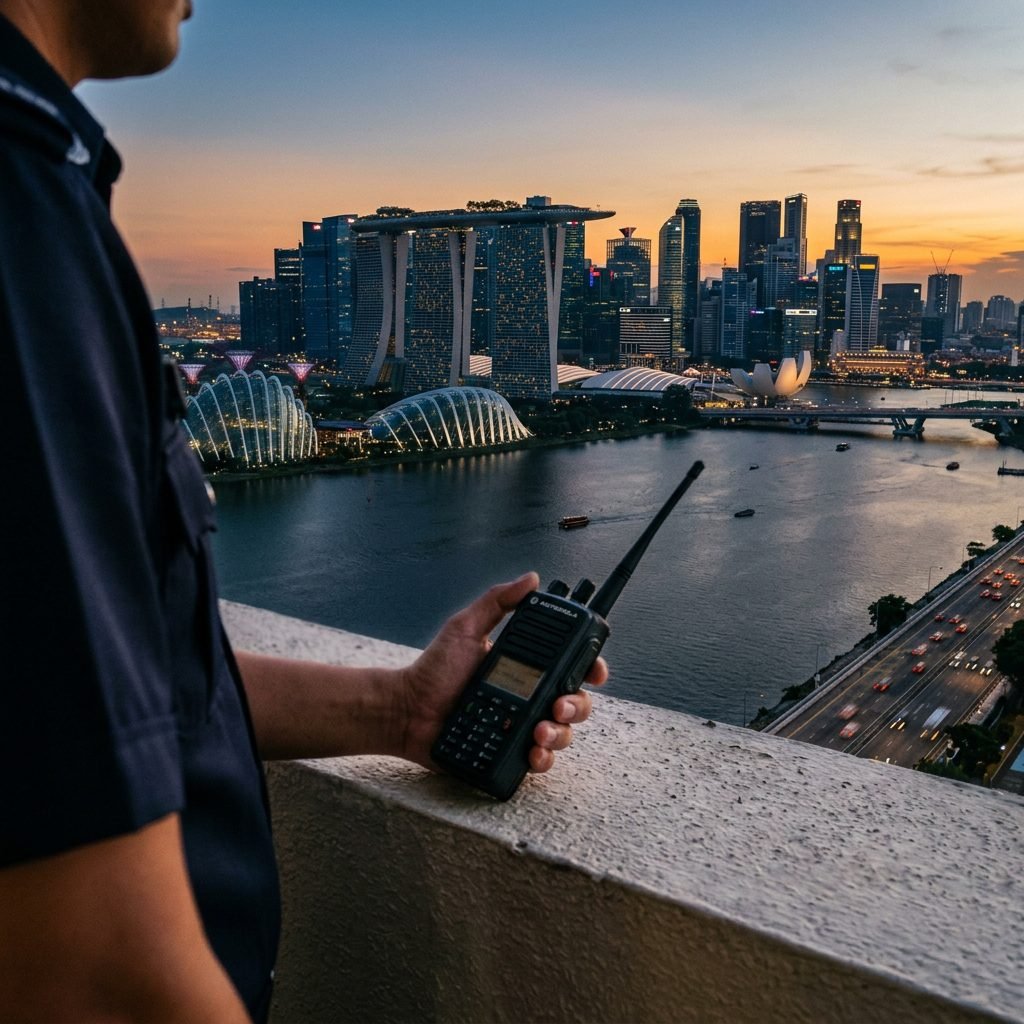
4 Frequencies to License. 2 Countries' Spectrum to Avoid.
Puteri Harbour sits less than 2km from the Singapore border and within range of Indonesian-registered frequencies from Batam. Any two-way radio system operating at this location must navigate MCMC licensing while ensuring zero spillover into Singapore's IMDA-regulated spectrum or Indonesia's Kominfo-registered channels. Standard off-the-shelf radios operating on unlicensed frequencies would have caused immediate cross-border interference.
- MCMC requires all commercial two-way radio frequencies to be individually licensed — 4 frequencies applied and approved for this deployment
- Singapore's IMDA-registered channels detected within 1.8km — any uncontrolled signal spillover would trigger cross-border interference complaints
- Indonesian-registered frequencies from Batam island overlapped with common unlicensed UHF bands — making frequency selection critical
The Cost of Getting It Wrong at This Scale
A 10-tower residential development is not a single-building job scaled up 10×. Every additional tower multiplies antenna count, cable routing complexity, frequency coordination, and the risk of self-interference between buildings. Previous contractors had quoted simple repeater installations — none addressed the cross-border frequency issue, the BDA engineering requirement, or the antenna count needed for true basement-to-rooftop coverage.
- Previous quotes: 3 contractors proposed basic repeater setups — all failed site survey validation
- Antenna count: 285 antennas across 10 towers, each requiring precise gain calibration to avoid inter-tower bleed
- Frequency licensing: 4 separate MCMC applications with cross-border coordination documentation
- Without proper BDA design: estimated 60% of towers would have had persistent dead zones in basements and stairwells
After three contractor proposals failed RF validation — each proposing simple repeater installations that could not address the cross-border frequency issue or the 47 identified dead zones — the development's management committee contacted Octogen. The first site survey confirmed what the RF data showed: this was not a radio problem. It was a systems engineering problem that required BDA infrastructure, MCMC frequency licensing, cross-border spectrum coordination, and a 285-antenna deployment designed tower by tower.
4 things Octogen did at Puteri Harbour
Not a repeater installation — a full-scale BDA engineering project covering 10 towers, 4 licensed frequencies, and cross-border spectrum coordination. Click each step to explore.
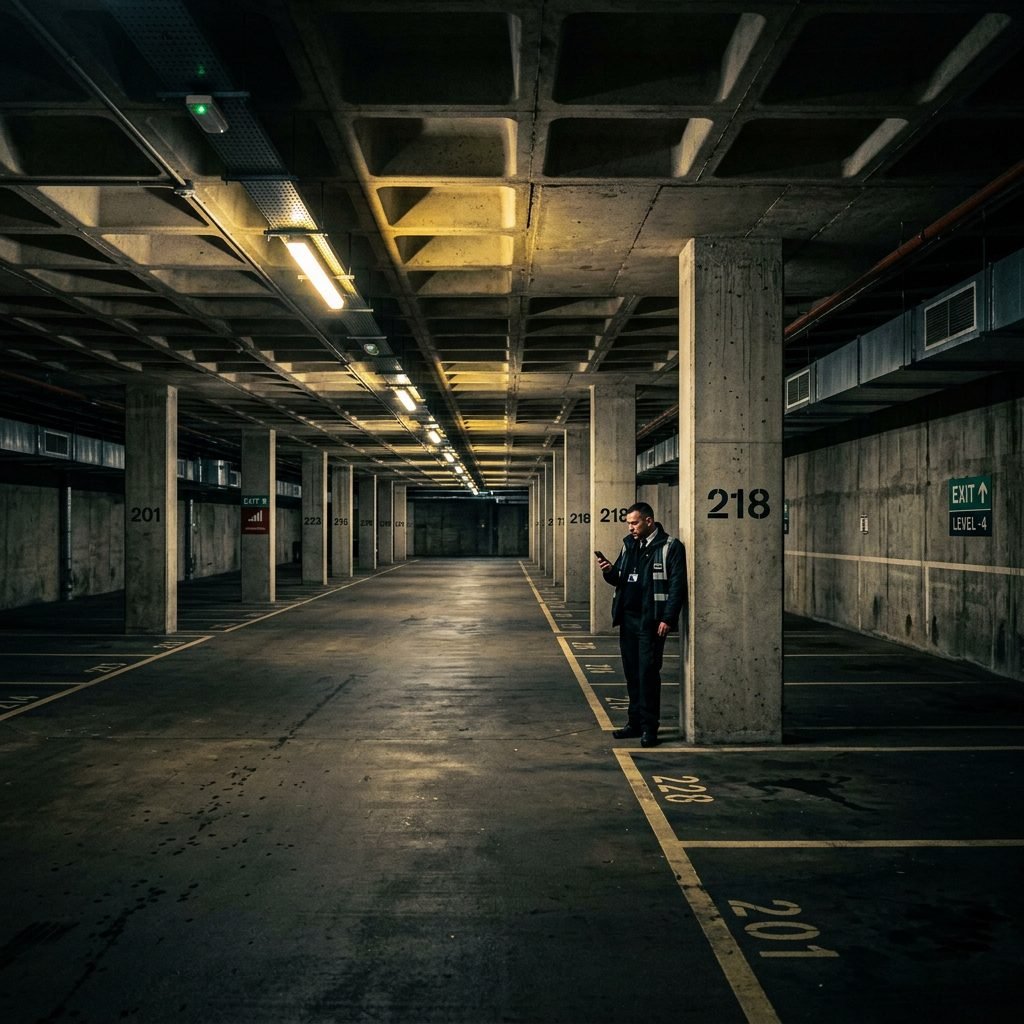
What 10-tower coverage looks like in real time
This is real channel activity from Puteri Harbour's overnight security operations — 4 channels, 80 devices, 10 towers, every basement and rooftop connected.
4 channels · 80 devices · 10 towers · 285 antennas · 0 cross-border interference
75 days — from first survey to live 10-tower coverage
Multi-Tower RF Survey
- Day 1Octogen RF team on-site — begins floor-by-floor signal mapping from Tower 1 basement
- Day 5All 10 towers surveyed — 47 dead zones mapped, cross-border channels documented
- Day 8BDA placement plan finalised — 285 antenna positions, cable routing per tower confirmed
- Day 10MCMC frequency application submitted — 4 frequencies with cross-border interference analysis
MCMC Licensing & BDA Engineering
- Week 3MCMC preliminary review — cross-border documentation requested and submitted
- Week 5All 4 frequencies approved — no conflicts with Singapore IMDA or Indonesian Kominfo registrations
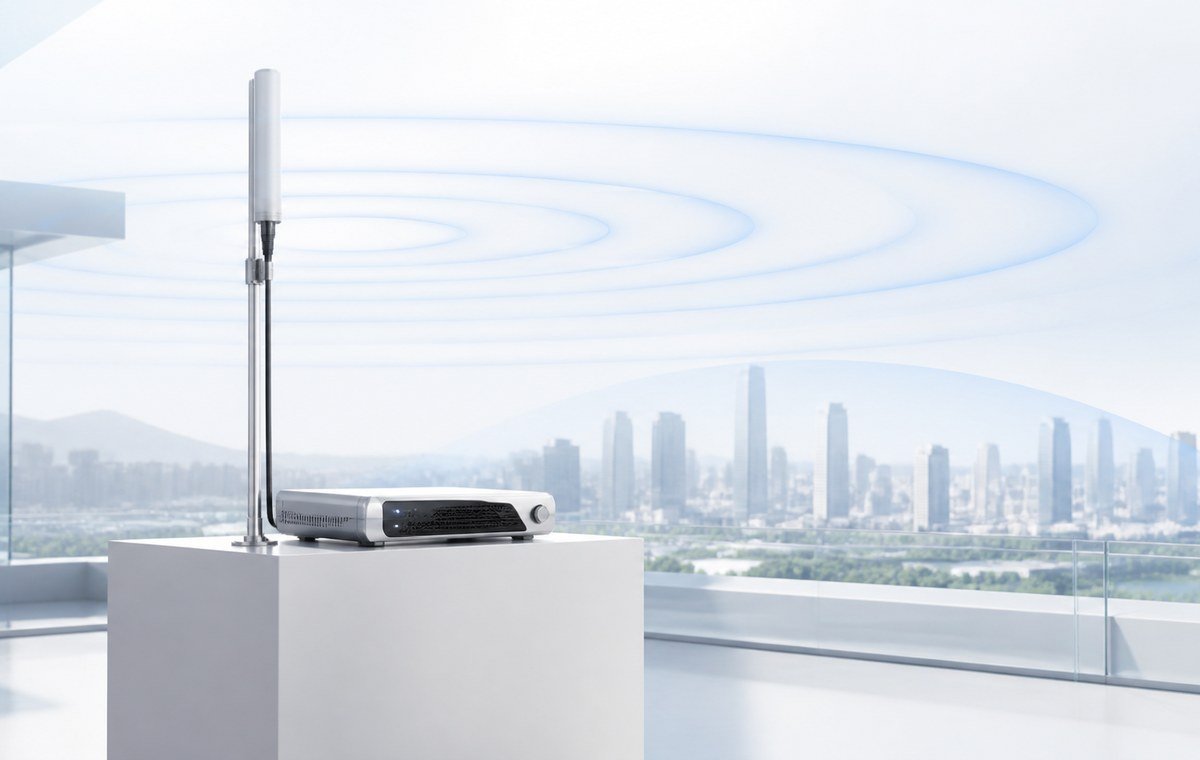
- Week 6BDA head-end units and 285 antennas procured and pre-tested at Octogen facility
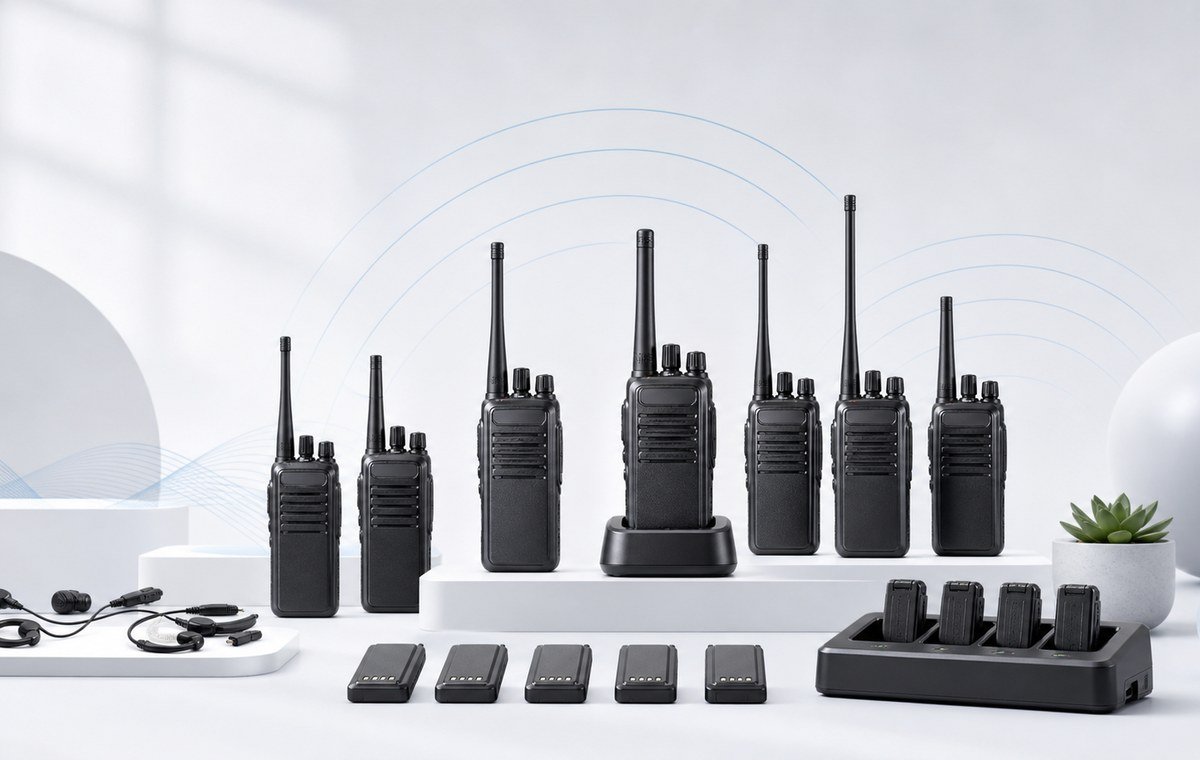
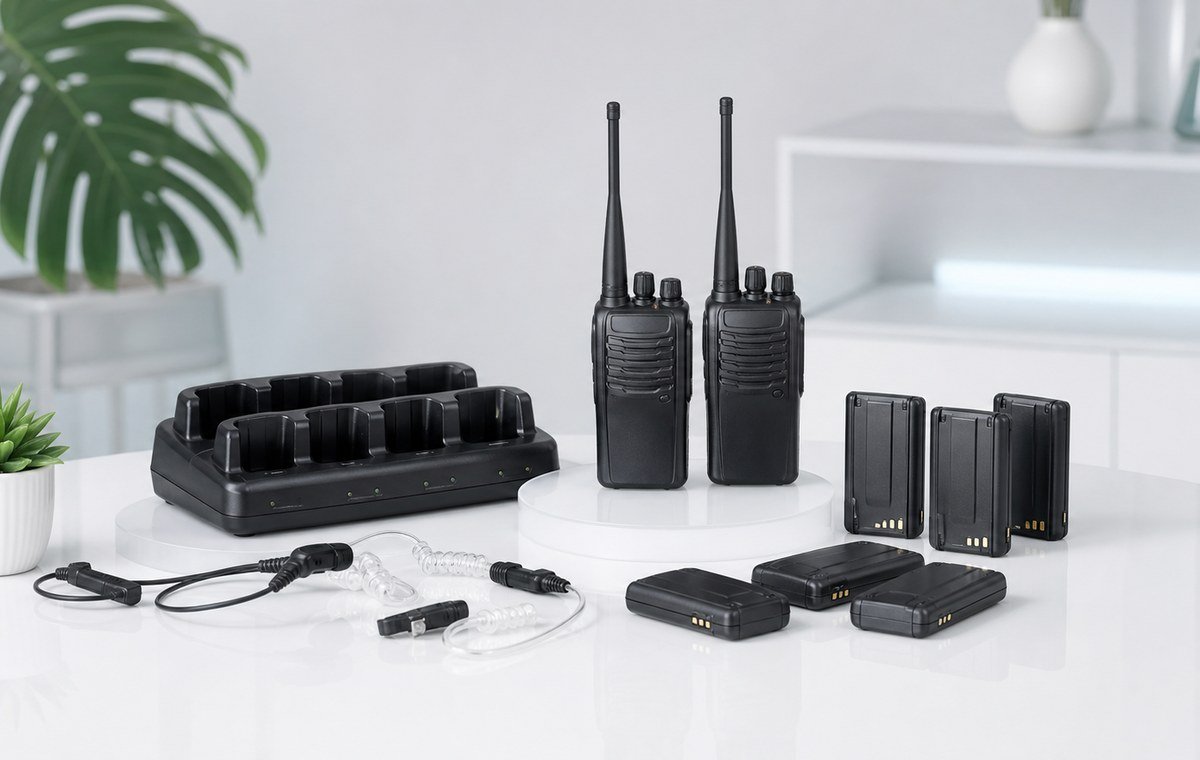
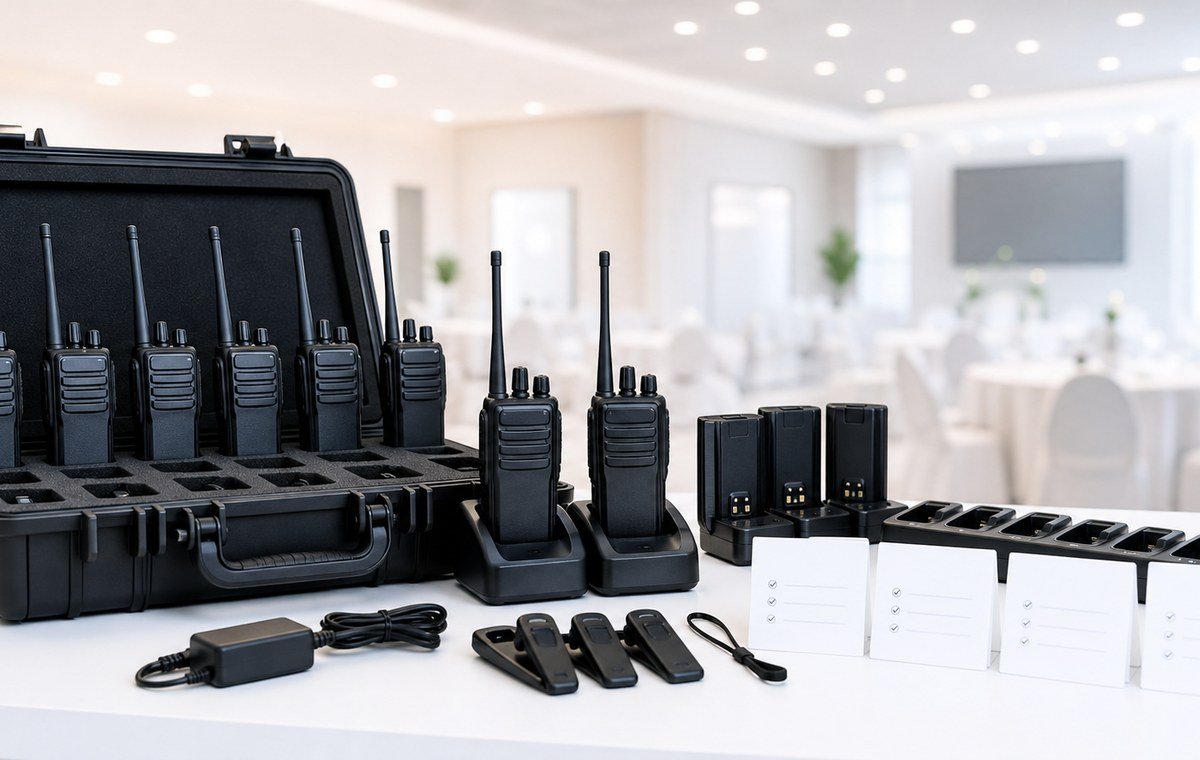
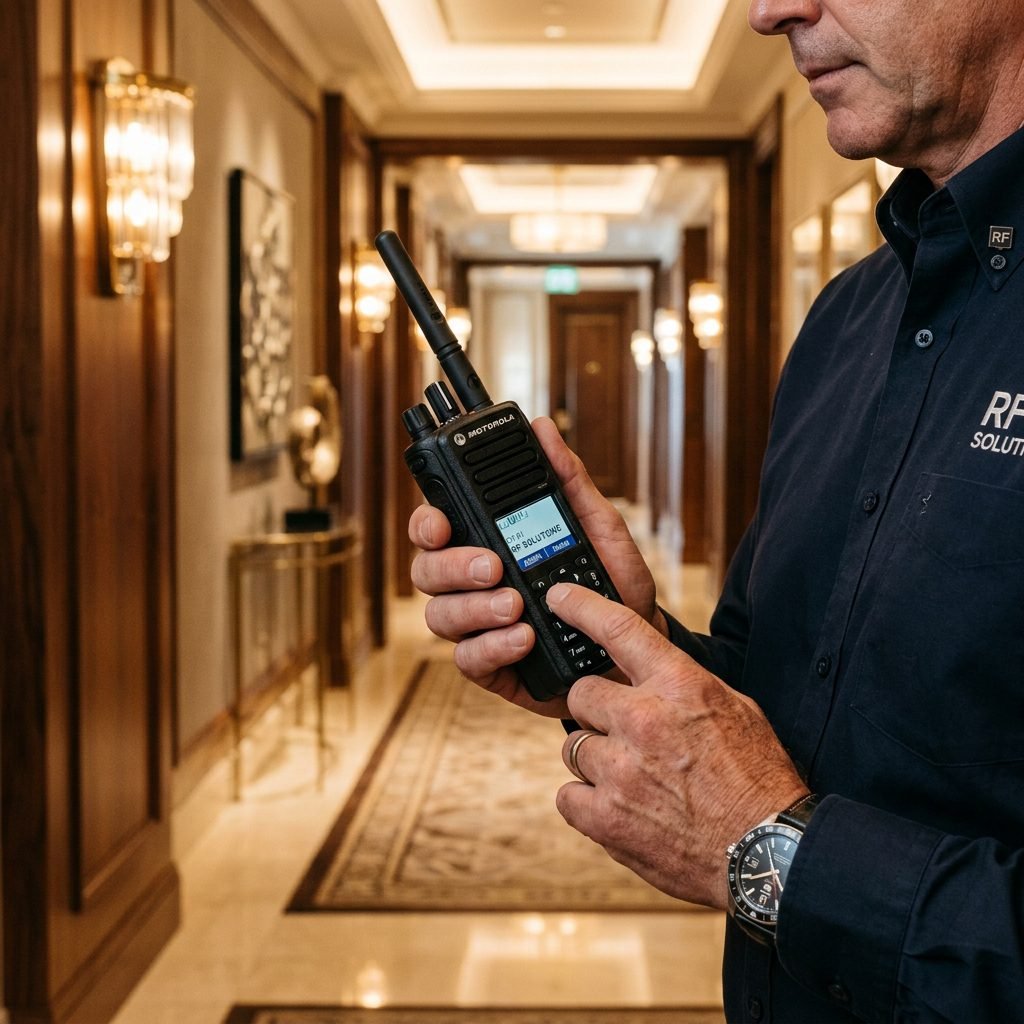
- Week 8All 80 Motorola DP4800e units pre-programmed and labelled by team and tower assignment
Installation & Commissioning
- Day 1–5Towers 1–5 antenna installation complete — gain calibrated per zone, BDA head-end units live
- Day 6–10Towers 6–10 antenna installation complete — full inter-tower coverage test passed
- Day 12All 80 walkie-talkies distributed — team briefings completed for all departments
- Day 1472-hour cross-border interference monitoring completed — zero incidents. Full sign-off.
75-Day Deployment Scorecard

Numbers don't lie
We approached three contractors before Octogen. Every one of them proposed a simple repeater setup — none of them mentioned the cross-border frequency issue, and none of them could explain how they would cover 10 towers without interference between buildings. Octogen's RF survey took two weeks and covered every floor of every tower. The MCMC licensing was handled end-to-end. 285 antennas were installed without a single resident complaint. And since the system went live, we have not had a single dead zone, a single interference incident, or a single communication failure across any tower. This was not a radio purchase — it was an infrastructure project, and Octogen treated it that way from day one.
Things you probably want to know
Related cases and planning resources
Plan a similar radio requirement
 IllustrationPlanning & servicesPlan radio coverage and system designDiscuss building layout, repeater requirements and coverage acceptance before choosing equipment.
- IllustrationPlanning & servicesPlan a permanent radio systemReview repeater, distributed antenna and handset requirements for a fixed property.
- Case study collectionBrowse all Octogen radio case studiesCompare rental, radio supply and fixed-system requirements across other documented cases.

Compare related customer orders
- Customer case40 UHF radios. One approved MCMC simplex certificate.A real Octogen case study backed by an MCMC Simplex / Apparatus Assignment certificate and Bukku invoice INV-202511-006 for 40 Motorola MOTOTRBO XiR P6620i UHF radios.
- Customer caseA Factory Floor. 3 Teams.A real Shah Alam industrial radio case study: 22 Swiftcom SC-F1 PMR446 License Free radios split across production, warehouse and EHS teams, backed by Bukku invoice INV-202506-032.

Manufacturer and technical references
These technical references explain products or radio principles. They do not independently verify this customer order, measured site coverage or commissioning. Product variants and local requirements need confirmation.
Don't let your buildings block your own communication
Puteri Harbour tried three contractors before finding one that could engineer the solution. You don't have to.