

Plantation Walkie Talkie Malaysia: Estate Field Guide
Plan walkie talkies for Malaysian plantation estates, field supervisors, harvesting teams, security posts, transport lorries and emergency response.
Use radios to shorten the distance between the estate office and the field.
Octogen has supplied two-way radios to Malaysian sites since 2017. For plantation estates, the radio plan should help supervisors coordinate field blocks, harvest movement, transport lorries, security posts and emergencies where phone coverage can be uneven. A practical starting plan is 6 role channels, 3 km field-road coverage tests, 12-hour battery planning and 15-minute exception updates during active field work.
Response index
Measures whether the team can call, acknowledge and resolve routine issues before they become customer-facing problems.
Escalation flow
The best radio plan is short enough to use during a busy shift and strict enough to keep emergency traffic clear.
Channel map
Keep daily operations, support traffic and emergency escalation apart.
What should plantation estate walkie talkies cover?
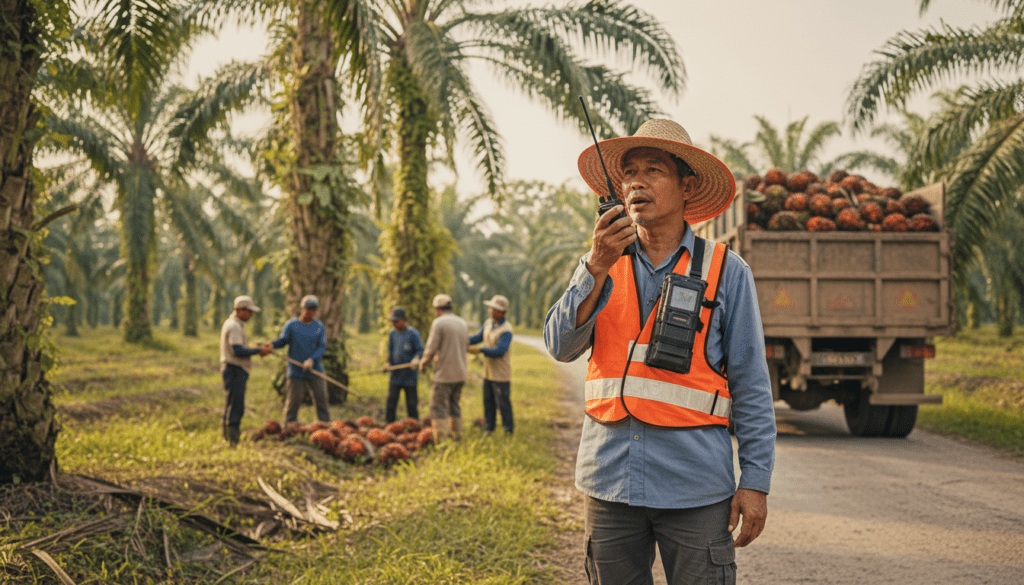
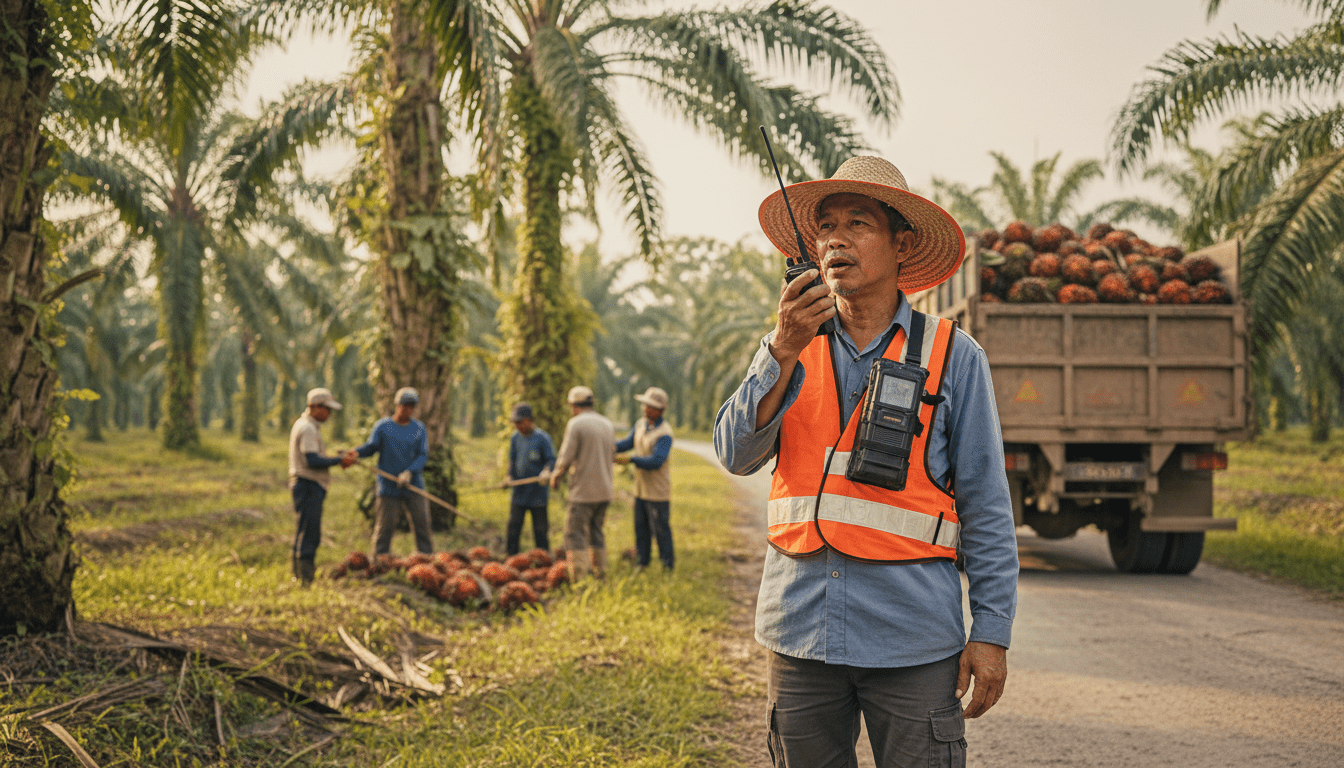
The main problem is distance and timing. A field supervisor may need help at a block, a lorry may be waiting at a collection point, and the office may not see the issue until hours later if every update depends on mobile phone coverage.
For Malaysian estates, Octogen usually starts with the estate office, security post, workshop, collection point, main field roads and several representative field blocks. The first test is whether the supervisor can call back clearly from real working locations.
A useful setup lets the office hear exception updates within 15 minutes when roads are blocked, machinery breaks down, harvest movement changes or emergency support is needed.
- Use block names or estate road names that match the printed field map.
- Keep office, field supervisor, transport and emergency call signs consistent.
- Place spare batteries at the estate office or workshop, not only in vehicles.
- Test radio coverage during normal vehicle movement, not only from the office compound.
Field block coverage needs a walk-test, not a desk estimate
A radio that sounds clear at the estate office may become weak at the far side of a field block, near a low area or behind a hill. The coverage plan should be tested from the places supervisors actually stand, drive and wait.
Octogen can help compare direct radio coverage, vehicle-mounted antenna options and repeater needs after the field test. The decision should be based on the weak points found during a normal work route.
For many estates, a 3 km planning radius is only a starting assumption. The real answer comes from field-road testing between office, security post, collection point, workshop and active blocks.
| Estate area | Radio test | Decision |
|---|---|---|
| Estate office to security post | Confirm clear base-to-guard call | Keep as daily control path. |
| Office to field block | Test from vehicle and on foot | Mark weak blocks for repeat test. |
| Collection point to transport | Check lorry dispatch audio | Decide if transport needs separate channel. |
| Workshop to field road | Test breakdown support call | Plan spare battery and response rule. |
Harvest and transport calls should stay short and location-based
Harvest and transport traffic can become noisy if every update goes to one open channel. The estate office needs enough information to assign movement, but not a long conversation that blocks emergency or security calls.
Use short phrases such as Harvest Supervisor to Transport, Block B7 ready for pickup, or Transport to Office, lorry delayed at south road. The first reply should confirm who is moving and when the next update will come.
During peak harvesting days, keep spare radios or batteries for relief supervisors, replacement drivers and temporary contractors. A 12-hour battery plan is important when field work starts early and transport closes late.
- Use block IDs, road names and collection point names consistently.
- Keep harvest status separate from emergency escalation where possible.
- Give transport coordinators a charger point near the dispatch desk.
- Review repeated missed calls after the first week of deployment.
Security and emergency escalation need a clear radio phrase
Security posts, remote roads, field blocks and workshops should share a clear escalation phrase. The message should state role, location and help needed without adding unnecessary personal details over an open channel.
For example, Emergency Support to Estate Office, attend Block C4 road now is enough to move the response owner. Further details can continue face to face or through the correct private process.
If the estate has weak mobile coverage, the radio becomes part of the safety system. Staff should know which channel to use, who acknowledges the call and who closes the incident after support arrives.
- Train the exact emergency phrase before rollout.
- Confirm security post, workshop and main collection point coverage.
- Keep one charged spare unit for emergency replacement.
- Record incident close-out so the office knows support arrived.
Charging and handover discipline keeps estate radios usable
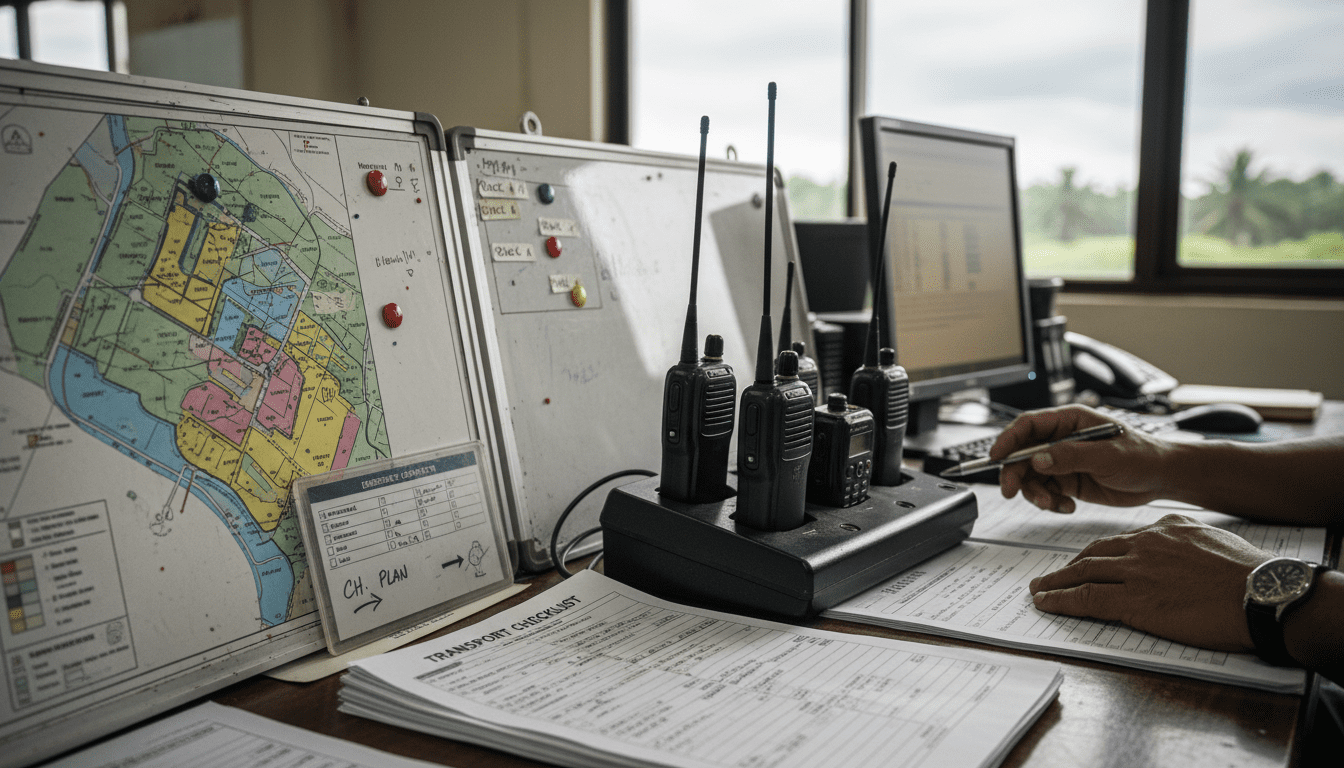
A field radio plan is only useful if radios return charged and assigned to the correct role the next morning. Keep a visible charging board at the estate office, workshop or supervisor room.
The handover should record who took each radio, which block or vehicle they covered and whether any weak coverage or damage was noticed. This creates a simple feedback loop for Octogen to adjust accessories, charger placement or radio count.
For 12-hour operating days, plan battery rotation before the first busy week. Do not wait for supervisors to discover the issue deep inside the estate.
- Label radios by role or unit number.
- Return all radios to one charging point before day close.
- Keep 10 to 20 percent spare batteries or units for field exceptions.
- Review weak blocks and missed calls every week during the first month.
Real Deployment Notes
A printed plantation field ops channel card helps relief staff use the same call signs and escalation words as the main team.
After one week, ask which calls were missed, which zones were weak and which channel had too much chatter. Adjust the channel plan before bad habits become normal.
Do not broadcast personal, medical, student, tenant or customer-sensitive details over an open channel. Use the radio to move the right person to the right place.
Common Customer Questions
Are walkie talkies useful in Malaysian plantation estates?
Yes. They are useful when supervisors, transport, security and estate office staff need fast updates across field blocks where phone coverage may be uneven or too slow for daily operations.
How far can plantation walkie talkies work?
Distance depends on terrain, tree density, antenna position and whether users are inside vehicles. Use 3 km only as a planning assumption; Octogen should walk-test the actual estate roads and field blocks before confirming coverage.
How many radios does an estate need?
Start with estate office, field supervisors, transport coordinator, security post, workshop or maintenance, plus spare units. Larger estates may need one unit per active block supervisor or vehicle team.
Do plantation teams need a repeater?
A repeater may be needed if field blocks, low areas, workshops or security posts cannot reach the estate office reliably. The decision should come after a real coverage test, not from distance alone.
Can transport lorries use the same channel as harvest teams?
Small operations can share one channel with strict call discipline. Busy estates should separate transport or define a clear transport call procedure so lorry movement does not block emergency calls.
What accessories help plantation radio users?
Useful accessories include spare batteries, vehicle chargers, speaker microphones, belt clips and protective cases. The right accessory depends on whether the user is walking, driving, supervising harvest or standing at a security post.
Can radios replace mobile phones in estates?
No. Radios are best for fast group coordination and emergency movement. Phones are still needed for private details, documents and longer conversations.
What should we send Octogen for a plantation radio quote?
Send the estate map, field block names, road layout, number of supervisors, vehicle count, shift hours, weak phone areas, security post location and whether emergency coverage or transport dispatch is the main priority.
Ask Octogen About Your Site Coverage
Send Octogen your site layout, user count, shift pattern and field block coverage concerns. The team can recommend a practical radio count, channel plan, accessories and coverage test for Malaysian operations.